
Beautiful Plants For Your Interior
Beautiful Plants For Your Interior
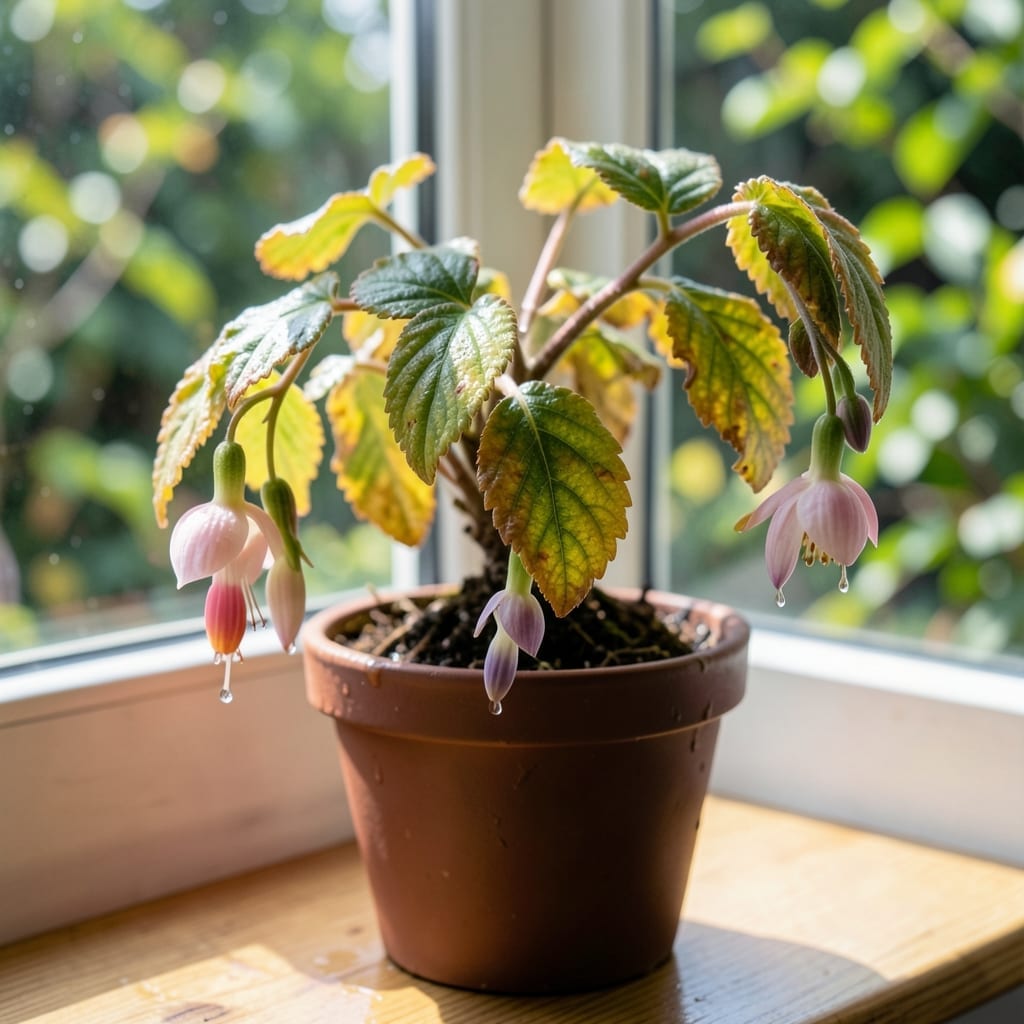
Yellowing leaves on your fuchsia aren’t just sad—they’re a red flag. I’ve watched too many of these beauties decline from overwatering, and the fix starts with recognizing the early signs.
Droopy, soft leaves and black stems scream excess moisture. The roots can’t breathe, and the plant suffocates. I learned the hard way that good intentions with watering can backfire fast.
Here’s the thing—fuchsias bounce back surprisingly well once you adjust. Stop watering, check the soil, and trim the damaged parts. Recovery often starts within a week.
Prevention is simpler than you think: water only when the top inch of soil feels dry. No more guessing games. This saves more fuchsias than any fancy treatment.
Overwatering disrupts the delicate balance fuchsias need to thrive. Here’s why it happens, broken down by the most common causes:
Fuchsias prefer well-draining soil that allows excess water to escape. When potted in dense, clay-heavy, or compacted mixes, water pools around the roots, suffocating them. This leads to root rot, where fungal pathogens like Phytophthora or Pythium thrive in waterlogged conditions, blocking oxygen uptake. Without oxygen, roots die, and the plant can’t absorb nutrients, causing yellowing, wilting, or dropping leaves.
Many gardeners assume fuchsias need constant moisture, but their roots require dry periods to breathe. Watering on a fixed schedule—rather than checking soil moisture—often leads to overhydration. A simple test: Stick your finger 1–2 inches into the soil. If it feels damp, hold off. Fuchsias in cooler or humid climates are especially vulnerable, as evaporation slows, prolonging soil saturation.
Even well-draining soil fails if the pot lacks drainage holes. Water accumulates at the bottom, creating a stagnant zone where roots drown. Always use containers with drainage holes and elevate pots to prevent water from pooling beneath. Saucer trays should be emptied after watering to avoid “sitting water,” a silent killer for fuchsias.
Larger pots hold more soil, which retains moisture longer. A fuchsia in a pot too big for its root ball struggles to absorb water efficiently, increasing the risk of overwatering. Opt for pots just 1–2 inches wider than the root system to encourage healthy growth and proper moisture balance.
Overwatering can leave your fuchsia looking sad, but don’t worry—it’s often fixable! Here’s how to nurse your plant back to health, step by step.
If the soil is soggy, stop watering immediately and let it dry out. For severe cases, gently remove the plant from its pot and place it on a dry towel or newspaper to absorb excess moisture. Ensure the pot has drainage holes to prevent future waterlogging.
If root rot has set in (signs include black, mushy roots), trim the affected roots with clean scissors and repot the fuchsia in fresh, well-draining potting mix. Choose a container with drainage holes to avoid recurrence.
Prevention tip: 💡 Use a mix with perlite or sand to improve drainage.
Fuchsias prefer consistent moisture but not soggy soil. Water only when the top inch of soil feels dry to the touch. Stick your finger in the soil to check—if it’s damp, wait another day or two.
Prevention tip: ✨ Use a moisture meter for precision.
If leaves are yellow, wilted, or mushy, trim them with sterilized shears to redirect energy to healthy growth. This also improves airflow, reducing the risk of fungal issues.
Prevention tip: 🎯 Avoid overhead watering to keep leaves dry.
Place your fuchsia in bright, indirect light and maintain moderate humidity. Avoid cold drafts or extreme heat, as stressed plants are more susceptible to overwatering damage.
Look for yellowing leaves, soft or mushy stems, and soil that stays soggy. Drooping foliage that doesn’t perk up after a day is another red flag.
Yes, with prompt action! Stop watering, let the soil dry, and trim affected leaves. Recovery often starts within a week if root damage isn’t severe.
Only if root rot is present. Use fresh, well-draining soil and a clean pot with drainage holes. This prevents further damage and encourages new growth.
Check the soil first—water only when the top 1–2 inches feel dry. Frequency depends on climate and pot size, not a fixed schedule.