
Beautiful Plants For Your Interior
Beautiful Plants For Your Interior
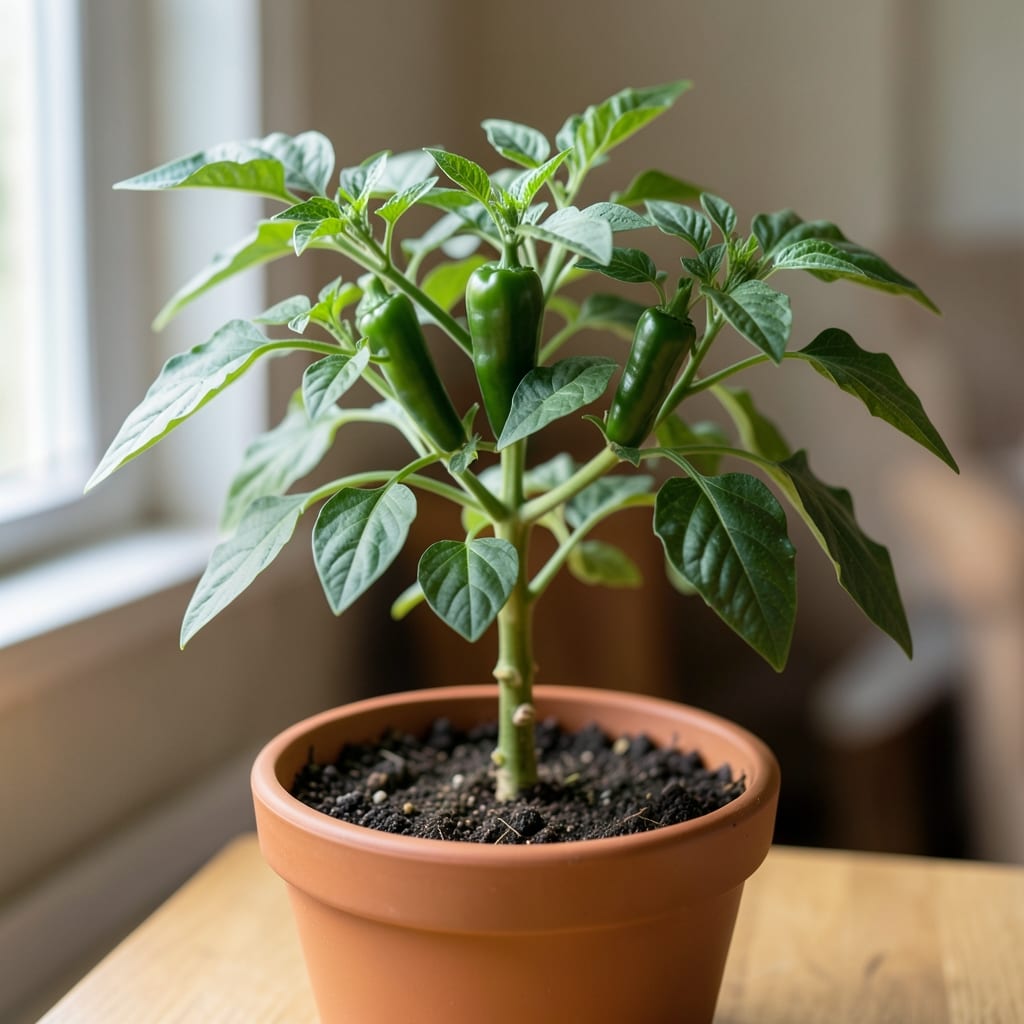
Those first two leaves on your jalapeño seedlings? They’re not the real deal. True leaves appear after the initial cotyledons, looking rougher and more jagged—this is when the plant starts its serious growth.
At this stage, your seedlings need steady light, consistent moisture, and protection from drafts. Within 2-3 weeks, you’ll see rapid development if conditions are right. These leaves signal it’s time to step up your care game.
📚 In This Guide
Here’s how to identify and nurture jalapeño true leaves as your seedlings develop.
The first leaves you see on jalapeño seedlings are cotyledons—round, smooth, and uniform in appearance. These are not true leaves but rather embryonic structures that provide initial nourishment. I always wait for the first pair of jagged, serrated leaves to appear, which signals the emergence of true leaves.
True leaves develop after cotyledons and display characteristic traits: pointed tips, uneven edges, and a deeper green color. You’ll notice these leaves grow in pairs, opposite each other, and they’ll begin photosynthesizing to fuel further growth. This transition typically occurs when seedlings are 2-3 weeks old.
Jalapeño seedlings need 12-16 hours of bright light daily to produce strong true leaves. Without sufficient light, they’ll grow leggy, with weak stems and sparse foliage. I position my seedlings under full-spectrum LED grow lights, keeping them 2-4 inches above the plants and adjusting height as they grow.
If you’re using natural light, a south-facing window is ideal, but supplement with grow lights on cloudy days. True leaves will develop more robustly under consistent, high-quality light. Watch for leaves that appear pale or yellow—this often indicates insufficient light exposure.
As true leaves emerge, jalapeño seedlings enter a rapid growth phase. I check daily for new leaf pairs, which should appear every 3-5 days under optimal conditions. The true leaves will grow larger and develop a thicker, slightly waxy texture compared to cotyledons.
At this stage, maintain even moisture in the soil—let the top ½ inch dry out between waterings to prevent overwatering. True leaves are more resilient than cotyledons, but they still need consistent care to thrive. If leaves start curling or wilting, adjust your watering schedule immediately.
Once your seedlings have 2-3 sets of true leaves, it’s time to introduce a balanced, water-soluble fertilizer. I use a half-strength solution of a 10-10-10 or 5-5-5 fertilizer every 7-10 days to provide essential nutrients without overwhelming the young plants.
True leaves will respond to fertilization by growing larger and developing a richer green color. Avoid over-fertilizing, as this can lead to salt buildup in the soil, which stunts growth and damages roots. Always water the soil before applying fertilizer to prevent root burn.
These practical insights will help you avoid common pitfalls when nurturing your jalapeño seedlings.
Light Exposure Precision: The 12-16 hours of daily bright light mentioned in Step 2 isn’t just a suggestion—it’s critical for compact, sturdy growth. I learned this the hard way when my first batch grew tall and spindly under just 8 hours of sunlight. Full-spectrum LED grow lights positioned 2-4 inches above the plants work wonders, but remember to adjust the height as your seedlings grow taller.
Watering Wisdom: In Step 3, that guidance about letting the top ½ inch of soil dry out between waterings prevents both root rot and weak stem development. True leaves may be more resilient than cotyledons, but they’ll still curl or wilt if the moisture balance is off. I check the soil with my finger every morning—it’s the most reliable method.
Fertilizer Timing: Don’t rush to fertilize in Step 4. Wait until you see those 2-3 sets of true leaves before introducing that half-strength 10-10-10 or 5-5-5 solution. Starting too early can damage the delicate roots, while waiting ensures your seedlings can actually utilize the nutrients. And always water first—this prevents fertilizer burn.
Growth Pattern Observation: Those new leaf pairs appearing every 3-5 days in Step 3 are your best indicator of healthy development. If you’re not seeing this regular progression, reassess your light and water conditions. The transition from cotyledons to true leaves at 2-3 weeks old is particularly exciting—this is when your plants really start to take off.
Jalapeño seedlings typically grow their first true leaves 2–4 weeks after germination, once the initial cotyledons (seed leaves) appear. True leaves emerge as the plant matures and starts photosynthesizing more efficiently.
True leaves have a jagged, serrated edge and a classic jalapeño leaf shape, while cotyledons are smooth, rounded, and simpler. True leaves also appear in pairs and grow larger over time.
Be patient! If seedlings are healthy but slow, check light, temperature, and water. True leaves may take longer in cooler conditions or low-light setups. Ensure 12–16 hours of light daily for best results.
It’s best to wait until at least 2–4 true leaves form, as this signals a strong root system. Transplanting too early can stress the plant and slow growth.
Yellowing leaves often indicate overwatering, nutrient deficiency (like nitrogen), or pests. Check soil moisture, fertilize lightly, and inspect for aphids or spider mites.