
Beautiful Plants For Your Interior
Beautiful Plants For Your Interior
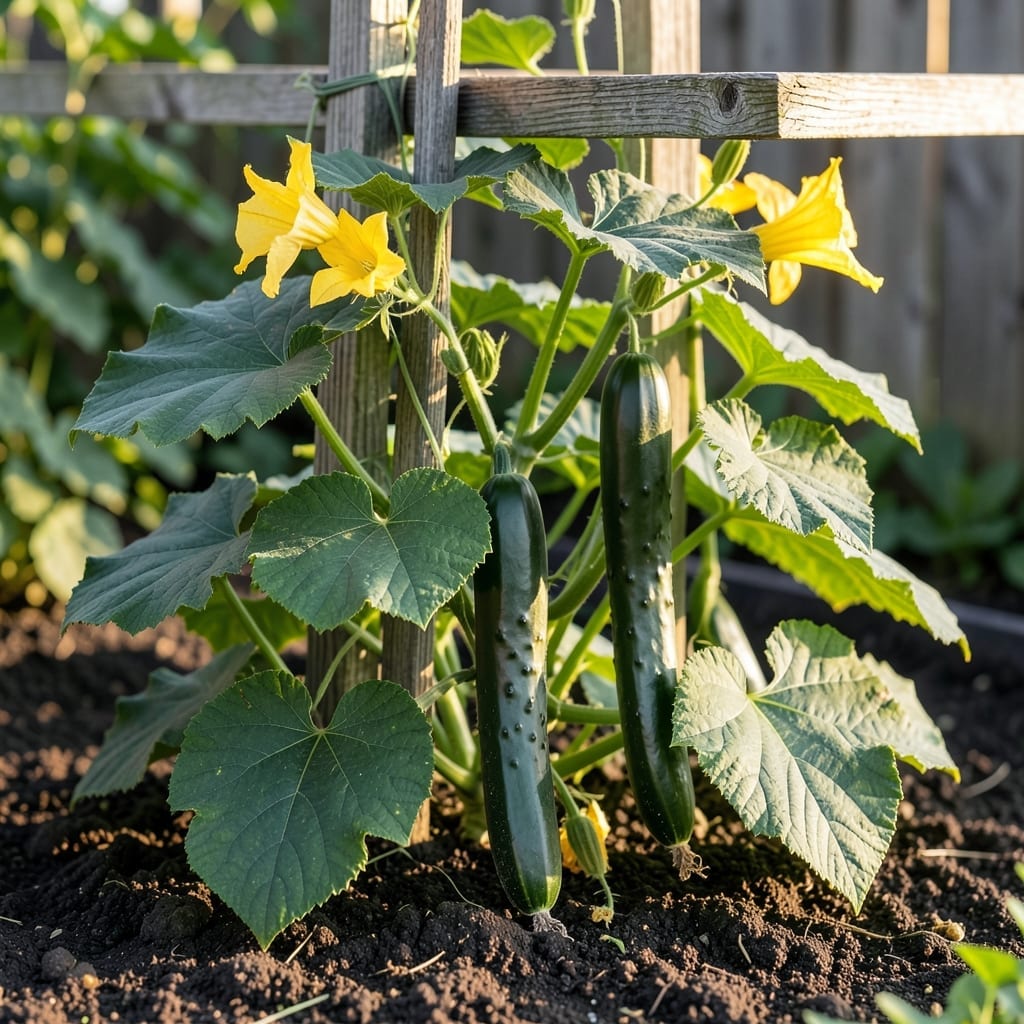
Strong cucumber roots mean bigger harvests and fewer problems. I learned this the hard way after losing plants to poor drainage.
These roots need loose soil, consistent moisture, and room to spread. Get this right and you’ll see vibrant vines and steady fruit production all season.
📚 In This Guide
Here’s how I ensure strong root development for thriving cucumber plants every season.
Begin by working the soil to a depth of 12-18 inches, removing any rocks or debris that could obstruct root expansion. Cucumber roots spread widely but remain relatively shallow, typically staying within the top 6-12 inches of soil. I always amend with plenty of organic matter to improve drainage while maintaining moisture retention.
The ideal soil texture should crumble easily in your hand but hold its shape when squeezed. Avoid compacting the soil as you work—roots need loose, aerated conditions to establish properly. Test drainage by digging a 1-foot hole and filling it with water. If it drains completely within 1 hour, your soil is ready.
When transplanting seedlings, handle them by the leaves rather than the stem to prevent damage to the delicate root system. Plant at the same depth they were growing in their containers, and space plants 36-60 inches apart to accommodate their extensive root spread. I’ve found that wider spacing produces more vigorous root systems.
For direct sowing, plant seeds 1 inch deep and 12 inches apart, thinning to the final spacing once the first true leaves appear. The initial roots will emerge within 3-10 days of germination. Water immediately after planting to settle the soil around the roots and eliminate air pockets.
Cucumber roots require consistent moisture but cannot tolerate waterlogged conditions. I water deeply at the base of the plant, providing 1-2 inches of water per week, more during hot, dry periods. The key is to keep the soil evenly moist but never soggy—roots will rot in standing water.
Check soil moisture by inserting your finger 1 inch deep. If it feels dry at that depth, it’s time to water. Mulching with 2-3 inches of organic material helps maintain consistent soil moisture and temperature, both crucial for root health. Avoid overhead watering to prevent disease and root disturbance.
Cucumbers are heavy feeders, and their root systems need steady nutrition throughout the growing season. I apply a balanced, water-soluble fertilizer every 2-3 weeks once the plants begin to vine. Be careful not to over-fertilize, as excess nitrogen can lead to lush foliage at the expense of root development.
Watch for signs of nutrient deficiency, such as yellowing leaves or stunted growth, which often indicate the roots aren’t accessing enough nutrients. A side-dressing of compost mid-season provides a slow-release boost that supports both root and foliar growth. Always water before and after fertilizing to prevent root burn.
Regularly inspect the base of your plants for signs of stress or disease. Healthy cucumber roots are white and firm, while problematic roots may appear brown, mushy, or have a foul odor. I gently dig a small hole near the plant base to check root condition if I suspect issues.
Prevent root damage by avoiding excessive cultivation near the plant base. The feeder roots, which absorb most of the water and nutrients, are particularly vulnerable to disturbance. If you notice wilting during the heat of the day that doesn’t recover by evening, it may indicate root stress—adjust your watering schedule immediately.
Small details make the difference between struggling plants and a thriving root system.
Soil Preparation Tip: When working the soil to that critical 12-18 inch depth in Step 1, resist the urge to compact it afterward. I learned this the hard way after wondering why my cucumbers underperformed—loose, aerated soil allows roots to spread freely within their natural 6-12 inch zone.
Planting Wisdom: The 36-60 inch spacing in Step 2 isn’t arbitrary. Cucumber roots spread aggressively, and crowding leads to competition for water and nutrients. For direct sowing, that 1 inch planting depth is just deep enough to anchor seeds without hindering emergence, which should happen within 3-10 days.
Moisture Management: That 1-2 inches of water per week in Step 3 is a baseline. In extreme heat, I’ve needed to double this. Always check moisture at that 1 inch depth—if your finger comes out clean, it’s time to water. And remember, that 2-3 inch mulch layer isn’t just for moisture retention; it also insulates roots from temperature swings.
Monitoring Insight: Step 5’s advice about wilting is gold. If your plants droop during midday heat but recover by evening, it’s normal. But if they stay wilted overnight, it’s a red flag that your watering schedule needs adjustment—usually meaning you’re either over or under-watering.
Cucumber roots typically grow 12–24 inches deep, but they spread widely (up to 3–4 feet) near the surface. Most roots stay in the top 6–12 inches of soil, so keep the soil loose and well-drained for optimal growth.
Yes, but it depends on the extent. Minor damage (e.g., from transplanting) often heals as the plant grows new roots. Severe damage may stunt growth—avoid disturbing roots and provide consistent moisture to aid recovery.
Water deeply 1–2 times per week, ensuring the top 1–2 inches of soil stay moist (but not soggy). Drip irrigation is ideal to keep roots hydrated without wetting the foliage, reducing disease risk.
Yellowing leaves, wilting, or stunted growth may indicate root rot, nutrient deficiency, or pests. Check for mushy, dark roots (rot) or dry, brittle ones (underwatering). Adjust care accordingly.
Not necessarily! Cucumbers thrive in loose, well-draining soil at least 12 inches deep. If your soil is shallow, use raised beds or containers (minimum 12-inch depth) to accommodate root growth.