
Beautiful Plants For Your Interior
Beautiful Plants For Your Interior
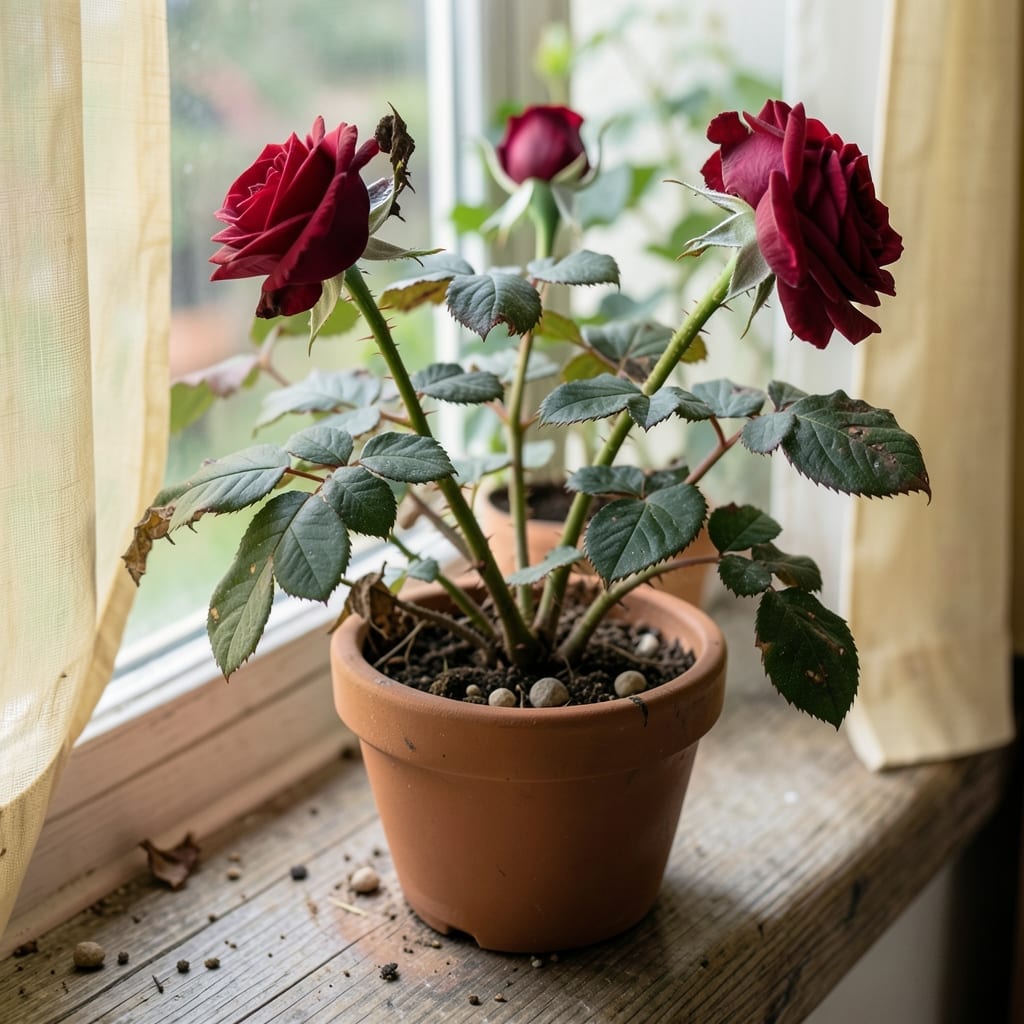
That sickly rose on your windowsill isn’t done for yet. I’ve brought back more dying indoor roses than I can count, and the fix is always simpler than you think.
The usual suspects are overwatering, dim light, or the wrong pot. Most people kill their roses with kindness—too much water, too little air flow. A few tweaks to your routine can turn yellowing leaves into vibrant green growth.
Within 2 weeks, you’ll see new buds forming if you catch it early. The key is acting fast and addressing the root cause, not just the symptoms.
Works for mini roses, hybrid teas, or any potted variety struggling indoors. Let’s diagnose and revive it.
Indoor roses are sensitive to their environment, and even small imbalances can lead to decline. Here’s why your indoor rose plant might be dying, broken down by the most common causes:
Roses hate “wet feet.” When soil stays soggy, roots suffocate and rot due to oxygen deprivation and Pythium or Phytophthora fungi. Clay pots or compacted soil worsen this. Fix: Water only when the top 1–2 inches of soil are dry, and ensure pots have drainage holes.
Indoor roses thrive at 60–75°F (15–24°C) with 40–50% humidity. Dry air (common in heated homes) causes leaf edges to brown and drop. Conversely, cold drafts (below 50°F/10°C) or heat sources (radiators, vents) shock the plant, halting growth. Fix: Use a pebble tray with water or a humidifier, and keep roses away from drafts or direct heat.
Roses need 6–8 hours of bright, indirect light daily for photosynthesis. Weak or leggy stems, pale leaves, and zero blooms signal light starvation. South-facing windows are ideal; north-facing or dim rooms often fail them. Fix: Move to a sunnier spot or supplement with grow lights (LED full-spectrum, 12–16 hours/day).
Yellowing leaves (starting at the bottom) or stunted growth often mean nitrogen or iron deficiency. Over-fertilizing, however, burns roots with salt buildup. Fix: Use a balanced, water-soluble fertilizer (10-10-10 NPK) every 2–4 weeks in growing season, and flush soil monthly to prevent salt accumulation.
Spider mites, aphids, and thrips suck sap from leaves, causing yellowing, webbing, or distorted growth. These pests thrive in dry, stagnant air. Fix: Wipe leaves with neem oil or insecticidal soap, and increase airflow with a gentle fan.
Bringing your indoor rose back to life starts with pinpointing the issue and applying the right fix. Below are the most common causes and their practical solutions, plus tips to keep your plant thriving long-term.
Fix: Check the soil—if it’s bone dry, give it a deep watering until water drains from the bottom. If it’s soggy, stop watering and let it dry out. For severe overwatering, repot the plant in fresh, well-draining soil. Use a pot with drainage holes to prevent root rot.
Prevention: Water only when the top inch of soil feels dry. Stick to a consistent schedule, but adjust for seasonal changes. 💡Pro tip: Use a moisture meter for precision.
Fix: Move your rose to a bright, indirect light source, like an east- or south-facing window. If natural light is limited, supplement with a grow light for 12-14 hours a day.
Prevention: Rotate the plant weekly to ensure even light distribution. Avoid harsh, direct sunlight, which can scorch the leaves.
Fix: Keep your rose in a stable environment (65-75°F). If the air is too dry, place a tray of water near the plant or use a humidifier. For cold drafts, move it away from windows or doors during winter.
Prevention: Avoid placing the plant near heaters, AC vents, or drafty areas. Grouping plants together can also boost humidity naturally. ✨
Fix: Wipe leaves with a damp cloth to remove pests like aphids or spider mites. For stubborn infestations, use insecticidal soap or neem oil, applying every 5-7 days until the pests are gone.
Prevention: Inspect new plants before bringing them indoors. Keep leaves clean and isolate infected plants to prevent spreading.
Fix: Feed your rose with a balanced, water-soluble fertilizer (10-10-10) every 2-4 weeks during the growing season. If leaves are yellow with green veins, use a magnesium supplement like Epsom salt.
Prevention: Repot every 1-2 years with fresh potting mix to replenish nutrients. Reduce fertilizing in winter when growth slows.
Water only when the top 1-2 inches of soil are dry. Overwatering is the most common killer, so check with your finger before adding more.
Yellow leaves often signal overwatering or nutrient deficiency. Check soil moisture first, then consider a balanced fertilizer if the problem persists.
Tap water is fine for most roses, but if yours is sensitive, let it sit out for 24 hours to allow chlorine to dissipate.
Repot every 1-2 years or when roots grow out the drainage holes. Use fresh, well-draining soil to prevent disease.