
Beautiful Plants For Your Interior
Beautiful Plants For Your Interior
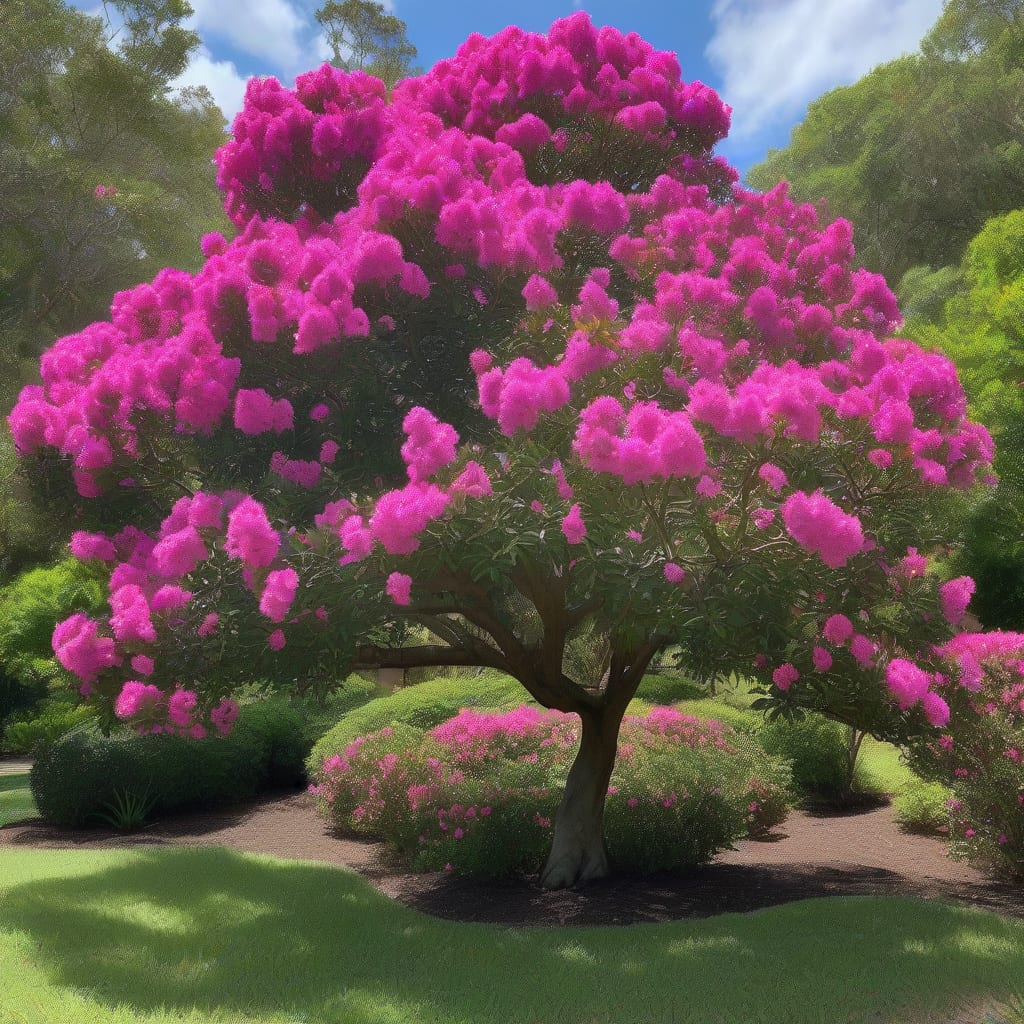
I’ve always been fascinated by the Crepe Myrtle 🌳 tree’s ability to grow into a stunning landscape feature. With proper care, these trees can reach impressive heights, transforming any garden into a vibrant summer spectacle.
Understanding how tall your Crepe Myrtle can grow is crucial for planning your garden layout, especially in USDA Zone 6 where they thrive. Let’s explore the factors that influence their growth and maximum height potential.


I’ve found that understanding the factors that influence Crepe Myrtle tree height is crucial for garden planning. The height of these beautiful trees can vary significantly based on several key factors 🌳.
The primary factors that affect Crepe Myrtle growth include soil quality, sunlight exposure, watering practices, pruning techniques, and cultivar variations. Each of these elements plays a significant role in determining the ultimate height of the tree.
These factors interact to determine the final height of a Crepe Myrtle tree. For example, a tree grown in poor soil with inadequate sunlight will likely be smaller than one grown in optimal conditions.
Soil quality is particularly important as it affects nutrient availability and water drainage. Crepe Myrtles prefer well-draining soil that is rich in organic matter 🌿.
Sunlight exposure is another critical factor. Trees receiving full sun tend to grow taller and produce more vibrant blooms than those in shadier conditions ☀️.
Watering practices also impact growth. While Crepe Myrtles are relatively drought-tolerant once established, consistent moisture during the growing season promotes healthier and more vigorous growth 💧.
Pruning techniques can significantly influence the height and shape of Crepe Myrtle trees. Regular pruning not only controls height but also encourages more blooms and maintains the tree’s natural grace ✂️.
Different Crepe Myrtle cultivars have varying growth habits and maximum heights. Some dwarf varieties naturally remain smaller, while standard varieties can grow much taller 🌳.
Understanding these factors helps gardeners make informed decisions about planting and caring for their Crepe Myrtle trees.
By optimizing growing conditions and choosing the right cultivar, gardeners can help their Crepe Myrtle trees reach their full potential height 🌟.
The combination of proper care and suitable growing conditions allows Crepe Myrtle trees to thrive and achieve their maximum height potential.
For gardeners in USDA Zone 6, understanding these growth factors is particularly important for successful cultivation.
I’ve found that Crepe Myrtle trees come in various cultivars, each with its own growth characteristics. Understanding these differences is essential for gardeners to make informed decisions 🌳.
The height of Crepe Myrtle trees can vary significantly depending on the cultivar. Let’s explore the maximum height potential of different varieties.
Dwarf varieties are perfect for smaller gardens or container planting. They typically grow between 8-12 feet tall, making them ideal for compact spaces 🌟.
Semi-dwarf varieties offer a middle ground, growing to be around 12-18 feet tall. They’re suitable for average-sized gardens where a moderate height is desired 🌿.
Standard varieties are the tallest, reaching heights of 20-30 feet. These are best suited for larger landscapes where their full growth potential can be realized 🌳.
When selecting a Crepe Myrtle variety, it’s essential to consider the mature height to ensure it fits your garden’s space and design.
By choosing the right cultivar, gardeners can better manage the height of their Crepe Myrtle trees and create a balanced landscape.
I manage Crepe Myrtle height effectively through proper pruning techniques and regular care. Understanding how to control their growth is essential for maintaining a balanced landscape 🌳.
Pruning is a critical aspect of Crepe Myrtle care. It not only helps control the tree’s height but also encourages more vibrant blooms and maintains its natural shape ✂️.
Prune your Crepe Myrtle in late winter or early spring before new growth begins.
Start by removing any dead or damaged branches to promote healthy growth.
Thin out the center of the tree to allow more sunlight to reach inner branches.
Shape your Crepe Myrtle to maintain its desired height and form.
Regular maintenance is also vital. This includes watering and fertilizing appropriately to support healthy growth 💧.
By following these pruning and care tips, you can effectively manage the height of your Crepe Myrtle trees and enjoy their beautiful blooms for years to come 🌼.
Crepe Myrtle trees are relatively low-maintenance, making them a great choice for gardeners of all experience levels 🌟.
Proper care ensures that your Crepe Myrtle remains healthy and thrives in your garden.
