
Beautiful Plants For Your Interior
Beautiful Plants For Your Interior
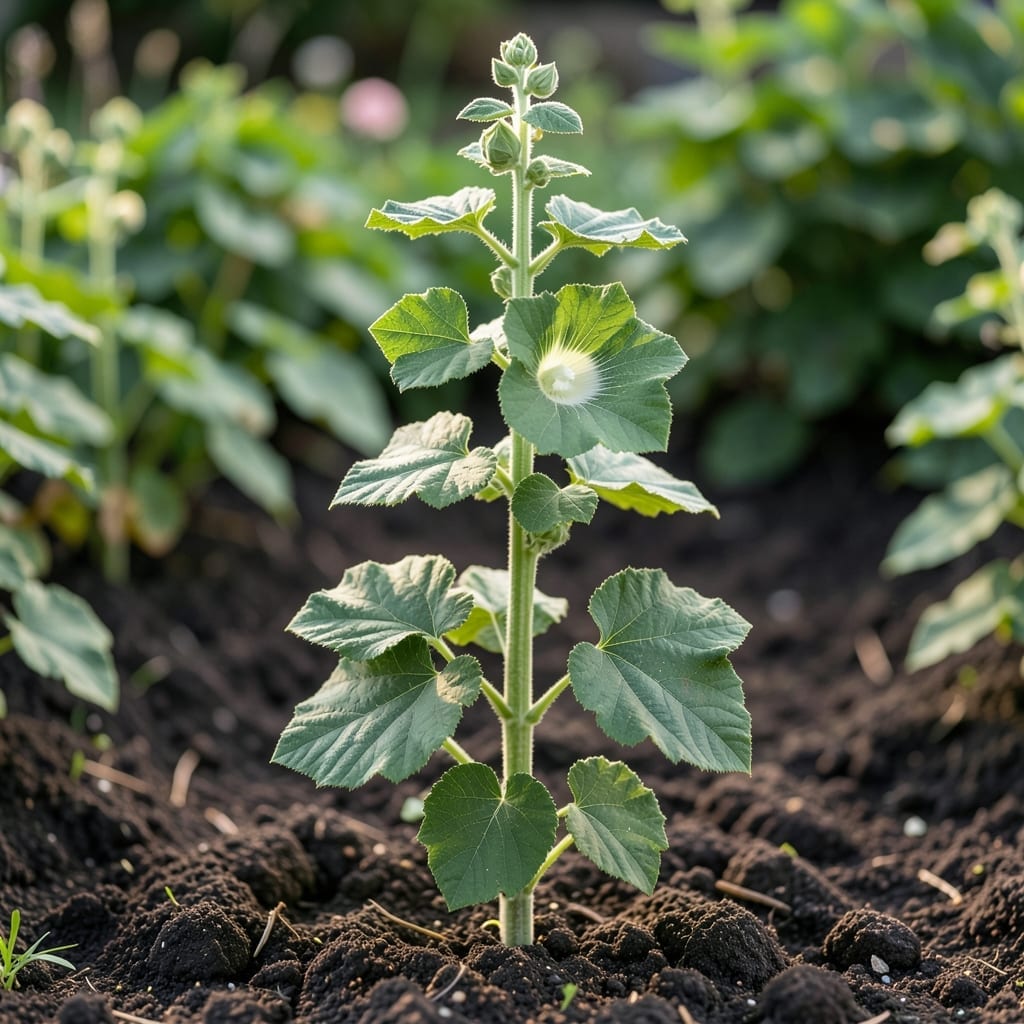
Spotted hollyhock leaves telling you something’s wrong? I’ve seen rust, aphids, and yellowing turn these tall beauties into sad sticks overnight.
These visual clues are your first defense. Catching problems early means saving the plant—and your garden’s vertical drama. Here’s how to read the leaves before it’s too late.
📚 In This Guide
Here’s how to recognize hollyhock foliage and distinguish healthy plants from those showing stress or disease.
Start by observing the overall form of the leaves. Hollyhock leaves are typically rounded to heart-shaped with 3-5 lobes, resembling maple leaves but with a softer, more irregular edge. They grow alternately along the stem, not in pairs or whorls.
A mature leaf can reach 6-8 inches across. The base of each leaf often has a slight indentation where it meets the stem. Young plants produce smaller leaves, but the shape remains consistent from the first true leaves onward.
Healthy hollyhock leaves have a slightly rough texture with visible veining that creates a quilted appearance. The surface feels slightly fuzzy, especially on the underside. This texture helps distinguish them from similar-looking plants like hibiscus.
Color should be a deep, vibrant green. Yellowing between veins often signals nutrient deficiency, while purple-tinged leaves can indicate phosphorus shortage. Pale green or yellow leaves with brown spots may suggest fungal issues like rust.
Note how leaves attach to the main stem. Hollyhocks produce leaves in an alternate pattern, meaning each leaf emerges at a different height on opposite sides of the stem. This creates a spiral effect as you move up the plant.
Lower leaves are larger and more lobed, while upper leaves become progressively smaller as they approach the flower spikes. The stem itself is often hairy, matching the leaf texture. This consistent pattern helps confirm identification even before flowers appear.
Inspect leaves for signs of trouble. Rust disease appears as orange-brown pustules on the undersides. Leaf spots show as dark brown or black circular patches with yellow halos. Powdery mildew creates a white, powdery coating on upper surfaces.
Physical damage often manifests as ragged edges from pests like Japanese beetles or slugs. Holes in the center of leaves typically indicate caterpillar activity. Note that lower leaves naturally yellow and die as the plant matures, which isn’t a cause for concern.
For absolute confirmation, compare your observations with known hollyhock traits. The leaves should be soft to the touch but sturdy, with prominent veins creating a raised pattern. The plant’s overall height can reach 5-8 feet when mature.
Remember that leaf size and shape can vary slightly between hollyhock varieties, but the lobed, heart-shaped pattern with fuzzy texture remains consistent. When in doubt, check multiple leaves at different heights on the stem for uniform characteristics.
Small details make the difference between confident identification and uncertainty.
Leaf Shape Clarity: In Step 1, look for those 3-5 lobes that give hollyhock leaves their maple-like appearance. The heart-shaped base with that slight indentation at the stem is the most distinctive feature—you might miss it if you’re only looking at the leaf tips.
Texture Check: Step 2 mentions the fuzzy underside, but here’s what nobody tells you—this texture is most pronounced on younger leaves. The quilted veining pattern becomes more visible as the leaf matures, so check both old and new growth for confirmation.
Pattern Recognition: The alternate leaf arrangement in Step 3 creates that spiral effect up the stem. Don’t make my mistake: I once confused hollyhocks with a similar plant that had opposite leaf pairs. Always trace the stem from bottom to top to see the alternating pattern.
Problem Identification: For Step 4, remember that rust disease pustules always appear on the undersides first. If you see orange-brown spots on top surfaces, it’s likely a different fungal issue. Also, those lower leaves yellowing naturally? Perfectly normal and not a disease sign.
Healthy hollyhock leaves are large, rounded, and vibrant green with slightly lobed edges. They should appear firm and free of spots, holes, or yellowing.
Yellowing leaves often indicate overwatering, poor drainage, or fungal diseases like rust. Check soil moisture and look for brown spots or powdery mildew for clues.
Compare your plant’s leaves to images of common issues: rust (orange spots), powdery mildew (white coating), or sawfly damage (skeletonized leaves). Use trusted gardening resources for reference.
Act at the first sign of trouble—early morning is ideal for applying fungicides or removing affected leaves. Prompt treatment prevents spread and saves the plant.
If hollyhocks struggle in your climate, try hardier substitutes like hibiscus or mallows, which share similar blooms but may resist pests/diseases better.