
Beautiful Plants For Your Interior
Beautiful Plants For Your Interior
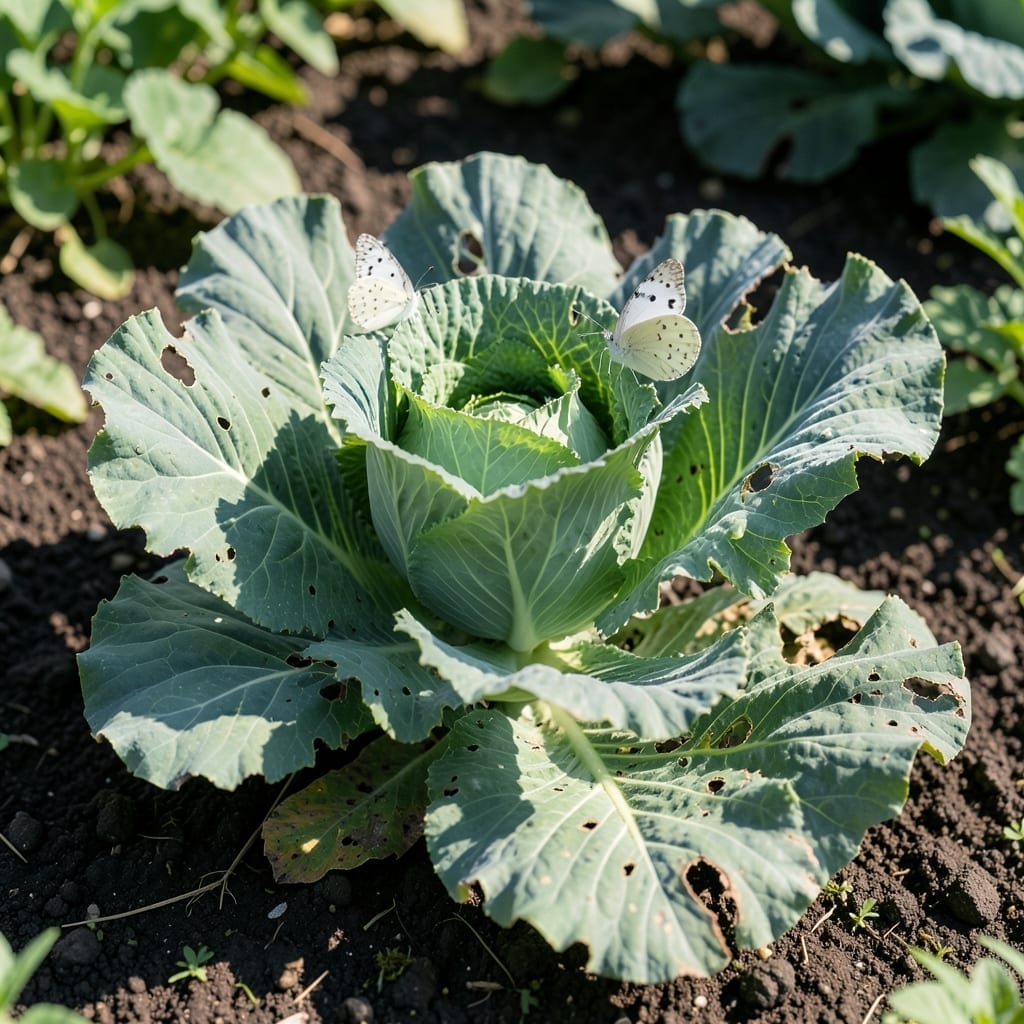
Those delicate white flutterers in your garden aren’t just pretty—they’re cabbage whites laying eggs that hatch into leaf-devouring caterpillars. I learned this the hard way after watching my kale disappear overnight.
Here’s the thing—you can spot their damage before you see the butterflies. Look for irregular holes in brassicas and mustards, then act fast with row covers or hand-picking to stop the cycle.
📚 In This Guide
Here’s the method I use to identify and control these pests before they damage your plants.
First, confirm you’re dealing with cabbage white butterflies (Pieris rapae), not harmless moths or other insects. Look for white wings with 1-2 black spots on the forewings and a wingspan of about 1.5-2 inches. You’ll often spot them fluttering around brassica plants like cabbage, broccoli, and kale during daylight hours.
The real damage comes from their larvae—green caterpillars with faint yellow stripes. Check the undersides of leaves for tiny yellow eggs laid singly, which hatch in 4-8 days. I’ve found that catching the adults early prevents the far more destructive caterpillar stage.
Use floating row covers made of lightweight spun-bonded polyester to create a physical barrier. Drape them over plants and secure the edges with soil, bricks, or sandbags. This prevents butterflies from laying eggs while still allowing light and water through.
For best results, install covers before adults appear in spring or immediately after harvesting a crop. Remove them only when plants need pollination. I’ve seen this method reduce infestations by 90% when applied consistently.
Encourage beneficial insects like parasitic wasps (Cotesia glomerata) which lay eggs inside the caterpillars. You can purchase these online or attract them by planting nectar-rich flowers like alyssum, dill, or yarrow near your garden.
Also consider ground beetles and lacewings, which feed on both eggs and young larvae. A diverse garden ecosystem with permanent plantings and mulch provides the habitat these predators need. I maintain a small patch of clover specifically to support these beneficial insects.
For immediate control, use Bacillus thuringiensis var. kurstaki (Btk), a natural bacteria that targets only caterpillars. Apply in the early morning or late evening when caterpillars are most active. Mix according to package directions and spray thoroughly, especially on leaf undersides.
Reapply after rain or every 7-10 days while butterflies are active. I’ve found Btk most effective when applied to young larvae—once they grow larger, they’re harder to control. Always wear protective gear when spraying, even with organic products.
Rotate crops yearly and avoid planting brassicas in the same spot more than once every 3 years. Interplant with strongly scented herbs like thyme, rosemary, or mint to confuse adult butterflies looking for host plants.
After harvest, remove all plant debris and till the soil to expose pupae to predators and harsh weather. I’ve reduced overwintering populations significantly by being meticulous with fall cleanup. Companion planting with nasturtiums can also help—they act as a trap crop, attracting butterflies away from your main crops.
Took me a few seasons to refine these, but they make all the difference.
Identification Insight: In Step 1, pay close attention to the 1.5-2 inch wingspan and those distinctive black spots on white wings. I initially confused these with harmless moths until I noticed they were only active during daylight hours around my brassicas. The yellow eggs on leaf undersides are a dead giveaway.
Barrier Timing: For Step 2, the key is installing floating row covers before adults appear in spring. I made the mistake of waiting until I spotted butterflies, which meant eggs were already laid. Secure all edges completely—I once left a small gap and still ended up with caterpillars.
Predator Support: In Step 3, don’t just plant nectar flowers and call it done. A diverse ecosystem with permanent plantings and mulch is what really keeps ground beetles and lacewings around. I dedicated a corner of my garden to clover specifically for this purpose, and my beneficial insect population exploded.
Spray Timing: The early morning or late evening application in Step 4 isn’t arbitrary. Caterpillars are most active then, and you’ll avoid harming pollinators. Also, reapplying every 7-10 days is crucial—I learned this after a rainstorm washed away my first application and the caterpillars came back with a vengeance.
Yes, they can be. Little white butterflies (like cabbage whites) lay eggs that hatch into caterpillars, which feed on leaves of brassicas, nasturtiums, and other plants, causing significant damage if left unchecked.
They’re most active during warm, sunny months, typically from spring to early fall. Peak activity occurs in midday when they seek nectar and lay eggs, so monitor your garden closely during this time.
Use floating row covers to block adults, introduce natural predators like parasitic wasps, or spray neem oil on plants. Companion planting with thyme or mint can also deter them.
They target brassicas (cabbage, kale, broccoli), as well as radishes, alyssum, and nasturtiums. These plants are primary hosts for their eggs and caterpillars.
Eggs may have already been laid and hidden under leaves. Inspect plants thoroughly and remove eggs or caterpillars by hand, or use organic sprays like Bacillus thuringiensis (Bt) for control.