
Beautiful Plants For Your Interior
Beautiful Plants For Your Interior
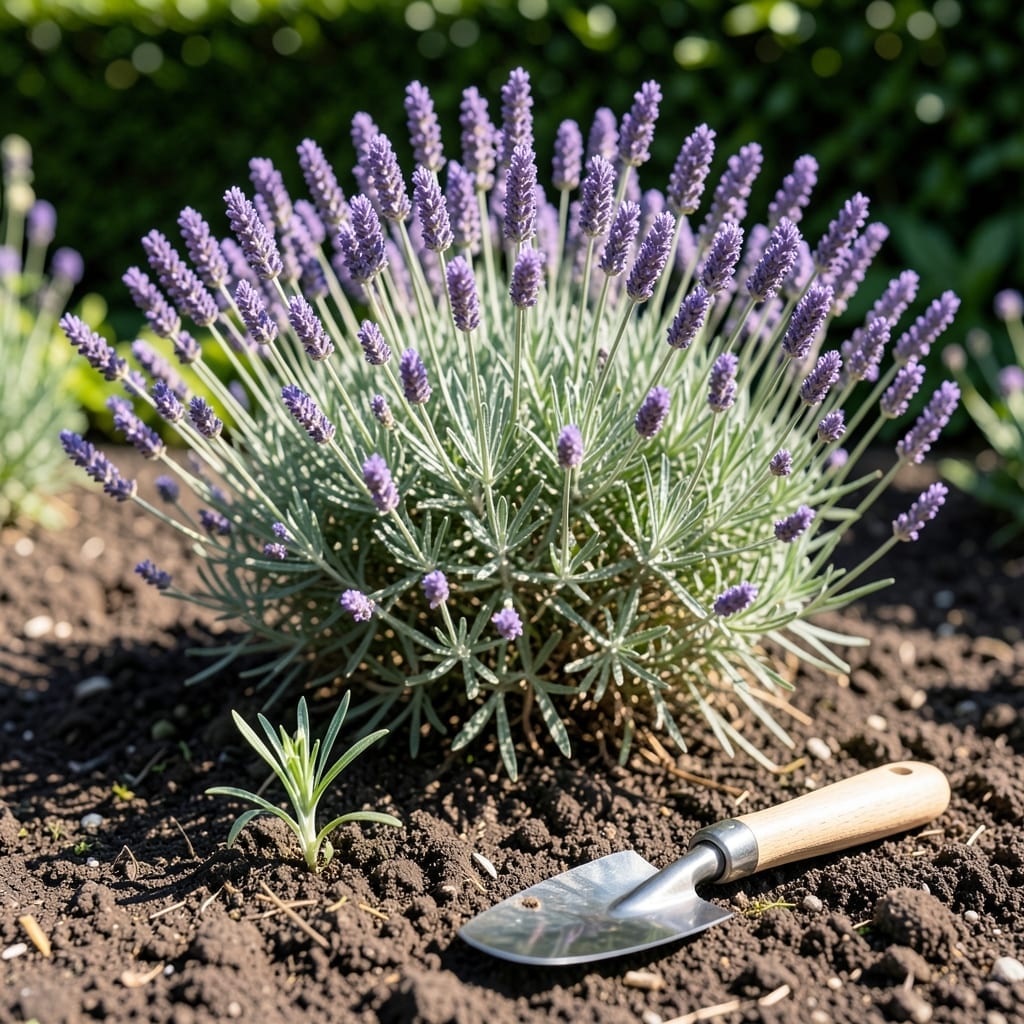
I planted my first lavender three seasons ago and killed it with kindness. Too much water, too much love, too much rich soil—exactly what this plant doesn’t want.
Get the conditions right and you’ll have fragrant purple blooms every summer with almost no effort. Dry soil, full sun, and good drainage are the only rules. Simple, but non-negotiable.
📚 In This Guide
Here’s the method I rely on for establishing lavender that thrives and blooms abundantly each season.
Select a spot with full sun exposure—lavender needs at least 6-8 hours of direct sunlight daily to produce its signature fragrant blooms. Without sufficient light, plants become leggy and fail to flower. I always check the area at different times of day to confirm it isn’t shaded by nearby structures or trees.
Ensure the soil is well-draining. Lavender hates wet feet, and soggy roots will quickly kill the plant. If your garden has heavy clay, consider planting in a raised bed or amending the soil with compost and coarse sand to improve drainage.
Lavender thrives in lean, slightly alkaline soil with a pH between 6.5 and 7.5. I test my soil first—if it’s too acidic, I add a handful of lime to raise the pH. Work the soil to a depth of about 12-15 inches, breaking up any clumps and removing weeds or debris.
Avoid overly rich soil. Lavender doesn’t need fertile ground; in fact, too much organic matter can cause excessive leafy growth at the expense of flowers. If your soil is very poor, a light addition of compost is fine, but don’t overdo it.
Dig a hole just deep enough to accommodate the root ball, but twice as wide as the container. Place the plant in the hole so the top of the root ball is level with the surrounding soil. Planting too deep can suffocate the stems and lead to rot.
Space plants 2-3 feet apart to allow for good air circulation, which helps prevent fungal diseases. If you’re planting a hedge, space them 18-24 inches apart for a denser look. Water each plant lightly after planting to settle the soil around the roots.
Water newly planted lavender once or twice a week for the first 2-3 weeks, allowing the soil to dry out slightly between waterings. This encourages deep root growth. After establishment, lavender is extremely drought-tolerant and will only need occasional watering during prolonged dry spells.
Always water at the base of the plant, keeping the foliage dry. Wet leaves can lead to mold or mildew, especially in humid climates. I use a soaker hose or drip irrigation to deliver water directly to the roots where it’s needed most.
After flowering, prune back the spent flower stems by about one-third of their length. This encourages a second bloom and keeps the plant compact. Avoid cutting into old wood, as lavender doesn’t regenerate well from woody stems.
In early spring, shape the plant by trimming back any straggly growth. This maintains a neat appearance and promotes bushier growth. Always use clean, sharp pruners to make clean cuts, and never remove more than one-third of the plant at a time.
Here’s how to avoid the pitfalls that often trip up new lavender growers.
The Sunlight Essential: Those 6-8 hours of direct sunlight daily in Step 1 aren’t just a suggestion—they’re mandatory. Confession: I learned this the hard way when my first lavender planting turned into a sad, leggy mess under a tree canopy. If your space gets less, skip lavender and opt for shade-loving herbs instead.
Drainage is Non-Negotiable: In Step 2, when working the soil to 12-15 inches deep, add coarse sand or gravel if you have clay. Lavender roots rot in soggy soil faster than you can say “wet feet.” A raised bed is your best friend in heavy soil areas.
Planting Depth Warning: Step 3 says to keep the root ball level with the soil, and here’s why: Planting too deep suffocates the stems. I’ve seen gardeners bury the base of the plant thinking it’ll be more stable, only to watch it rot within weeks. Trust the process—shallow is better.
Watering Wisdom: The once or twice a week for 2-3 weeks in Step 4 is designed to force roots to grow deep. Resist the urge to baby your lavender with daily watering. After establishment, you’ll barely need to water at all—overwatering is the #1 killer of mature plants.
The ideal time is in spring after the last frost or early fall before the first frost. This gives the plant time to establish roots before extreme temperatures.
Yes! Use a well-draining pot (at least 12 inches deep) and a gritty potting mix. Ensure the container has drainage holes to prevent root rot.
Overwatering is the most common cause. Lavender thrives in dry soil—water only when the top inch is dry. Check for root rot if wilting persists.
English lavender (Lavandula angustifolia) is hardy, drought-tolerant, and easy to grow, making it perfect for new gardeners.
Prune right after flowering (late summer) to shape the plant and encourage new growth. Avoid cutting into old wood, as it may not regrow.