
Beautiful Plants For Your Interior
Beautiful Plants For Your Interior
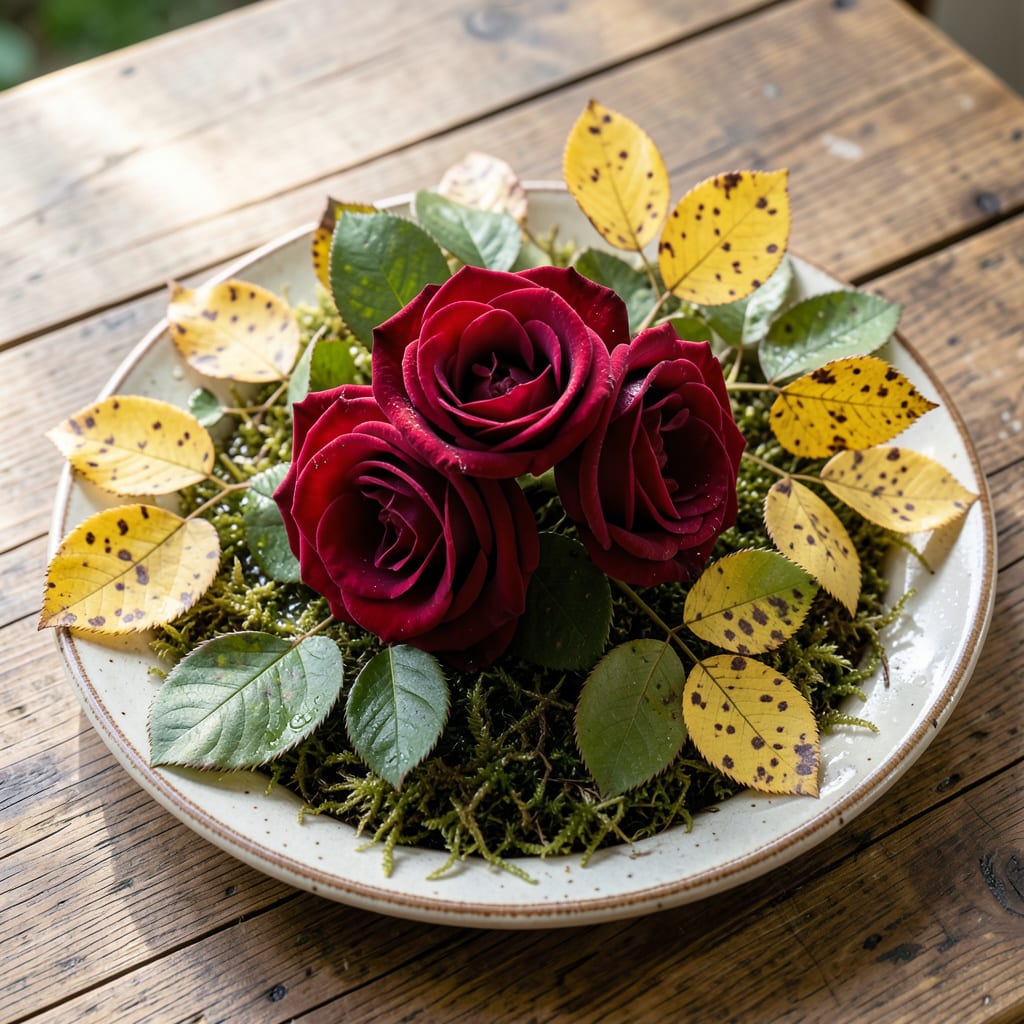
Yellow leaves with brown spots on your roses aren’t just unsightly—they’re a distress signal. I’ve seen this pattern wipe out entire bushes if left unchecked, but the good news is it’s usually fixable with the right approach.
The most common culprit is black spot fungus, but nutrient issues and pests can mimic the same symptoms. Early diagnosis saves time and plants. Here’s how to identify the problem and stop it in its tracks.
📚 In This Guide
Here’s my step-by-step approach to diagnosing and treating fungal issues on your roses.
Examine the leaves closely for yellow halos around brown spots—this is a classic sign of black spot fungus, the most common culprit. Check the undersides too, where purple or black speckling often appears. I’ve found these symptoms usually start on lower leaves first, where moisture lingers longest.
Note the weather pattern: fungal spores thrive in wet, humid conditions with temperatures between 65-75°F. If your roses have been exposed to overhead watering or recent rain, that’s likely the trigger. Don’t assume it’s just a nutrient deficiency—fungal infections spread fast if untreated.
Prune off all affected leaves and stems immediately using clean, sharp shears. Cut at least 2 inches below any visible spots to ensure you’ve removed the entire infected area. This prevents the fungus from spreading to healthy tissue.
Don’t compost these clippings—toss them in the trash or burn them. I learned the hard way that even a few overlooked leaves can reintroduce the problem. Sterilize your tools afterward with rubbing alcohol to avoid contaminating other plants during your next pruning session.
Thin out dense growth in the center of the bush to allow better airflow. Fungal spores need moisture to germinate, so reducing humidity around the leaves is critical. I aim for an open, vase-like shape that lets light and air penetrate the center.
Water at the base of the plant using a soaker hose or drip irrigation, never from above. If you must use a sprinkler, do it early in the day so foliage dries by evening. Morning watering gives leaves 6-8 hours of sunlight to dry completely.
Choose a fungicide labeled for black spot—copper-based sprays or neem oil work well for organic gardeners. Mix according to package instructions and apply on a dry, overcast day to prevent leaf burn. Cover both the tops and undersides of leaves thoroughly.
Reapply every 7-10 days or after rain, as water can wash away protection. I’ve had the best results with a preventive schedule: start treatments in early spring or at the first sign of humidity, before spots appear. Consistency is key—one application won’t break the fungal life cycle.
Fungus targets stressed plants, so boost your roses’ resilience with proper care. Ensure they’re getting 6+ hours of sun daily and aren’t crowded by other plants. Mulch with 2-3 inches of organic material to prevent soil-borne spores from splashing onto leaves during rain.
Feed with a balanced fertilizer to promote vigorous growth, but avoid high-nitrogen formulas that produce soft, fungus-prone foliage. I switch to a lower-nitrogen, higher-phosphorus feed once the plant is established to encourage stronger cell walls that resist infection better.
These practical insights will help you tackle fungal issues on your roses more effectively.
The Temperature Factor: Fungal spores thrive in temperatures between 65-75°F, so monitor your roses closely during these conditions. I’ve noticed that early morning or late evening—when temperatures often fall in this range—is when infection risk is highest. Keep an eye on weather forecasts and act preventively when this temperature window is predicted.
Pruning Precision: In Step 2, when removing infected foliage, cutting at least 2 inches below visible spots is crucial. I learned this the hard way after a fungal outbreak spread because I didn’t prune aggressively enough. Use sharp shears to make clean cuts, and always sterilize your tools between plants to prevent cross-contamination.
Watering Wisdom: Morning watering gives leaves 6-8 hours of sunlight to dry completely, as mentioned in Step 3. If you must water in the evening, use a soaker hose to keep foliage dry. I’ve found that roses watered at the base with drip irrigation have significantly fewer fungal issues than those watered from above.
Treatment Timing: The 7-10 day reapplication schedule in Step 4 is non-negotiable. I’ve seen fungal infections return when gardeners stretched this interval to 14 days. Set a calendar reminder to stay consistent—this is especially important after rain, which can wash away your fungicide protection completely.
This is often caused by fungal diseases like black spot or rust, which thrive in wet, humid conditions. Poor drainage or nutrient deficiencies can also contribute. Check for dark spots with feathery edges, a classic sign of fungal infection.
Remove infected leaves immediately and apply a fungicide like neem oil or copper-based sprays. Improve air circulation around the plant and avoid overhead watering. Keep the area clean to prevent spores from spreading.
Yes! Overwatering leads to root rot, which stresses the plant and can cause yellowing leaves with brown spots. Ensure your roses are planted in well-draining soil and water only when the top inch of soil feels dry.
Absolutely! Try spraying a mixture of baking soda and water (1 tbsp per gallon) or use compost tea to boost plant health. Regularly prune affected areas and maintain good garden hygiene to prevent recurrences.
