
Beautiful Plants For Your Interior
Beautiful Plants For Your Interior
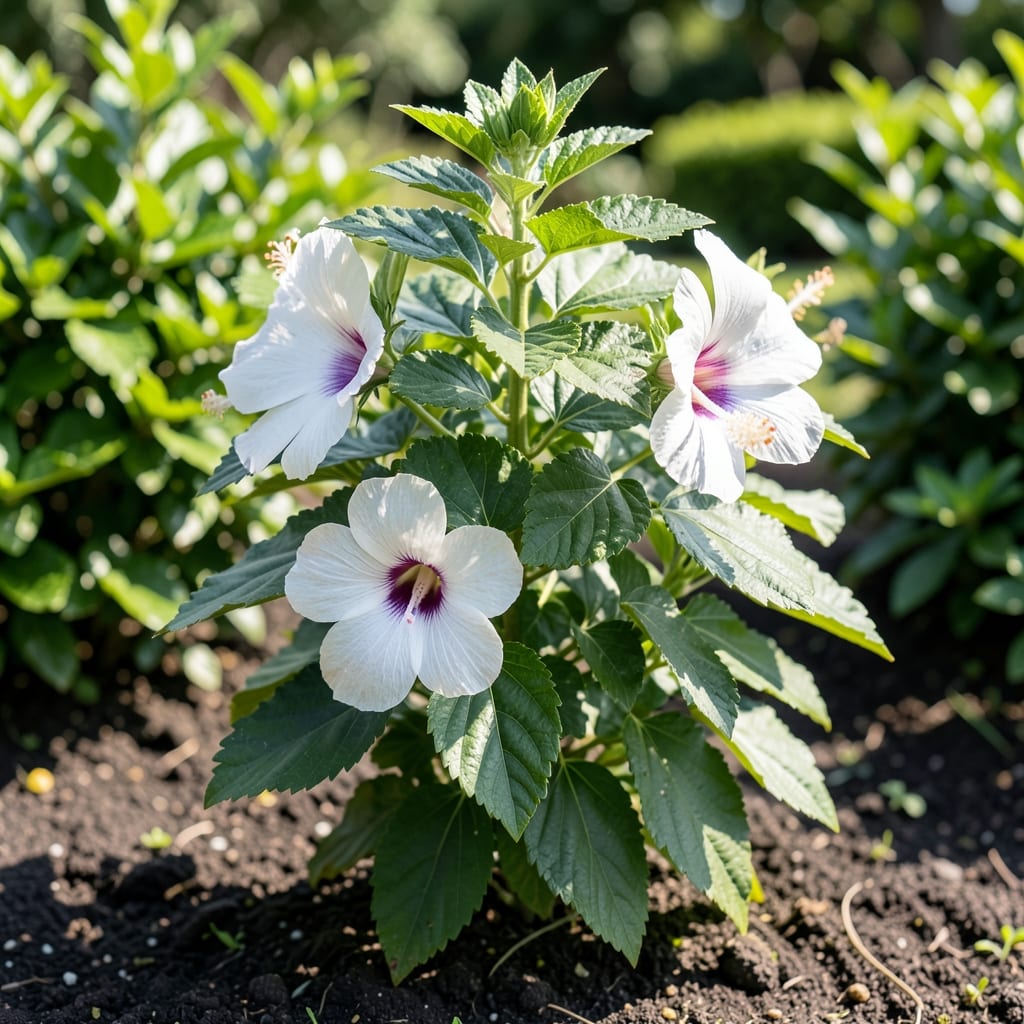
Those brown spots on your rose of Sharon leaves aren’t just ugly—they’re a warning sign. I’ve watched leaf spot disease spread through my garden, turning vibrant foliage into a polka-dotted mess in weeks.
Early diagnosis means the difference between saving your shrub and losing it. You’ll spot the telltale yellow halos and dark centers, then learn exactly how to stop the damage before it takes over.
📚 In This Guide
Here’s the method I use to accurately identify leaf spot disease on hibiscus syriacus every time.
Start by inspecting the upper surface of mature leaves under good lighting. Leaf spot disease typically appears as circular or irregular brown lesions with dark purple or black margins. These spots often begin as small, water-soaked areas that gradually expand.
I’ve found that using a hand lens helps reveal the subtle concentric rings that develop within the lesions as they mature. The tissue within these spots often becomes dry and papery, sometimes falling out to create a shot-hole appearance.
Turn the leaves over to examine the undersides, where symptoms often appear first. On hibiscus syriacus, you’ll typically see raised, pustule-like structures in the center of the lesions. These are the fungal fruiting bodies producing spores.
The lower surface may also show yellowing around the spots before it becomes visible on the upper surface. This is particularly noticeable in early stages of infection. I always check both sides because some infections start subtly on the underside.
Observe how the spots are distributed across the plant. Leaf spot disease on hibiscus syriacus often begins on the lower, older leaves first, then progresses upward. The spots frequently cluster along leaf margins or between veins.
In severe cases, you’ll notice premature leaf drop, with affected leaves turning yellow before falling. This pattern of infection helps distinguish it from other issues like nutrient deficiencies, which typically affect the entire plant uniformly.
Leaf spot thrives in warm, humid conditions with temperatures between 75-85°F. I check my plants most carefully during periods of prolonged leaf wetness, as the fungus needs 6-12 hours of moisture to infect.
Overhead watering and poor air circulation create perfect conditions for this disease. You’ll often see more severe symptoms on plants in crowded garden beds or those watered late in the day when leaves can’t dry quickly.
These observations will help you refine your diagnosis and avoid common pitfalls when inspecting plants.
The Lighting Factor: In Step 1, always examine mature leaves under bright, natural light or a strong LED lamp. Dim lighting can obscure the dark purple or black margins of lesions, making early detection nearly impossible. I’ve missed infections in shaded areas until the damage became severe.
Tool Recommendation: A hand lens, as mentioned in Step 1, is invaluable for spotting concentric rings within lesions. These subtle details often confirm leaf spot disease when other symptoms are ambiguous. Without magnification, you might overlook the papery texture that develops in advanced stages.
Timing Insight: The fungus requires 6-12 hours of moisture to infect, as noted in Step 4. This means you should inspect your plants after rain or watering sessions that leave foliage wet for extended periods. Morning checks are ideal, as dew provides the perfect conditions for infection.
Environmental Awareness: Since leaf spot thrives at temperatures between 75-85°F, be extra vigilant during summer months or in greenhouses where these conditions persist. Poor air circulation in crowded beds can exacerbate the problem, so prune for better airflow if you notice recurring issues.
Yellowing leaves with spots often indicate leaf spot disease, commonly caused by fungal or bacterial infections. Poor air circulation or excess moisture can worsen it. Remove affected leaves and improve growing conditions to prevent spread.
Treat leaf spot early in the season or at the first sign of symptoms. Apply fungicides in spring or early summer as a preventive measure. Avoid treating during rainy or humid periods to maximize effectiveness.
Yes! Neem oil is a natural fungicide that can help control leaf spot. Mix it with water and a mild soap, then spray it on affected leaves. Reapply every 7-10 days for best results.
Ensure good air circulation, avoid overhead watering, and keep the area clean of fallen leaves. Water at the base of the plant and use mulch to reduce soil splashing onto leaves.