
Beautiful Plants For Your Interior
Beautiful Plants For Your Interior
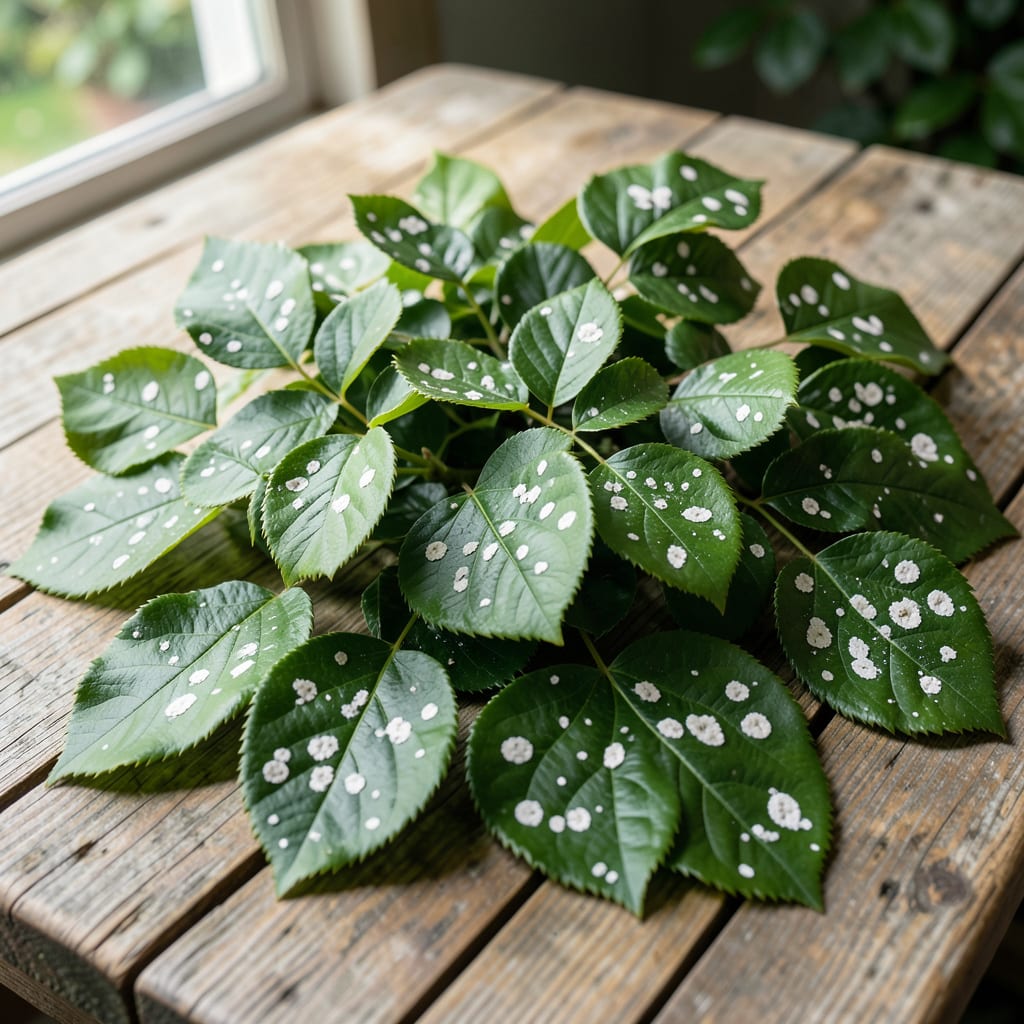
Spotted white splotches on your Rose of Sharon leaves aren’t just ugly—they’re a warning sign. I ignored them once and lost half my shrub by August.
These spots usually mean fungus, pests, or stress, but the good news is they’re all fixable with early action. Most cases clear up with better airflow and a simple organic spray.
Left untreated, the spots spread, leaves yellow, and your plant weakens. Catching it early means saving your shrub before it’s too late.
Works for new growth and established plants alike. Here’s how to diagnose and stop the damage fast.
White spots on Hibiscus syriacus (Rose of Sharon) leaves are rarely random. They’re usually your plant’s SOS signal for one of these underlying issues:
The most common culprit is powdery mildew (Podosphaera spp. or Erysiphe spp.), a fungal disease that thrives in high humidity (60-80%) and warm temps (60–80°F). Spores land on leaves, germinate, and form white, powdery patches that spread rapidly. Poor air circulation (e.g., crowded plantings or dense foliage) accelerates the problem.
Sap-sucking pests like mealybugs (Pseudococcus spp.) and scale insects (Coccidae family) secrete a white, waxy coating as they feed. This appears as fuzzy or crusty white spots, often clustered along leaf veins or undersides. Their honeydew residue can also promote sooty mold, a secondary black fungus.
If spots are chalky and easily wiped off, they may be mineral deposits from hard water (calcium/magnesium) or foliar fertilizers. Tap water with >120 ppm hardness or improperly diluted sprays (e.g., lime sulfur) leave white residues when water evaporates.
Exposure to intense sunlight after water droplets (e.g., overhead irrigation) can cause localized epidermal damage, leading to bleached, white patches. Similarly, herbicide drift (e.g., glyphosate) or improperly applied oils (neem, horticultural) may burn leaf tissues, creating irregular white scars.
Pro tip 💡: Check for patterns—fungal spots spread; pest spots cluster; mineral spots are uniform; burns are localized.
Addressing white spots on your rose of Sharon leaves starts with identifying the cause and applying the right fix. Below are targeted solutions for the most common issues, along with prevention tips to keep your plant thriving.
Remove heavily infected leaves and prune dense foliage to increase air circulation. Spray affected areas with a neem oil solution (1 tbsp neem oil + 1 tsp dish soap per gallon of water) weekly until the issue resolves. Prevention: Water at the base of the plant in the morning to allow leaves to dry quickly, and space plants properly.
Blast mites off leaves with a strong stream of water, then apply insecticidal soap or a 1:1 rubbing alcohol-water mix to remaining pests. Introduce beneficial insects like ladybugs to your garden. Prevention: Keep foliage dust-free and mist leaves regularly to deter mites.
Let the soil dry out between waterings and ensure pots have drainage holes. If root rot is suspected, trim affected roots and repot in fresh, well-draining soil. Prevention: Use a moisture meter to avoid overwatering, and choose a well-draining soil mix.
Remove and destroy spotted leaves to prevent spread. Apply a copper-based fungicide or baking soda spray (1 tsp baking soda + 1 quart water + a few drops of soap) every 7–10 days. Prevention: Avoid overhead watering and clean up fallen debris around the plant.
Pro Tip 💡: Regularly inspect your rose of Sharon for early signs of trouble. Catching issues early makes treatment easier and keeps your plant healthy long-term!
Fungal spots spread evenly across leaves and look powdery. Pest spots cluster in groups, often on undersides, and may feel sticky or fuzzy.
If left untreated, fungal infections can weaken the plant and reduce blooming. Pests can cause stunted growth. Early action prevents lasting damage.
Yes! A 1:10 baking soda-water spray or 1 tbsp neem oil per gallon works well for fungal issues. For pests, insecticidal soap is effective.
