
Beautiful Plants For Your Interior
Beautiful Plants For Your Interior
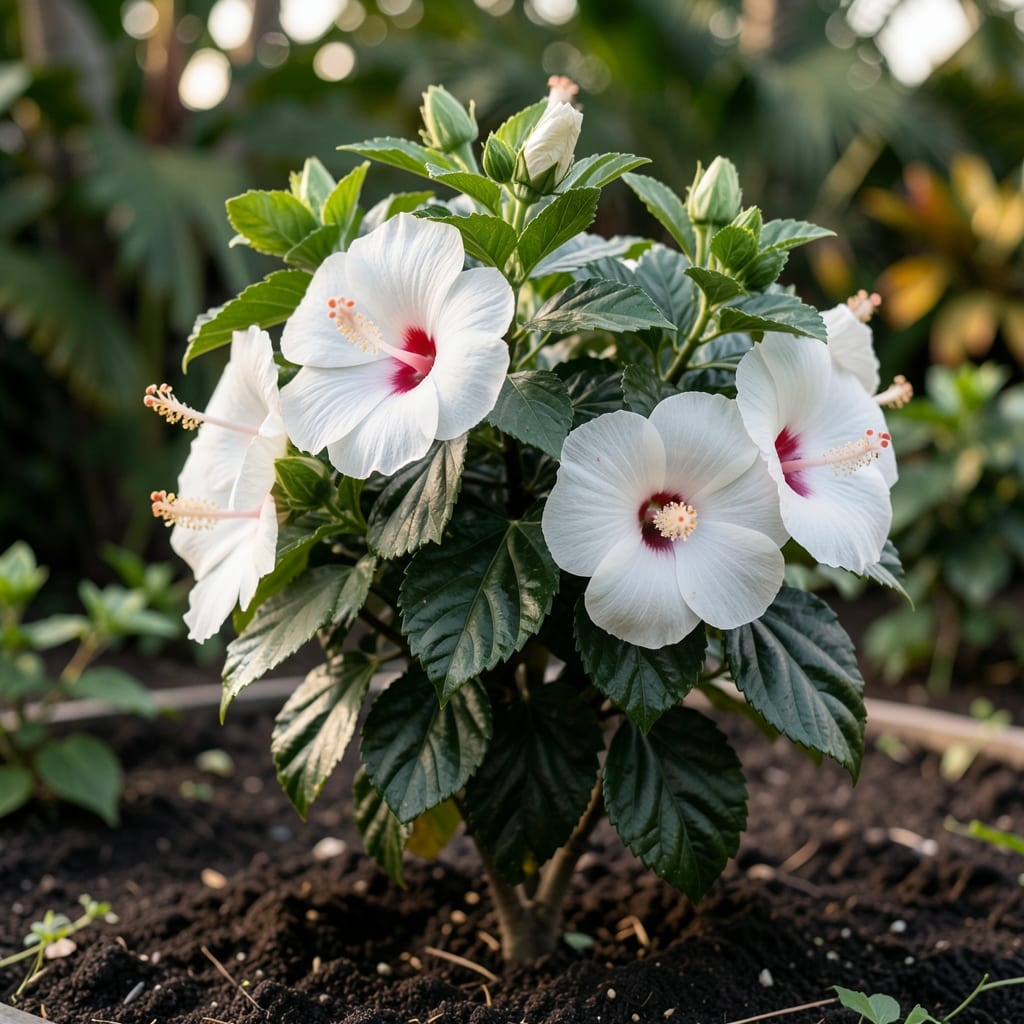
This tropical stunner brings island charm to any landscape. I first fell for its glossy leaves and pure white blooms that open every morning like nature’s own alarm clock.
It thrives in full sun and well-draining soil, rewarding you with flowers from spring through fall. The key is consistent moisture without waterlogged roots—get that right and you’ll have a plant that grows as fast as it impresses.
📚 In This Guide
Here’s the method I’ve refined to bring tropical elegance to any garden setting.
Choose a spot with full sun to partial shade, as Hawaiian white hibiscus thrives in 6-8 hours of direct sunlight daily. The location should have well-draining soil—these plants despise waterlogged roots. I always test drainage by digging a 1-foot hole and filling it with water; if it doesn’t drain within 30 minutes, amend the soil.
Avoid areas with strong winds, which can damage the large, delicate blooms. A south or west-facing position often works best in most climates. If you’re in a cooler zone, consider a container that can be moved indoors when temperatures drop below 50°F.
Hawaiian white hibiscus prefers slightly acidic to neutral soil with a pH between 6.0 and 7.0. Amend heavy clay or sandy soil with organic matter like compost or well-rotted manure to improve texture and fertility. I mix in a 2-inch layer of organic material into the top 12 inches of soil before planting.
If planting in a container, use a high-quality potting mix with added perlite or coarse sand for drainage. A 15-20 gallon pot is ideal for mature plants, as hibiscus develop extensive root systems. Ensure the container has multiple drainage holes to prevent root rot.
Dig a hole twice as wide as the root ball but no deeper. Place the plant in the hole, ensuring the top of the root ball is level with the surrounding soil. Backfill with the amended soil, gently pressing down to eliminate air pockets. Water thoroughly after planting to settle the soil around the roots.
For bare-root plants, soak the roots in lukewarm water for 1-2 hours before planting to rehydrate them. Space multiple plants 3-5 feet apart to allow for air circulation and future growth. Mulch around the base with 2-3 inches of organic mulch to retain moisture and suppress weeds.
Water deeply 2-3 times per week for the first month after planting to help the roots establish. After that, reduce frequency but water deeply each time, ensuring the soil stays evenly moist but not soggy. I check soil moisture by inserting my finger 1-2 inches into the soil—if it feels dry, it’s time to water.
During extreme heat or drought, increase watering to every other day. Avoid wetting the foliage, as this can lead to fungal diseases. For container-grown hibiscus, water until it runs out of the drainage holes, then empty the saucer to prevent root rot.
Feed your hibiscus with a balanced, water-soluble fertilizer every 2-4 weeks during the growing season. I use a 10-10-10 or 20-20-20 formula, diluted to half strength, to avoid burning the roots. Switch to a low-nitrogen fertilizer in late summer to encourage blooming rather than leafy growth.
Prune lightly after each flush of blooms to shape the plant and promote bushier growth. Remove dead or diseased branches immediately, cutting back to healthy wood. In early spring, prune back one-third of the plant to rejuvenate it and encourage new growth. Always sterilize pruning tools with rubbing alcohol to prevent disease spread.
Let me share what I’ve learned through trial and error to help your hibiscus thrive.
The Sunlight Sweet Spot: Those 6-8 hours of direct sunlight daily are non-negotiable for vibrant blooms. If your garden only gets morning sun, position plants to catch those rays. Afternoon shade works too, but avoid deep shade—you’ll get leaves without flowers. I learned this the hard way with my first sad, flowerless plant.
Drainage Test Hack: The 30-minute drainage test in Step 1 is your best insurance against root rot. Dig that 1-foot hole, fill with water, and time it. If water lingers beyond 30 minutes, mix in compost or sand. Trust me, waterlogged hibiscus roots turn to mush faster than you’d think.
Container Wisdom: For cooler climates where temperatures drop below 50°F, that 15-20 gallon container isn’t just practical—it’s a lifesaver. I moved mine indoors last winter and was rewarded with blooms while my neighbor’s in-ground plant died back completely.
Watering Discipline: The 1-2 inches finger test in Step 4 works perfectly. Too many people overwater, thinking more is better. Hibiscus prefer consistent moisture but will protest soggy roots by dropping leaves. During extreme heat, that every other day schedule becomes crucial.
Yes! It thrives in warm climates with well-drained soil and full sun. Beginners can succeed with consistent watering and occasional pruning.
It typically blooms year-round in tropical climates, with peak flowering in spring and summer. In cooler areas, expect blooms from late spring to early fall.
Watch for aphids, whiteflies, and spider mites. Fungal issues like leaf spot or root rot can occur in soggy soil—improve drainage to prevent them.
Absolutely! Use a large pot with drainage holes and a well-draining potting mix. Move it indoors if temperatures drop below 50°F (10°C).
Consider hardy hibiscus varieties like Hibiscus moscheutos or grow the Hawaiian white hibiscus as an annual or in a portable container.