
Beautiful Plants For Your Interior
Beautiful Plants For Your Interior
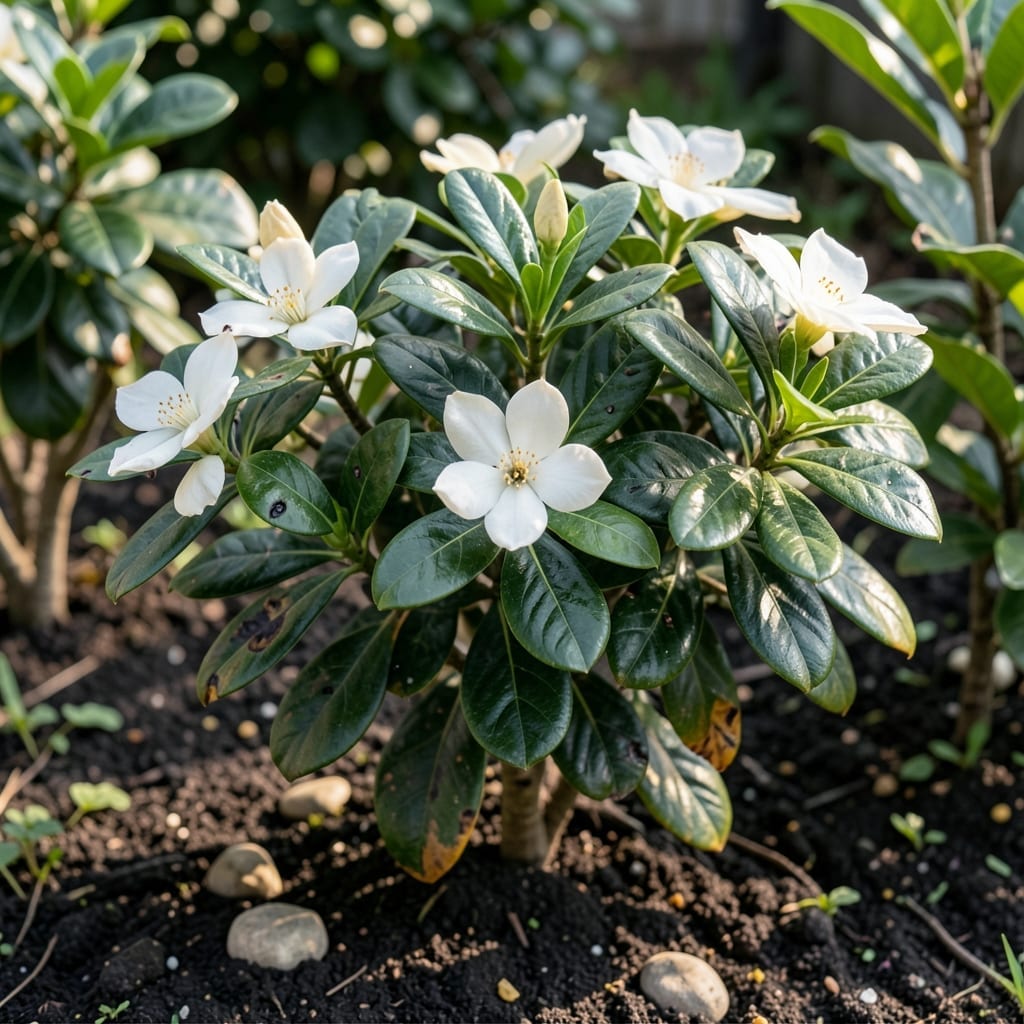
Black spots on gardenia leaves hit me hard last summer. My once vibrant green plants looked like they’d been through a forest fire overnight.
Turns out, it’s usually one of three culprits: fungal infections from too much moisture, root rot from poor drainage, or nutrient deficiencies. Each leaves a different black pattern on the leaves.
I fixed mine with better air circulation, adjusted watering, and a natural fungicide. The new growth came back healthier than ever within 3 weeks.
You can save your gardenias too. Here’s exactly how to diagnose and treat the problem without harsh chemicals.
Gardenia leaves turning black is often a distress signal from the plant, and several underlying issues can trigger this unsightly problem. Below are the most common causes, explained scientifically and with actionable insights.
Gardenia plants thrive in stable, warm environments (65–75°F). Sudden drops in temperature, especially below 60°F, can cause cold shock, leading to leaf necrosis (tissue death). Conversely, excessive heat (above 85°F) can scorch leaves, turning them black. Fix: Keep gardenias in a temperature-controlled space, away from drafts or direct heat sources.
Overwatering suffocates the roots, preventing oxygen uptake and promoting root rot (often caused by Phytophthora or Pythium fungi). As roots decay, they fail to supply nutrients and water, causing leaves to blacken. Fix: Use well-draining soil, water only when the top inch is dry, and ensure pots have drainage holes.
Fungi like Alternaria or Cercospora thrive in humid, poorly ventilated conditions, leading to leaf spot diseases. These manifest as black or dark brown patches, often with yellow halos. Fix: Improve airflow, avoid overhead watering, and apply copper-based fungicides preventatively.
Excessive fertilizer or tap water high in salts (sodium, chlorine) can cause osmotic stress. Roots absorb too much salt, disrupting cellular function and leading to leaf burn. Fix: Use distilled or rainwater, and flush the soil monthly to remove salt buildup. Fertilize sparingly with a balanced, acid-loving plant formula.
When your gardenia’s leaves start turning black, act fast to restore its health. Below are targeted fixes for the most common causes, along with prevention tips to keep your plant thriving.
Fix: Stop watering immediately and check the soil. If it’s soggy, repot the gardenia in fresh, well-draining potting mix (add perlite or sand for better drainage). Trim any black, mushy roots with sterilized shears. Water only when the top 1-2 inches of soil feel dry.
Prevention: Use pots with drainage holes and a saucer to catch excess water. Water deeply but less frequently—gardenia roots prefer consistent moisture, not a swamp. 💡
Fix: Remove affected leaves and stems with clean pruners to prevent spread. Treat the plant with a copper-based fungicide or a DIY solution of 1 tsp baking soda + 1 quart water + a few drops of dish soap. Spray weekly until the issue resolves.
Prevention: Improve air circulation around the plant and avoid wetting the leaves when watering. Sterilize tools between uses to stop pathogens. ✨
Fix: Move the gardenia to a spot with bright, indirect light (e.g., east-facing window or dappled shade outdoors). If leaves are crispy, prune them to redirect energy to healthy growth. Mist the plant lightly to cool it down.
Prevention: Acclimate gardenias gradually to new light conditions. Use shade cloth for outdoor plants during peak summer heat. 🌡️
Fix: Test the soil pH (gardenia thrives in acidic soil, 5.0–6.5 pH). Amend with sulfur or peat moss to lower pH if needed. Feed with an acid-loving plant fertilizer (e.g., for azaleas) every 4–6 weeks during growing season.
Prevention: Use rainwater or distilled water to avoid alkaline tap water. Top-dress with compost annually for slow-release nutrients. 🎯
No, once leaves turn black, the damage is permanent. Focus on improving plant health to encourage new green growth. Remove blackened leaves to prevent spreading issues.
Water when the top 1-2 inches of soil feel dry. Gardenias prefer consistent moisture but hate soggy roots. Use well-draining soil and pots with drainage holes.
Bright, indirect light is ideal. Avoid direct afternoon sun, which can scorch leaves. East-facing windows or dappled shade outdoors work best.
Repotting stress combined with fresh soil can cause temporary shock. Ensure the new mix drains well and avoid fertilizing for 2-3 weeks. Blackening should stop as roots adjust.