
Beautiful Plants For Your Interior
Beautiful Plants For Your Interior
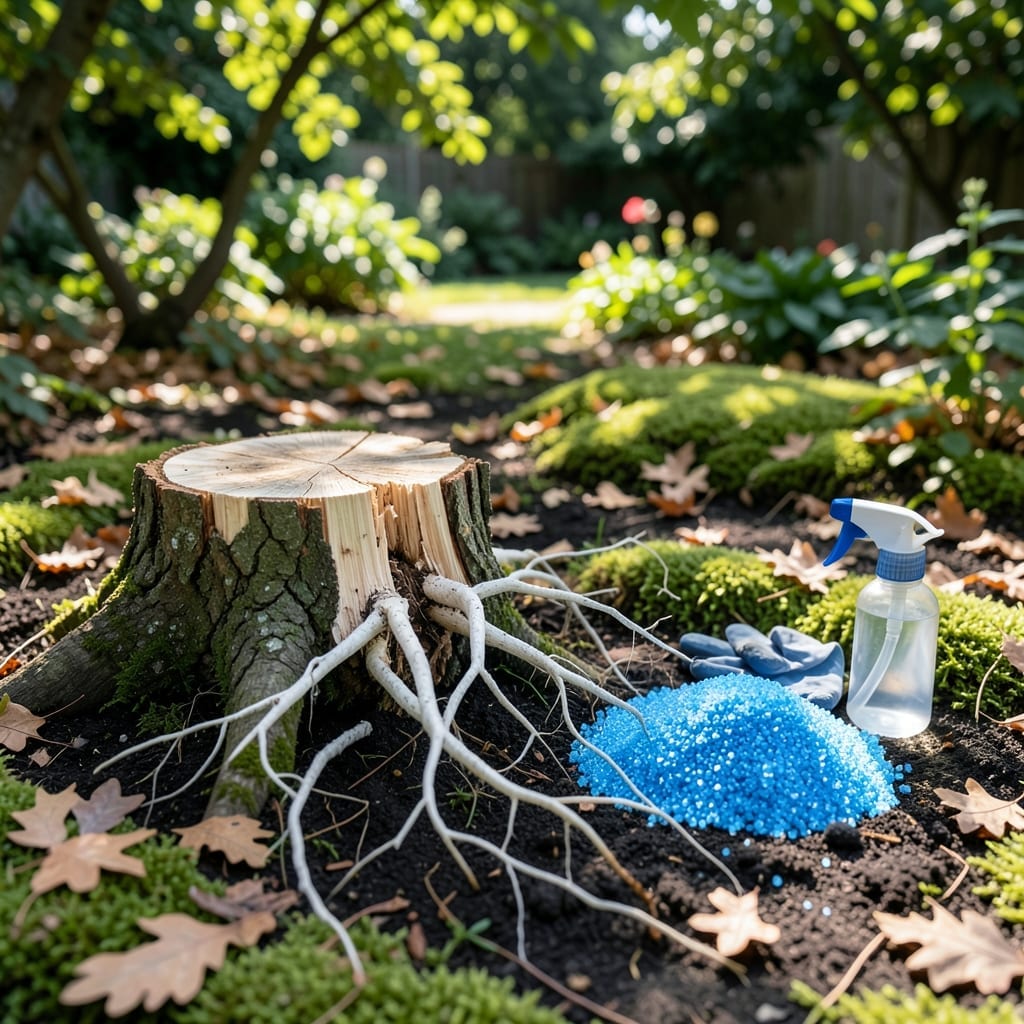
Root killer chemicals contain herbicides like copper sulfate or dichlobenil that destroy invasive roots in pipes and sewers. They work by disrupting root cell growth but require careful handling due to toxicity risks.
I’ve seen these products tackle stubborn root intrusions that would otherwise clog drainage systems. The active compounds penetrate the root structure, halting growth at the cellular level. Yet, their potency means you must wear protective gear and follow dosage instructions precisely to avoid harming plants or water sources. 💫
💡 In This Article
The active ingredients in these products, like copper sulfate and dichlobenil, act as systemic herbicides that roots absorb through their vascular systems. Once inside, they interfere with the plant’s ability to produce proteins essential for cell division, effectively halting growth. 🔥
Copper sulfate works by denaturing proteins and disrupting enzyme function in root cells. At concentrations of 1-2%, it causes cellular damage that prevents water and nutrient uptake. This process typically takes 2-4 weeks to fully eliminate the root system. ✨
Dichlobenil takes a different approach by inhibiting mitosis—the cell division process. It’s particularly effective against woody roots because it prevents new cell formation in the meristematic zones where growth occurs. The chemical remains active in soil for 6-12 months. ⚡
What makes these chemicals so effective is their ability to spread through interconnected root systems. When one root absorbs the herbicide, it can travel through the plant’s vascular network to affect other roots in the same system, even those not in direct contact with the chemical.
Environmental factors influence effectiveness. In clay soils, copper sulfate binds tightly to particles, reducing its mobility but increasing persistence. In sandy soils, dichlobenil may leach deeper, potentially affecting non-target plants. 💫
The absorption rate depends on root health and moisture levels. Damaged roots absorb chemicals faster, while dry conditions may slow the process. For optimal results, application during active growth periods when roots are most metabolically active yields the best outcomes.
Most products show effects within 1-2 weeks, with complete elimination taking 2-4 weeks. Copper sulfate often works faster than dichlobenil, which may require 6-12 months for full effect.
Yes, improper use can damage non-target plants. Always apply precisely to the affected area and avoid overspray. In sandy soils, chemicals may leach further, increasing risk to surrounding vegetation.
Never handle without nitrile gloves, safety goggles, and long sleeves. A respirator is recommended for powder forms. Work in ventilated areas to prevent inhalation.
Keep in original sealed containers at 40-80°F in a locked cabinet. Never store near food, pet supplies, or water sources. Check for leaks monthly.
Overapplying to speed up results. This wastes product, harms the environment, and may damage pipes. Always follow label rates—more isn’t better.