
Beautiful Plants For Your Interior
Beautiful Plants For Your Interior
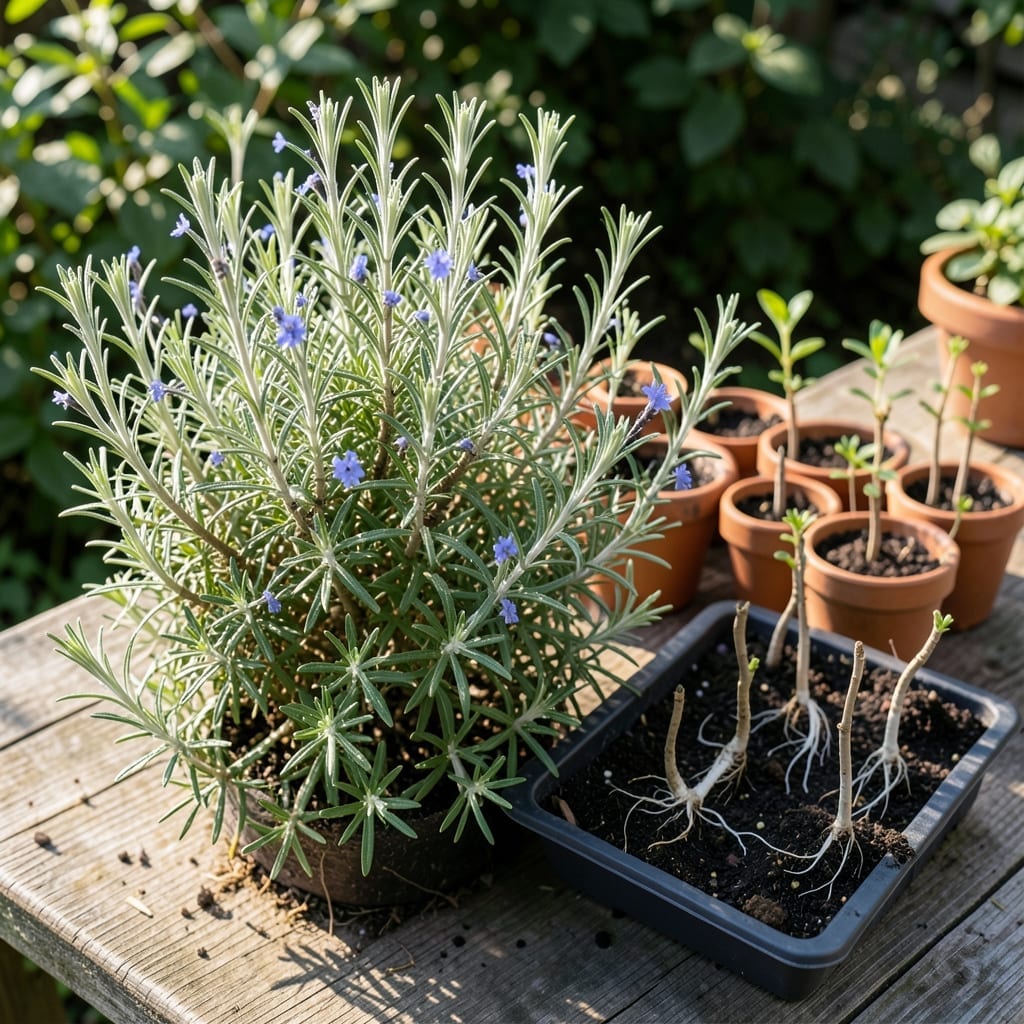
Take 4-6 inch stem cuttings from healthy rosemary, remove lower leaves, dip in rooting hormone, plant in well-draining soil, and keep moist in bright, indirect light until roots form in 3-6 weeks.
I’ve had great success with this method because rosemary contains natural compounds that encourage root growth. The key is choosing semi-woody stems—they’re mature enough to root but still flexible. 🌟 A humidity dome or plastic bag can speed up the process by maintaining consistent moisture around the cuttings.
💡 In This Article
Rosemary contains natural auxins, plant hormones that stimulate root growth at the cutting site. These compounds concentrate in the stem nodes, which is why removing lower leaves exposes these high-auxin areas to soil contact. This biological trigger tells the plant to develop new roots rather than continue growing upward. 🌟
The semi-woody nature of rosemary stems provides the perfect balance of maturity and flexibility. Softwood cuttings root faster but are more prone to rot, while hardwood cuttings take longer but survive better. Rosemary’s woody stems have enough stored energy to support new growth while resisting fungal issues that plague softer plants.
Temperature plays a crucial role in root development. Rosemary cuttings thrive in 70-75°F soil temperatures, which accelerate cellular division at the cutting base. This is why spring and early summer propagation often yields better results than winter attempts, when cooler soils slow metabolic processes. ✨
Humidity is equally important for successful rooting. Maintaining 80-90% humidity around the cuttings prevents moisture loss through the leaves while roots form. This mimics the natural conditions rosemary experiences in its Mediterranean habitat, where high humidity often follows rain events that trigger new growth.
What most gardeners don’t realize is that rosemary cuttings develop roots faster in slightly alkaline soil (pH 6.5-7.5). This pH range optimizes nutrient availability while preventing the buildup of toxic elements that can inhibit root growth in more acidic conditions. 💫
Spring or early summer is ideal, when the plant is actively growing. 70-75°F soil temperatures speed up rooting. Avoid winter, when cooler conditions slow growth.
Choose semi-woody stems—they’re mature enough to root but still flexible. Soft stems root faster but rot easily, while hardwood takes longer.
Gently tug the stem after 3-4 weeks. Resistance means roots have formed. Look for new growth as another sign of success.
It’s possible but less reliable than soil. Water can cause rot before roots develop. Soil provides better support and nutrients.
Low humidity or overwatering are common culprits. Maintain 80-90% humidity and keep soil moist, not soggy. Check for stem rot.