
Beautiful Plants For Your Interior
Beautiful Plants For Your Interior
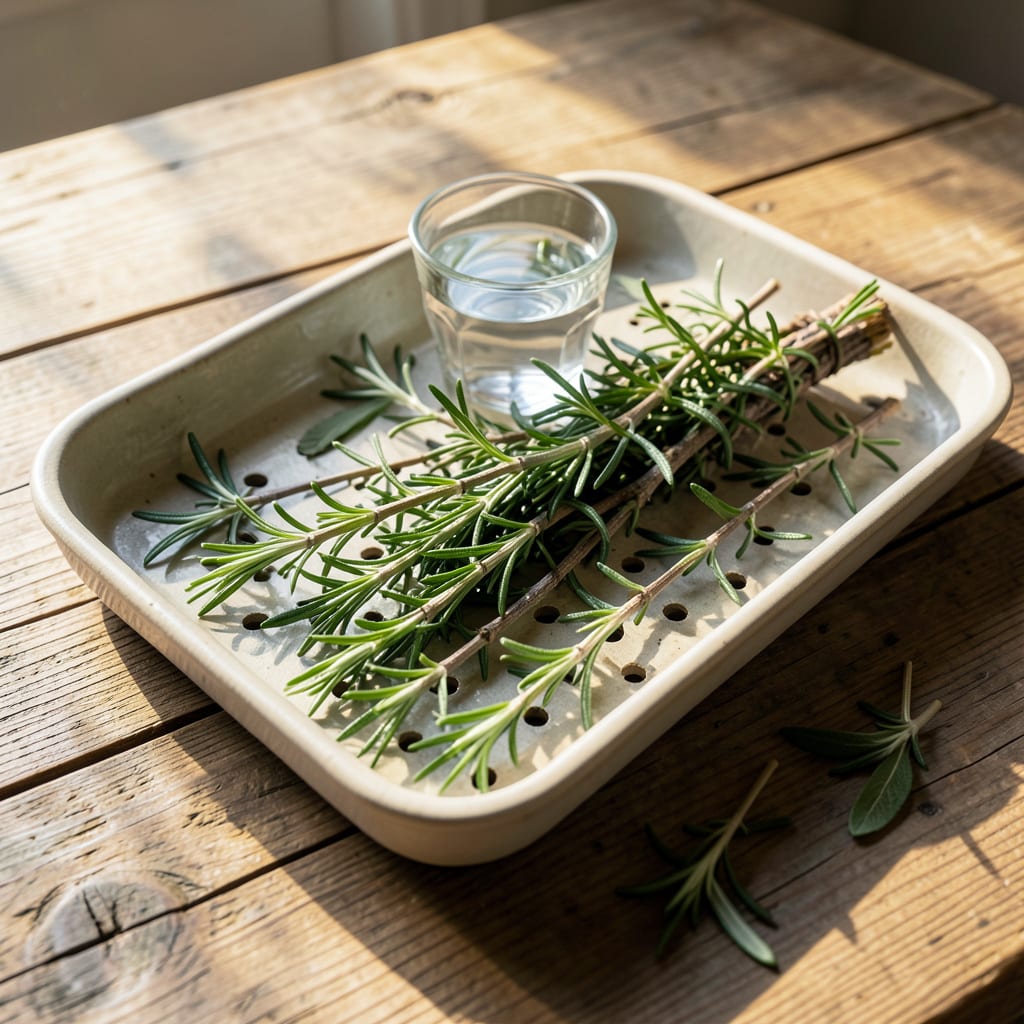
I turned one rosemary plant into a dozen with just water and patience. This method works every time if you pick the right stems and keep them happy.
You’ll see roots in 2-3 weeks, then transplant to soil. No fancy tools, no greenhouse—just a sunny windowsill and the right technique. Simple, foolproof, and surprisingly fast.
📚 In This Guide
This water propagation method is foolproof and requires nothing more than patience and the right cutting.
Choose a 4-6 inch stem from a healthy, established rosemary plant, preferably one that’s not currently flowering. The best candidates are semi-woody stems with fresh, flexible green growth at the tips. Look for sections with multiple leaf nodes (the small bumps where leaves emerge)—these are where roots will form.
Using sharp, clean pruners, make a cut just below a leaf node at a 45-degree angle. This increases the surface area for water absorption and root development. Remove the lower 1-2 inches of leaves, leaving only the top foliage intact. This prevents rot in the water while keeping enough leaves to support photosynthesis.
Fill a clean glass or jar with room-temperature water—cold water can shock the cutting. Submerge only the stripped lower portion of the stem, ensuring no leaves touch the water (they’ll rot and contaminate the cutting). Place the container in a location with bright, indirect light, like an east-facing windowsill.
Avoid direct sunlight, which can overheat the water and cook the cutting. I’ve found that maintaining a consistent temperature between 65-75°F speeds up rooting. Change the water every 3-4 days or when it appears cloudy to prevent bacterial growth that can stall progress.
Check the cuttings weekly for signs of new growth. You’ll first notice tiny white bumps forming along the submerged stem—these are root initials. Within 3-6 weeks, depending on temperature and humidity, you should see 1-2 inch long roots emerging. Rosemary is slow to root, so resist the urge to tug on the cutting to check for resistance.
Here’s the thing—some cuttings will fail, and that’s normal. If the stem turns black or mushy, discard it and try again with a fresh cutting. Healthy cuttings will develop both roots and new leaf growth at the top, a sure sign they’re ready for the next step.
Once roots reach 2-3 inches long, it’s time to transplant. Fill a 4-inch pot with well-draining potting mix—rosemary despises soggy roots. Gently plant the cutting, ensuring the roots are covered but the stem remains above soil level. Water lightly to settle the mix around the roots, then place in bright, indirect light for a week to acclimate.
After 7-10 days, gradually introduce more direct sunlight. Real talk: the transition from water to soil can be stressful, so don’t be alarmed if the cutting wilts slightly at first. It’ll perk up within a day or two if conditions are right. Keep the soil lightly moist but never waterlogged during this adjustment period.
Patience and attention to detail make all the difference with this propagation method.
The Cutting Selection: In Step 1, always choose stems with multiple leaf nodes—these are the growth points where roots will emerge. Semi-woody stems with flexible green tips root most successfully, while flowering stems often lack the energy needed for propagation.
Temperature Matters: Step 2’s temperature range of 65-75°F is critical for success. Below 65°F, rooting slows dramatically, while above 75°F can encourage rot. A consistent spot away from drafts or heat sources works best for maintaining this range.
Water Maintenance: Changing the water every 3-4 days as directed in Step 2 prevents bacterial growth that can kill your cutting. If the water looks cloudy before then, replace it immediately—don’t wait for the full interval.
Transplant Timing: Step 4 specifies waiting until roots reach 2-3 inches long before transplanting. This length ensures the cutting has enough root mass to support the transition to soil. Rushing this step often results in transplant shock.
Yes! Rosemary cuttings root well in water. Simply place 4-6 inch stem cuttings in a jar of water, ensuring the lower leaves are submerged. Change the water every few days and wait 3-6 weeks for roots to form.
Rosemary cuttings typically take 3-6 weeks to root in water, depending on temperature and light conditions. Warmer environments (70-75°F) speed up the process, while cooler temps may slow it down. Be patient!
While not required, a dab of rooting hormone can boost success rates. Honey (a natural antifungal) can also help—dip the cut end in honey before placing it in water or soil. Both methods may encourage faster root growth.
Common issues include old wood cuttings (use soft, new growth), insufficient light, or dirty water. Ensure your cutting is healthy, the water is fresh, and it gets bright, indirect light. If rot occurs, trim and restart.
Absolutely! Plant cuttings in well-draining soil (like perlite or sand mixes), keep moist but not soggy, and cover with a plastic bag for humidity. Soil rooting can be faster and reduces transplant shock.
