
Beautiful Plants For Your Interior
Beautiful Plants For Your Interior
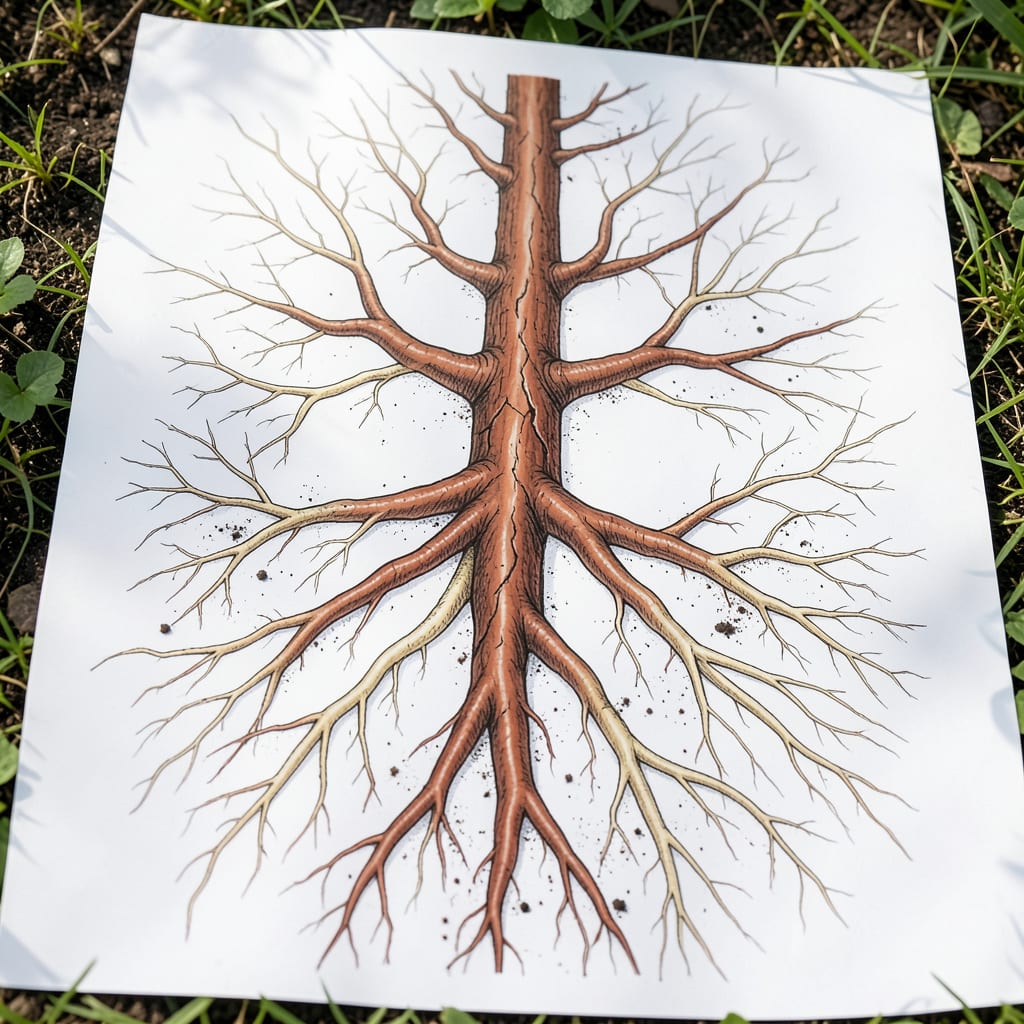
I first noticed the tree of heaven spreading through my neighbor’s yard like wildfire. Its root system is what makes this plant so aggressively invasive, sending up suckers 50 feet from the parent tree.
Understanding this network helps explain why it outcompetes native plants and damages foundations. The roots run deep and wide, making removal a challenge—but not impossible with the right approach.
📚 In This Guide
Here’s how I map out this aggressive root system to understand its invasive patterns.
Begin by locating the main taproot, which typically drives 3-6 feet deep in mature specimens. This central anchor is thicker than your wrist and often exhibits a reddish-brown hue. I use a garden probe to trace its path downward without disturbing the soil excessively.
Note how lateral roots branch off horizontally from the taproot at depths of 12-18 inches. These spread outward in a radial pattern, often extending 2-3 times the canopy width. The key visual cue is their segmented, bamboo-like appearance with noticeable nodes.
The most invasive feature is the network of shallow, creeping roots that generate suckers. These roots run just 2-4 inches below the surface and can stretch 50+ feet from the parent tree. I follow these by gently brushing away soil to reveal their white, string-like appearance.
Watch for small, pale shoots emerging at nodes along these runners. Each sucker represents a potential new tree, and I’ve found clusters of 20-30 shoots within a 10-foot radius of established specimens. This is the primary mechanism of vegetative spread.
Pay attention to the fine, fibrous roots that form dense mats in the top 6 inches of soil. These absorb most of the tree’s water and nutrients. I carefully excavate small sections to observe how they intertwine with the lateral roots, creating an impenetrable network.
This layer often contains the most aggressive suckers, as the tree invests heavily in surface-level expansion. I’ve measured individual fibrous roots extending 15-20 feet outward, with new shoots emerging at 1-2 foot intervals along their length.
To create an accurate diagram, I use string lines to mark the outermost extent of all root types. The taproot’s depth, lateral spread, and sucker locations form three distinct layers. I’ve found that mature trees often have root systems covering 4,000-6,000 square feet of soil.
Document the vertical distribution: taproot at depth, laterals at mid-level, and fibrous roots with suckers near the surface. This stratification is key to understanding why this species outcompetes native plants—it occupies every available niche in the soil profile.
Mapping this invasive system requires patience and precision to capture its full scope.
Depth Accuracy: In Step 1, when probing for the taproot, remember it can drive 3-6 feet deep. I once missed the full extent by stopping at 4 feet on a mature specimen. Use a probe with depth markings to ensure you don’t underestimate this central anchor’s reach.
Lateral Root Identification: The lateral roots at 12-18 inches have that distinctive bamboo-like segmentation. Confession: I initially confused these with fibrous roots until I noticed their thicker diameter and horizontal growth pattern. Mark their radial spread carefully—it often extends 2-3 times the canopy width.
Sucker System Mapping: For Step 2, those shallow creeping roots at 2-4 inches depth are easy to overlook. I’ve found that gently brushing soil away with a hand trowel reveals their white, string-like appearance without damaging them. Each node can produce multiple shoots, so trace these carefully to document the full 50+ foot potential spread.
Documentation Strategy: In Step 4, when marking the complete system, use different colored string lines for each root type. This visual separation helps when translating your field notes to a final diagram. The stratification—deep taproot, mid-level laterals, and surface fibrous roots—creates that 4,000-6,000 square foot coverage pattern that makes this species so aggressive.
Tree of heaven roots typically extend 12–18 inches deep, but they can spread laterally up to 50 feet, forming a dense, shallow network. This aggressive growth helps the tree outcompete native plants.
Yes, but it’s challenging due to their extensive spread. Small saplings can be pulled by hand, but for mature trees, professional removal is recommended to prevent regrowth from remaining root fragments.
Late summer to early fall is ideal, as the tree is actively transporting nutrients to its roots. Herbicides applied during this period are most effective at killing the root system.
Yes! Repeated mowing, cutting, or girdling can weaken the tree over time. Solarization or smothering with thick mulch can also suppress root growth, though these methods require persistence.
