
Beautiful Plants For Your Interior
Beautiful Plants For Your Interior
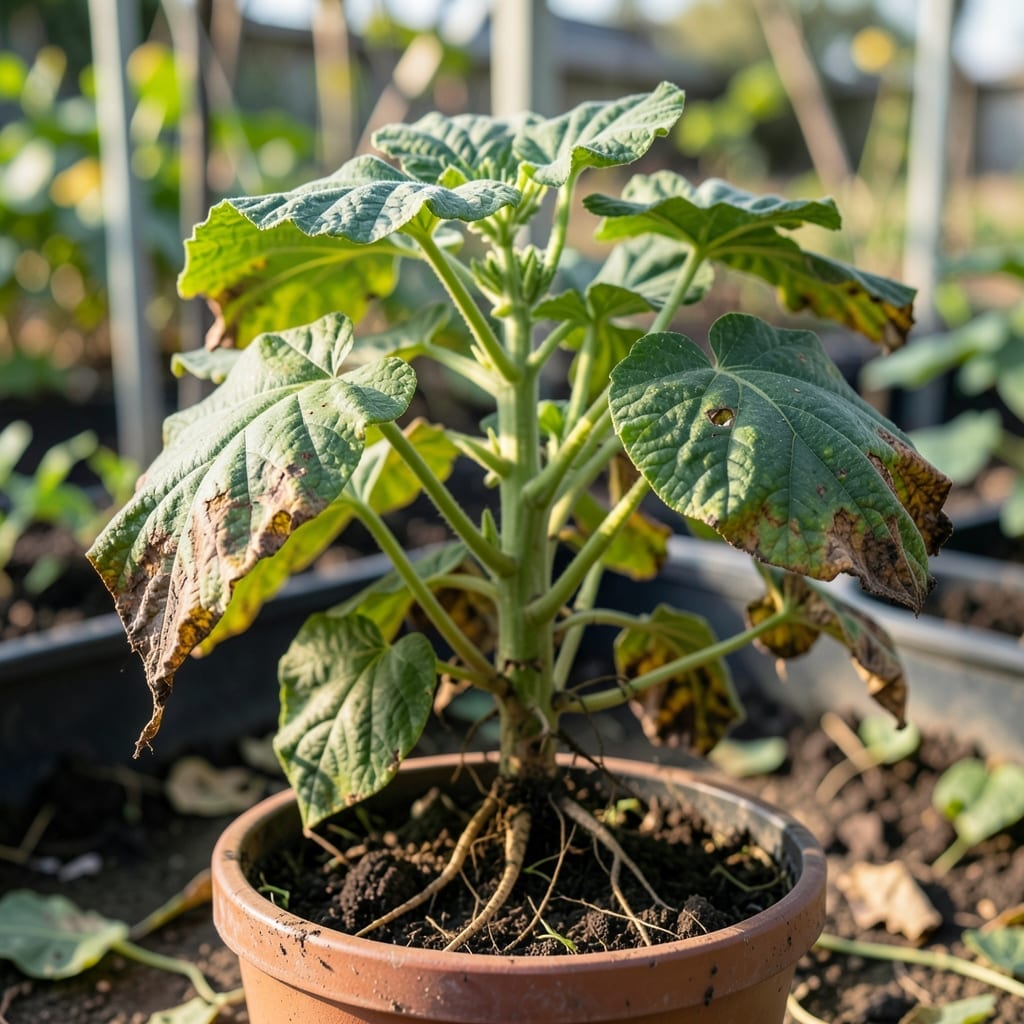
Yellowing leaves and wilting vines often signal trouble below the soil. I’ve lost entire squash plants to root rot before learning to spot the early warning signs.
This sneaky problem starts with soggy soil and spreads fast, but organic fixes can save your crop if you act quickly. Here’s what to watch for and how to stop it in its tracks.
Bare bones list for saving your squash. Most of this is already in your shed.
| Ingredient | Amount | Notes |
|---|---|---|
| Well-Draining Potting Mix 🌾 | 2 gallons | Peat-based or coconut coir |
| Compost 🌿 | 1 gallon | Aged organic compost |
| Perlite 🪨 | 1 gallon | Improves soil aeration |
| Neem Oil 💧 | 1 piece | Organic fungicide treatment |
| Hydrogen Peroxide 🧪 | 1 piece | 3% solution for root treatment |
| Mulch 🪵 | 1 gallon | Straw or wood chips |
| Garden Trowel 🔧 | 1 piece | For soil inspection |
| Drainage Gravel 🪨 | 1 gallon | Prevents waterlogging |
| Spray Bottle 💦 | 1 piece | For applying treatments |
[recipe_ingredient_scaler]
The soil mix is critical here. Peat-based or coconut coir prevents waterlogging—dense garden soil suffocates roots. Grab compost from local nurseries (the good stuff, not the bagged-up dirt from a sale). Perlite is sold at Home Depot in small bags; it’s worth the extra dollar for aeration.
No perlite? Coarse sand works in a pinch (or whatever drainage gravel you’ve got). Neem oil and hydrogen peroxide are available at garden centers or online. Fresh mulch matters, but stored straw works fine if it’s dry and mold-free.
Store leftover compost in a sealed bin—it keeps for 1-2 years. Perlite and gravel last indefinitely if kept dry. I label treatments with dates so I know what’s still effective next season.
In Texas, squash plant root rot is often tackled with a mix of heat tolerance and drought-resistant varieties. Gardeners here focus on well-draining soil amended with compost to prevent waterlogging. Raised beds are a popular choice to improve drainage, and mulching with straw helps retain moisture without suffocating roots.
The humid climate of the Carolinas means root rot is a common foe. Locals swear by crop rotation and companion planting with marigolds or nasturtiums to deter pests and improve soil health. Drip irrigation is widely used to deliver water directly to the roots, minimizing excess moisture that can lead to rot.
In the Midwest, gardeners combat root rot by prioritizing soil testing to monitor pH and nutrient levels. Organic fungicides, like neem oil or copper sprays, are applied preventatively. Wide plant spacing ensures airflow, reducing the risk of fungal growth that thrives in damp conditions.
Memphis gardeners lean on sandy loam soil to promote drainage and prevent water from pooling around roots. Beneficial microbes, such as mycorrhizal fungi, are introduced to strengthen root systems. Regular hand-weeding also helps by reducing competition for nutrients and water.