
Beautiful Plants For Your Interior
Beautiful Plants For Your Interior
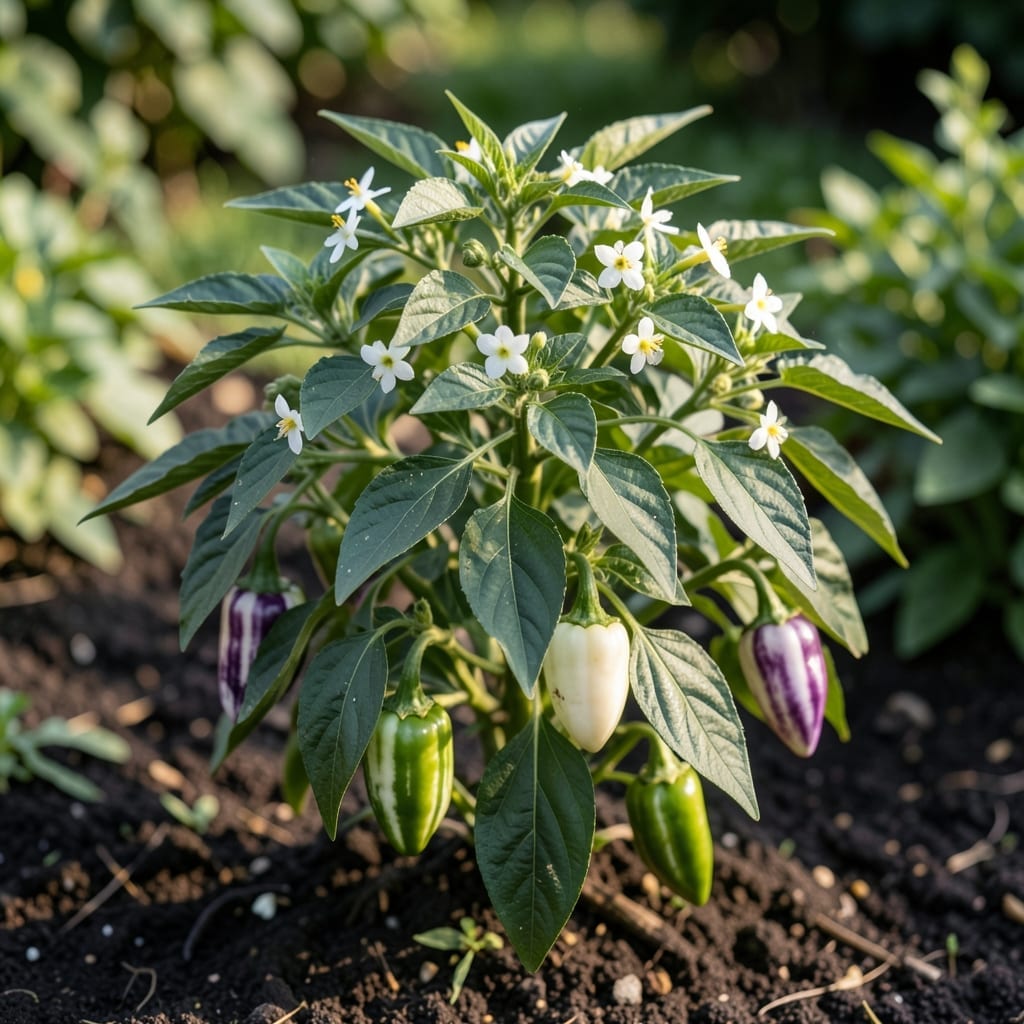
Fish pepper plants bring more than just heat to your garden. I grew my first batch last summer and was shocked by the stunning variegated leaves—creamy white with green streaks. They look as good as they grow.
The leaves themselves pack a mild, peppery kick perfect for garnishes or companion planting. These plants thrive in full sun and well-draining soil, and they’re surprisingly low-maintenance once established. You’ll get both beauty and flavor from one plant.
📚 In This Guide
This method delivers consistent results with minimal fuss, even for first-time growers.
Begin fish pepper seeds 8-10 weeks before your last frost date to give them a head start. These tropical plants need warmth to germinate, so maintain soil temperatures between 70-80°F. I use a seedling heat mat for consistent results, as cooler rooms can delay sprouting by weeks.
Sow seeds ¼ inch deep in a sterile seed-starting mix, barely covering them. Mist the surface until evenly moist but not waterlogged. The first sign of success appears in 10-21 days when you spot the distinctive purple-green cotyledons pushing through the soil.
Fish peppers demand 14-16 hours of bright light daily to develop their signature variegated foliage. A south-facing window rarely suffices, so I position a full-spectrum LED grow light 2-4 inches above seedlings, raising it as they grow to maintain this gap.
Insufficient light produces leggy, pale plants with weak stems. You’ll know your setup is working when the first true leaves emerge in a striking pattern of white, green, and purple. Rotate pots quarter turn daily to prevent plants from leaning toward the light source.
When seedlings develop 3-4 true leaves (usually after 6-8 weeks), move them to individual 1-gallon containers. Fish peppers resent root disturbance, so I always use biodegradable peat pots that can go directly into the soil, eliminating transplant shock.
Fill the new containers with well-draining potting mix, creating a hole just large enough for the root ball. Handle seedlings by their leaves, not stems, which can crush easily. Water thoroughly after transplanting and place in a location with bright, indirect light for the first 24-48 hours to reduce stress.
Keep soil consistently moist but not soggy—fish peppers wilt dramatically when thirsty but recover quickly once watered. I check the top 1 inch of soil daily, watering when it feels dry to the touch. A balanced liquid fertilizer applied every 2-3 weeks encourages robust foliage growth.
These plants thrive in 65-80°F temperatures. If growing outdoors, harden off seedlings over 7-10 days before transplanting to the garden. Watch for the first signs of stress like yellowing leaves, which often indicates either overwatering or nutrient deficiency.
Begin harvesting leaves when plants reach 8-12 inches tall, typically 10-12 weeks after germination. I pinch off the top set of leaves to encourage branching, which results in a fuller, more productive plant. Regular harvesting stimulates new growth and prevents the plant from becoming leggy.
Always use clean, sharp scissors to avoid tearing stems. Harvest in the morning when the leaves contain the highest concentration of oils. The more you harvest, the more the plant will produce, making this a rewarding crop for continuous use.
Small adjustments make a big difference when growing these stunning, variegated plants.
The Heat Factor: Maintain that 70-80°F soil temperature religiously during germination. I learned the hard way that even a few degrees below this range can delay sprouting by weeks. A seedling heat mat is worth the investment for consistent results.
Light Distance Matters: Keep your full-spectrum LED grow light precisely 2-4 inches above seedlings as they grow. Any higher and your plants will stretch toward the light, becoming leggy and weak. Rotate pots that quarter turn daily—this prevents uneven growth and ensures all sides develop properly.
Transplant Timing: Don’t rush moving seedlings to larger containers. Wait until they’ve developed 3-4 true leaves, which typically happens after 6-8 weeks. Using biodegradable peat pots eliminates transplant shock, as the entire pot can go directly into the soil without disturbing delicate roots.
Moisture Monitoring: Check that top 1 inch of soil daily. Fish peppers wilt dramatically when thirsty but bounce back quickly once watered. It’s better to water slightly less frequently with more volume than to keep soil constantly soggy, which can lead to root rot.
Yes! Fish pepper leaves are edible and add a mild, peppery flavor to dishes. They’re often used fresh in salads or cooked in soups and stews. Always ensure they’re pesticide-free if grown at home.
Fish pepper plants typically take 70–90 days to mature from seed. Leaves can be harvested once the plant is 6–8 inches tall, usually within 4–6 weeks after germination.
If unavailable, substitutes like regular pepper leaves, arugula, or mustard greens can mimic the mild spicy kick. Adjust quantities to taste, as flavors may vary.
Yellowing leaves often signal overwatering, nutrient deficiencies, or pests. Check soil moisture, fertilize if needed, and inspect for bugs. Proper drainage and sunlight can help prevent this.