
Beautiful Plants For Your Interior
Beautiful Plants For Your Interior
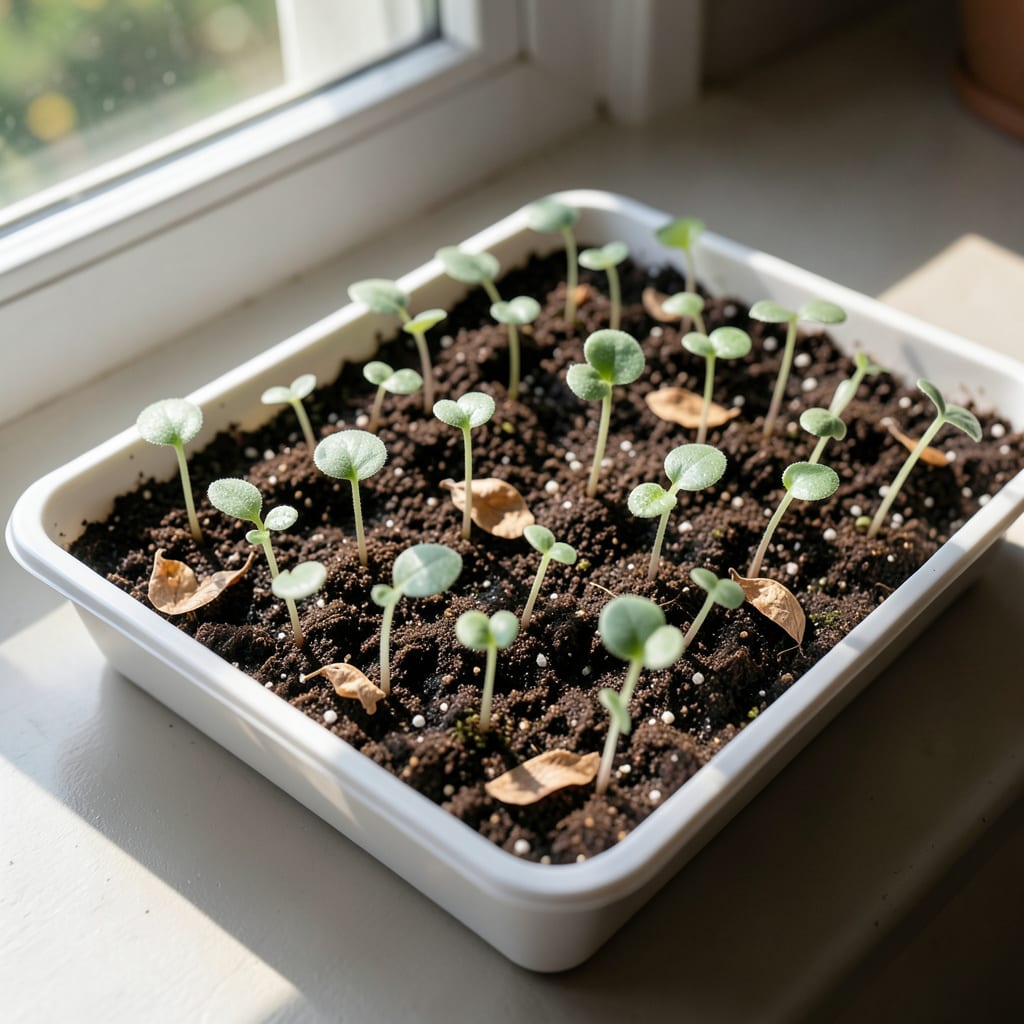
Stuck with seedlings that refuse to grow true leaves? I’ve been there—rows of tiny plants with just their baby leaves, like they’re frozen in time.
This usually means they’re missing something critical: light, nutrients, or the right growing conditions. Most often, it’s not enough bright light or the wrong soil mix that’s holding them back.
Once you fix the issue, you’ll see those first real leaves emerge within 7-10 days. The plants will start looking like the mature versions you planted, not just sad, stunted sprouts.
Works for any seedlings—herbs, flowers, or veggies. Let’s get them growing right.
Seedlings failing to develop true leaves often stem from environmental or nutritional stressors. Here are the most common reasons:
Seedlings require high-intensity light (12–16 hours daily) to transition from cotyledons to true leaves. Weak or indirect light forces them to stretch (etiolation), diverting energy from leaf development. Use full-spectrum LED grow lights 2–4 inches above seedlings for optimal photosynthesis.
Root health directly impacts foliage growth. Overwatering suffocates roots, reducing nutrient uptake, while underwatering stresses the plant, halting development. Maintain moist but not soggy soil, and ensure pots have drainage holes.
True leaves emerge only when seedlings access nitrogen, phosphorus, and potassium. Yellowing cotyledons or stunted growth may signal a lack of nitrogen (essential for leaf formation). Use a balanced, diluted fertilizer (e.g., 10-10-10) once the first true leaves appear.
Seedlings thrive at 70–75°F (21–24°C). Temperatures below 60°F (15°C) slow metabolic processes, delaying true leaf formation. Conversely, heat above 85°F (29°C) can stress seedlings. Use a heat mat for warmth or shade cloth for cooling.
Once you’ve identified the issue, these targeted fixes will get your seedlings back on track with healthy true leaves. Address each cause systematically for the best results.
Move seedlings to a sunnier windowsill (south-facing is ideal) or use grow lights 12–16 hours daily. Keep lights 2–4 inches above seedlings and raise them as plants grow. Prevention tip: 💡 Rotate seedlings daily to ensure even light distribution and prevent leggy growth.
Switch to a balanced, water-soluble fertilizer (10-10-10 or 5-5-5) diluted to half strength. Feed seedlings every 2 weeks once they have 2–3 true leaves. For nitrogen deficiency (pale leaves), use a higher-nitrogen formula. Prevention tip: ✨ Start with a quality seed-starting mix to avoid nutrient gaps from the get-go.
Let the top inch of soil dry out before watering again. Use containers with drainage holes and a well-draining potting mix. If root rot is suspected, trim affected roots and repot in fresh soil. Prevention tip: 🌡️ Water from the bottom (using a tray) to encourage deeper root growth and prevent soggy soil.
Keep seedlings in a consistent 65–75°F range. Use a heat mat for warmth if needed, and avoid cold drafts or direct heat sources. Prevention tip: 🎯 Group seedling trays together to create a microclimate with stable humidity and temperature.
Thin seedlings to 1–2 per cell or transplant to larger containers once they have 2–3 true leaves. This reduces competition for light and nutrients. Prevention tip: 🔥 Sow seeds sparsely or use pelletized seeds for better spacing control.
True leaves usually emerge 7-14 days after germination under ideal conditions. If they don’t appear within 3 weeks, check light, temperature, and moisture levels.
Yes! Overwatering suffocates roots, limiting nutrient uptake needed for leaf development. Ensure soil is moist but not soggy and has proper drainage.
Only after the first true leaves appear. Start with a diluted, balanced fertilizer (like 10-10-10) to avoid burning tender roots. Use half-strength every 2 weeks.
This is called etiolation—caused by insufficient light. Seedlings stretch toward light, diverting energy from leaf growth. Move them closer to a bright light source.
