
Beautiful Plants For Your Interior
Beautiful Plants For Your Interior
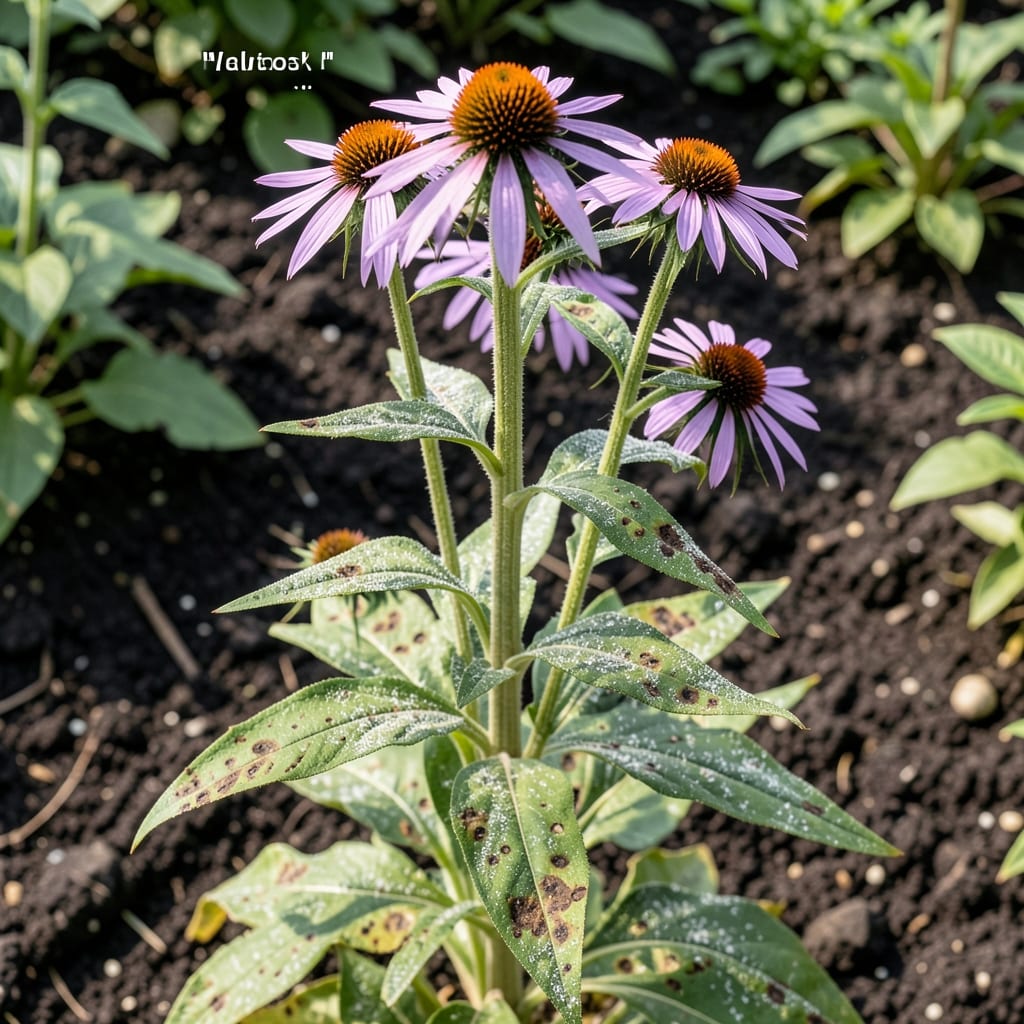
Echinacea plants commonly face fungal diseases like powdery mildew and aster yellows, along with bacterial leaf spot. Proper spacing, air circulation, and organic fungicides help prevent these issues effectively.
In my experience, these plants often fall victim to powdery mildew when humidity spikes or airflow is restricted. 🌿 I’ve seen bacterial leaf spot create unsightly dark patches, while aster yellows can stunt growth entirely. The key is proactive care—start with well-draining soil and monitor for early signs like yellowing leaves or white fungal growth.
💡 In This Article
Powdery mildew appears as a white, powdery coating on leaves, often thriving in humidity above 60% with poor air circulation. This fungal disease spreads rapidly, causing leaves to yellow and distort. 🔥
Aster yellows, caused by a phytoplasma, manifest as stunted growth and yellow-green discoloration. Infected plants develop witch’s broom-like clusters of small, pale leaves instead of normal blooms.
Bacterial leaf spot creates dark, water-soaked lesions with yellow halos. These spots often merge, forming large dead areas. Warm, wet conditions accelerate its spread, especially in crowded plantings.
Root rot, from overly moist soil, causes wilting and blackened roots. Echinacea prefers well-draining soil with pH 6.0-7.0. Early signs include yellowing lower leaves and stunted growth. ✨
Viral diseases like cucumber mosaic create mottled leaves and distorted flowers. These spread via aphids, so controlling these pests is crucial for prevention.
Regular inspection helps catch these issues early. Look for unusual spots, color changes, or growth patterns that deviate from healthy echinacea’s vibrant green leaves and sturdy stems. 💫
That’s powdery mildew, a fungal disease thriving in humidity above 60% with poor airflow. It spreads quickly, turning leaves yellow and distorted. Prevent it with 1 tablespoon neem oil per gallon of water.
Bacterial leaf spot creates water-soaked lesions with yellow halos. Remove infected leaves immediately and apply copper fungicide mixed at 1 tablespoon per gallon of water. Avoid overhead watering.
Aster yellows, caused by phytoplasma, stunts growth and creates witch’s broom clusters. There’s no cure, so remove infected plants to prevent spread. Control aphids to stop transmission.
If roots are blackened and mushy, it’s often too late. Prevent it with well-draining soil and pH 6.0-7.0. Early signs include wilting and yellowing lower leaves.
Every 3-4 years to prevent disease buildup. This breaks pathogen lifecycles in the soil. Pair with companion plants like marigolds for added protection.