
Beautiful Plants For Your Interior
Beautiful Plants For Your Interior
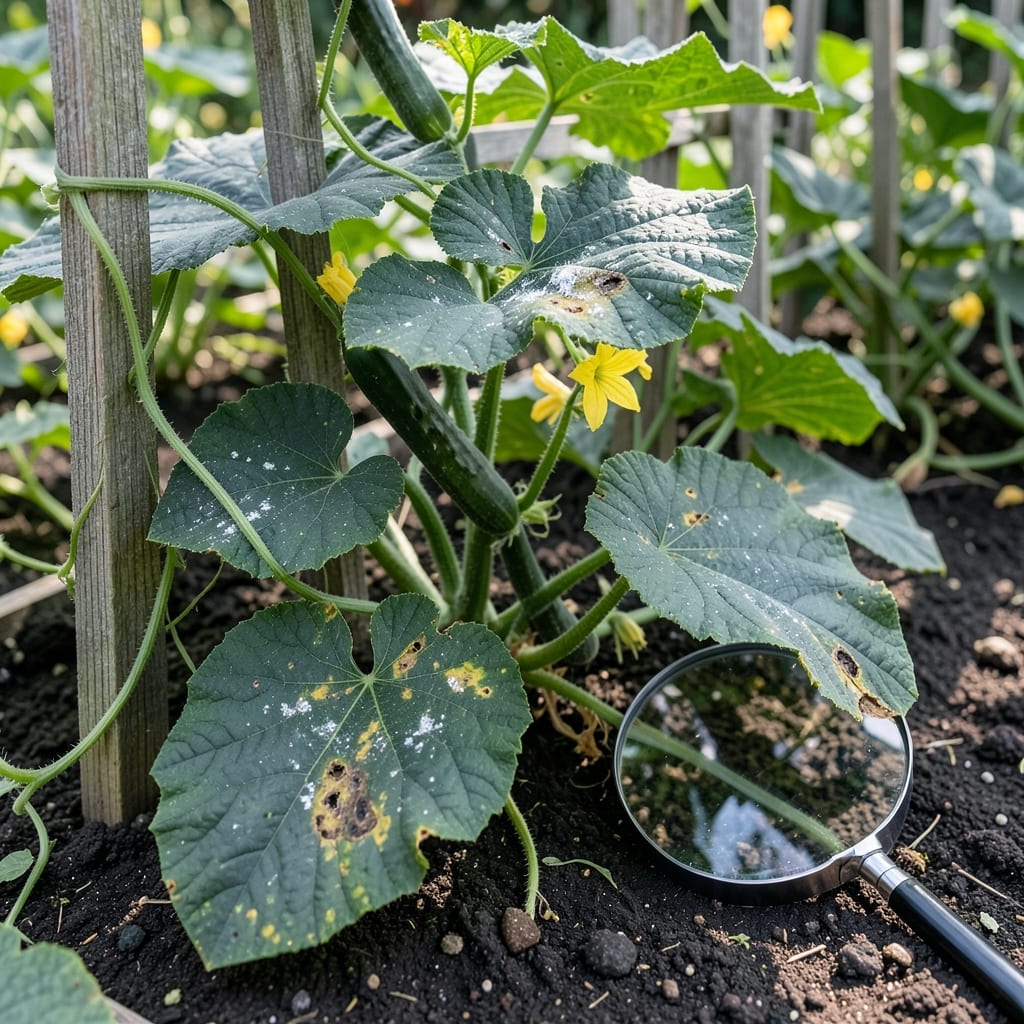
Spotted yellow leaves and white powder on your cucumber vines mean trouble. I’ve lost entire crops to fungal diseases before learning to spot the early signs—before it’s too late to save the plants.
The usual suspects are powdery mildew, downy mildew, and anthracnose, each leaving distinct marks on leaves and fruit. Catching them early changes everything. A little vigilance and the right response can turn the tide in 48 hours.
You’ll stop the spread with targeted sprays, better airflow, and simple cultural fixes. Organic options work just as well as chemical treatments if you act fast. The key is consistency—not just one treatment but a season-long strategy.
Prevention starts with resistant varieties, proper spacing, and cleaning up old plant debris. This guide shows you exactly what to look for and how to respond.
Fungal diseases in cucumbers thrive under specific environmental and cultural conditions. Understanding the root causes helps in implementing targeted prevention strategies. Below are the primary factors that contribute to these infections:
Fungi like Powdery Mildew and Downy Mildew flourish in wet, humid environments. Overhead irrigation, poor soil drainage, or frequent rainfall creates the perfect breeding ground. Waterlogged soil or prolonged leaf wetness (over 6–12 hours) allows fungal spores to germinate and infect plant tissues. Actionable tip: Use drip irrigation to keep foliage dry and improve soil drainage with organic matter.
Most cucumber fungal pathogens, such as Alternaria Leaf Spot and Anthracnose, thrive in moderate temperatures (60–77°F / 15–25°C) combined with high humidity (80%+). Greenhouses or densely planted fields can trap moisture, accelerating spore spread. Actionable tip: Space plants 12–18 inches apart for airflow and use shade cloth in extreme heat to reduce stress.
Fungal spores overwinter in crop residue, soil, or contaminated tools. Fusarium Wilt and Phytophthora Blight persist in soil for years, infecting new plants through roots or splashing water. Actionable tip: Rotate crops (avoid cucurbits for 3+ years) and remove/burn infected plant debris post-harvest.
Dense canopies restrict airflow, trapping moisture and creating microclimates ideal for fungi like Cercospora Leaf Spot. Over-fertilization (especially nitrogen-heavy) promotes lush, susceptible foliage. Actionable tip: Prune lower leaves to improve ventilation and avoid excessive nitrogen applications.
Some pathogens, such as Pythium (damping-off), are seedborne. Using untreated seeds or infected transplants introduces fungi directly into your crop. Actionable tip: Source certified disease-free seeds and treat them with hot water (122°F / 50°C for 20 minutes) or fungicidal soaks.
Fungal diseases can wreak havoc on your cucumber plants, but with the right approach, you can nurse them back to health. Below are targeted solutions for common fungal issues, along with prevention tips to keep your garden thriving.
If you spot white, powdery spots on leaves, act fast. Mix 1 tablespoon of baking soda and 1 teaspoon of dish soap in a gallon of water, then spray affected plants weekly. For severe cases, use a copper-based fungicide. Prevention tip: 💡 Ensure good air circulation by spacing plants properly and watering at the base to keep foliage dry.
Yellow patches on top of leaves with grayish growth underneath signal downy mildew. Remove infected leaves immediately and apply a fungicide containing chlorothalonil or mancozeb. Prevention tip: ✨ Avoid overhead watering and rotate crops yearly to reduce fungal spores in the soil.
Dark, sunken spots on leaves or fruit mean anthracnose is present. Remove and destroy infected plant parts, then treat with a copper fungicide. Prevention tip: 🎯 Use drip irrigation to minimize leaf wetness, and opt for disease-resistant cucumber varieties.
Wilting leaves and stunted growth often point to Fusarium wilt. Unfortunately, there’s no cure, so remove and destroy infected plants to prevent spread. Prevention tip: 🌡️ Solarize soil before planting and choose resistant cucumber seeds labeled with “F” for Fusarium resistance.
Regularly inspect your plants for early signs of trouble, and always sanitize tools to avoid spreading fungal spores. With these steps, your cucumbers can bounce back stronger! 🌿
Look for white powdery spots for mildew or yellow patches with gray undersides for downy mildew. Dark, sunken spots signal anthracnose. Catching these early gives you a 48-hour window to act.
Yes! A mix of 1 tablespoon baking soda and 1 teaspoon dish soap in a gallon of water works well for powdery mildew. Apply weekly for prevention.
Space plants 12-18 inches apart, use drip irrigation, and remove old plant debris. Rotate crops yearly and choose resistant varieties.
No cure exists. Remove infected plants immediately to prevent spread. Solarize soil and plant resistant seeds labeled “F”.