
Beautiful Plants For Your Interior
Beautiful Plants For Your Interior
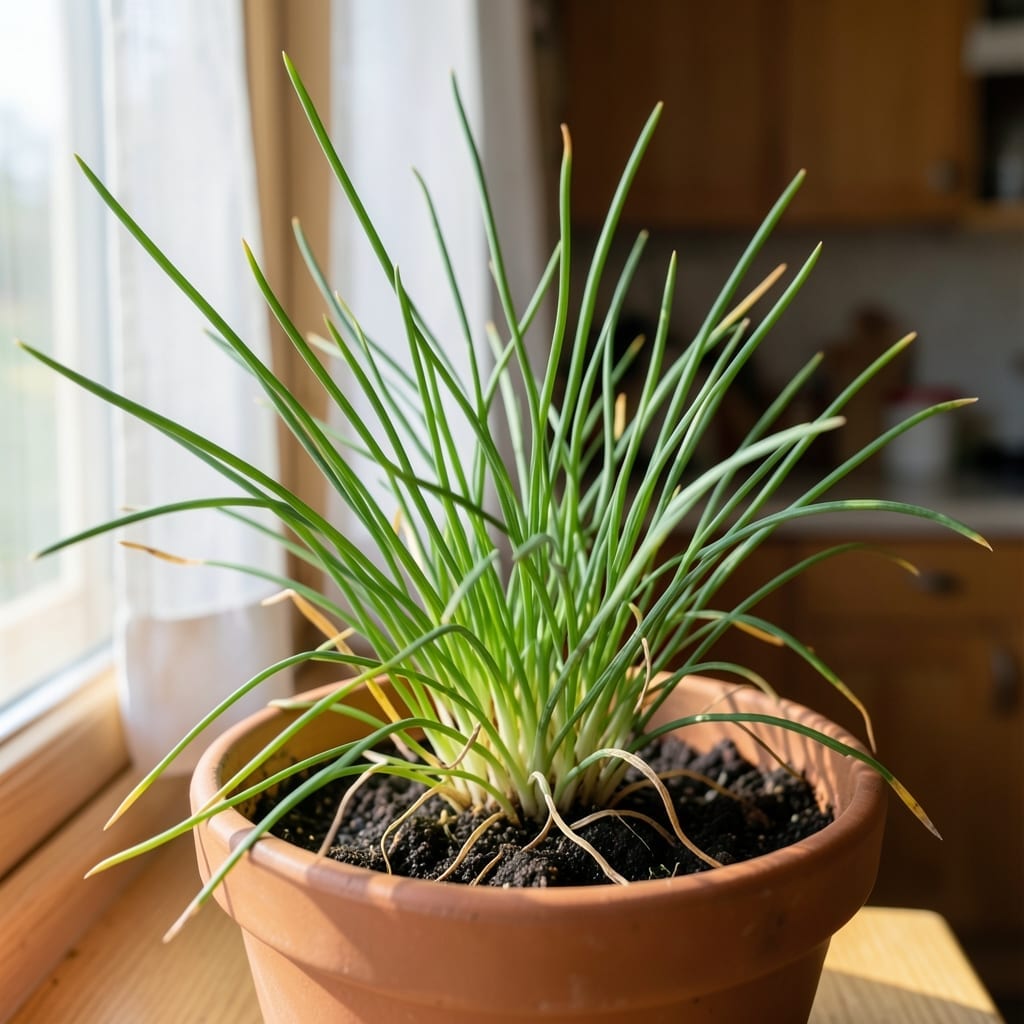
Yellow chives in your garden aren’t a death sentence. I’ve nursed more patches back to health than I can count, and the fix is usually simpler than you’d think.
The culprit is often hiding in plain sight—too much water, not enough nitrogen, or soil that’s thrown its pH out of whack. Your plants might be drowning, starving, or slowly poisoning themselves without you realizing it.
Once you pinpoint the issue, you’ll see green regrowth within 7-10 days of treatment. The key is matching symptoms to solutions: wilting means water, pale leaves mean food, and stunted growth usually means soil chemistry needs attention.
Works for container or in-ground chives, and the same principles apply to most herbs. Here’s how to diagnose and fix it.
Chives turning yellow often signal underlying issues that disrupt their health. Here are the most frequent culprits:
Yellowing can stem from a lack of nitrogen, a key nutrient for leafy growth. Nitrogen deficiency typically causes uniform yellowing of older leaves first. Similarly, a magnesium shortage may lead to interveinal chlorosis—yellowing between leaf veins—while potassium deficiency often starts at leaf edges. Test your soil to confirm imbalances.
Excess water suffocates chive roots, preventing oxygen uptake. This stress triggers yellowing, often accompanied by wilting or mushy stems. Ensure your soil is well-draining and let the top inch dry between waterings. Chives prefer moist but not soggy conditions.
Chives thrive in 60–75°F (15–24°C). Heat stress or sudden cold snaps can cause yellowing, especially in younger leaves. Provide shade during heatwaves or use row covers for frost protection.
Sap-sucking pests like aphids or thrips drain nutrients, leading to yellow, stunted growth. Check leaf undersides for tiny insects or sticky residue (honeydew). Treat with neem oil or insecticidal soap.
Chives prefer a slightly acidic to neutral pH (6.0–7.0). Highly alkaline or acidic soil can lock out essential nutrients, causing yellowing. Conduct a soil test and amend with lime (to raise pH) or sulfur (to lower pH) as needed.
Revive your chives with these targeted fixes for the most common causes of yellowing.
If soggy soil is the culprit, stop watering immediately and let the top inch of soil dry out. For potted chives, ensure the container has drainage holes. Repot if roots are waterlogged or rotten, trimming any black, mushy roots with clean shears. Prevention tip: 💡 Water only when the soil feels dry 1 inch down, and always use well-draining soil.
A lack of nitrogen often turns leaves pale yellow. Apply a balanced, water-soluble fertilizer (10-10-10) every 4–6 weeks during the growing season. For organic gardens, work in compost or fish emulsion. If yellowing starts at the leaf tips, suspect potassium deficiency—add wood ash or a potassium-rich amendment. Prevention tip: ✨ Feed chives lightly but regularly to maintain soil fertility.
Chives thrive in slightly acidic to neutral soil (pH 6.0–7.0). Test your soil with a pH kit, then amend as needed: add lime to raise pH or sulfur to lower it. Mix in the amendment thoroughly before planting or top-dress around existing plants. Prevention tip: 🎯 Retest soil pH every 2–3 years, as it can shift over time.
Leggy, yellow chives often mean they’re not getting enough sun. Move pots to a sunnier spot (6+ hours of light daily) or thin nearby plants shading garden chives. If light is limited, supplement with a grow light. Prevention tip: 🔥 Rotate potted chives weekly for even exposure.
Inspect leaves for aphids, spider mites, or fungal spots. Blast pests off with water or apply insecticidal soap. For fungal issues, improve air circulation and avoid overhead watering. Remove severely affected foliage to prevent spread. Prevention tip: 🌿 Space plants properly and keep the garden free of debris.
Water when the top 1 inch of soil feels dry. Chives prefer moist but not soggy conditions. Overwatering is a common cause of yellowing leaves.
Yes! Once you address the issue, new growth should appear green within 7-10 days. Trim severely yellowed leaves to redirect energy to healthy foliage.
A balanced 10-10-10 fertilizer works well. Apply every 4-6 weeks during growing season. For organic options, use compost or fish emulsion.
Treat with neem oil or insecticidal soap, then give them 1-2 weeks to bounce back. Remove heavily infested leaves to prevent spread.