
Beautiful Plants For Your Interior
Beautiful Plants For Your Interior
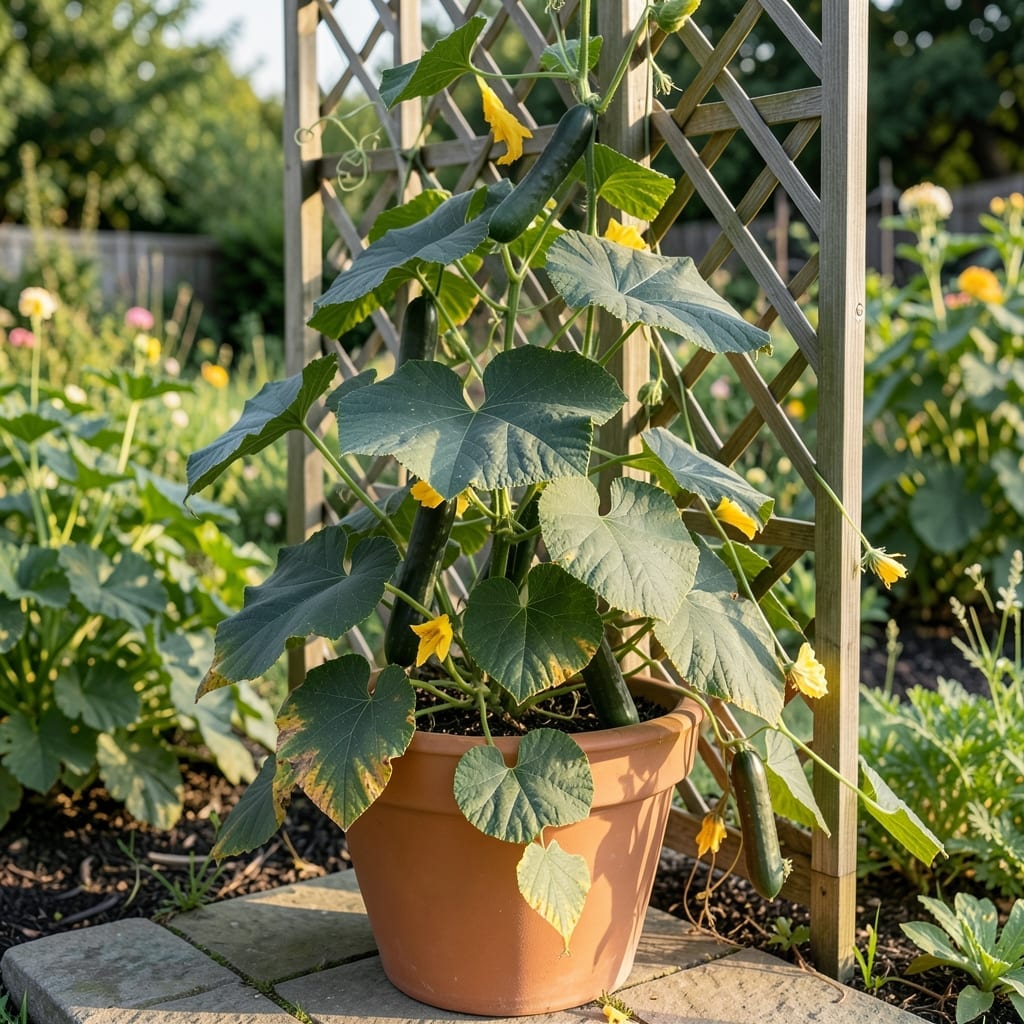
Yellow leaves on container cucumbers aren’t a death sentence. I’ve rescued more than a few by catching the warning signs early and adjusting care before the plant gives up.
The usual suspects are simple: not enough nitrogen, too much water, or roots begging for air. Most container gardeners overthink this—it’s about matching what the plant needs to what you’re giving it. A few tweaks often fix it fast.
You’ll see fresh green growth return within 7-10 days once conditions improve. The key is acting before yellow spreads to new leaves, which signals the problem is getting worse, not better.
Works for all container sizes and cucumber varieties. Let’s get those vines back on track.
Yellow leaves on container-grown cucumbers often signal nutritional or environmental stress. Below are the most common causes, explained with actionable insights.
Nitrogen is critical for chlorophyll production. When deficient, older leaves turn pale yellow first while veins may stay green. Containers deplete nitrogen faster than garden soil, especially with frequent watering. Fix: Use a balanced, water-soluble fertilizer (e.g., 10-10-10) or top-dress with compost.
Soggy soil suffocates roots, blocking nutrient uptake. Yellowing starts on lower leaves and may spread upward. Containers without drainage holes or compacted potting mix worsen this. Fix: Ensure pots have drainage holes and use a well-draining mix (e.g., 60% potting soil + 40% perlite). Water only when the top inch of soil is dry.
Cucumbers need 6–8 hours of sunlight daily. Too little light causes uniform yellowing (often with leggy growth), while scorched yellow patches indicate excessive direct sun, common in small containers. Fix: Move plants to a sunnier spot or provide shade cloth during peak afternoon heat.
Magnesium deficiency causes yellowing between leaf veins (interveinal chlorosis), starting on older leaves. Iron deficiency shows similar symptoms but affects new growth first. Both are common in containers with high pH soil. Fix: Apply Epsom salt (magnesium sulfate) or chelated iron supplements, and test soil pH (aim for 6.0–6.8).
Spider mites, aphids, or whiteflies sap plant juices, causing stippled yellow spots or curled, discolored leaves. Check leaf undersides for webbing or tiny insects. Fix: Spray with insecticidal soap or neem oil, and isolate affected plants.
Tackling yellow leaves on your container cucumbers starts with identifying the root cause and applying the right fix. Below are targeted solutions, paired with prevention tips to keep your plants thriving.
If soggy soil is the culprit, let the top 1-2 inches of soil dry out between waterings. Fix: Poke drainage holes in the container if missing, and use a well-draining potting mix. Elevate pots to prevent waterlogging. Prevention tip: Water deeply but less frequently—check moisture with your finger before adding more. 💡
Yellowing often signals a lack of nitrogen (lower leaves) or magnesium (between veins). Fix: Use a balanced, water-soluble fertilizer (10-10-10) every 2 weeks, or add compost tea for a nutrient boost. For magnesium, sprinkle 1 tablespoon of Epsom salt per gallon of water at the base. Prevention tip: Mix slow-release granules into the soil at planting. ✨
Leggy growth with pale leaves? Your cucumbers may need more light. Fix: Move containers to a spot with 6-8 hours of sunlight daily. If leaves are scorched, provide afternoon shade with a sheer cloth. Prevention tip: Rotate pots weekly for even exposure. 🌡️
Check undersides of leaves for aphids or spider mites. Fix: Spray with insecticidal soap or neem oil every 3-5 days. For fungal issues (like powdery mildew), remove affected leaves and improve airflow. Prevention tip: Space containers apart and avoid wetting foliage when watering. 🎯
If roots circle the container, your plant is suffocating. Fix: Transplant to a larger pot (at least 12 inches deep) or trim back roots and refresh the soil. Prevention tip: Start with a container 2-3 inches wider than the root ball. 🌿
Water when the top 1-2 inches of soil feel dry. Containers dry out faster than garden soil, but overwatering causes yellowing. Check daily in hot weather.
Unfortunately, no. Once leaves yellow, they won’t recover. Remove them and focus on fixing the underlying issue to prevent new leaves from turning.
Use a balanced, water-soluble fertilizer like 10-10-10 every 2 weeks. For magnesium, add 1 tablespoon Epsom salt per gallon of water.
Yes. Small pots heat up quickly, scorching leaves. Provide afternoon shade if leaves develop yellow patches. Aim for 6-8 hours of morning sun.