
Beautiful Plants For Your Interior
Beautiful Plants For Your Interior
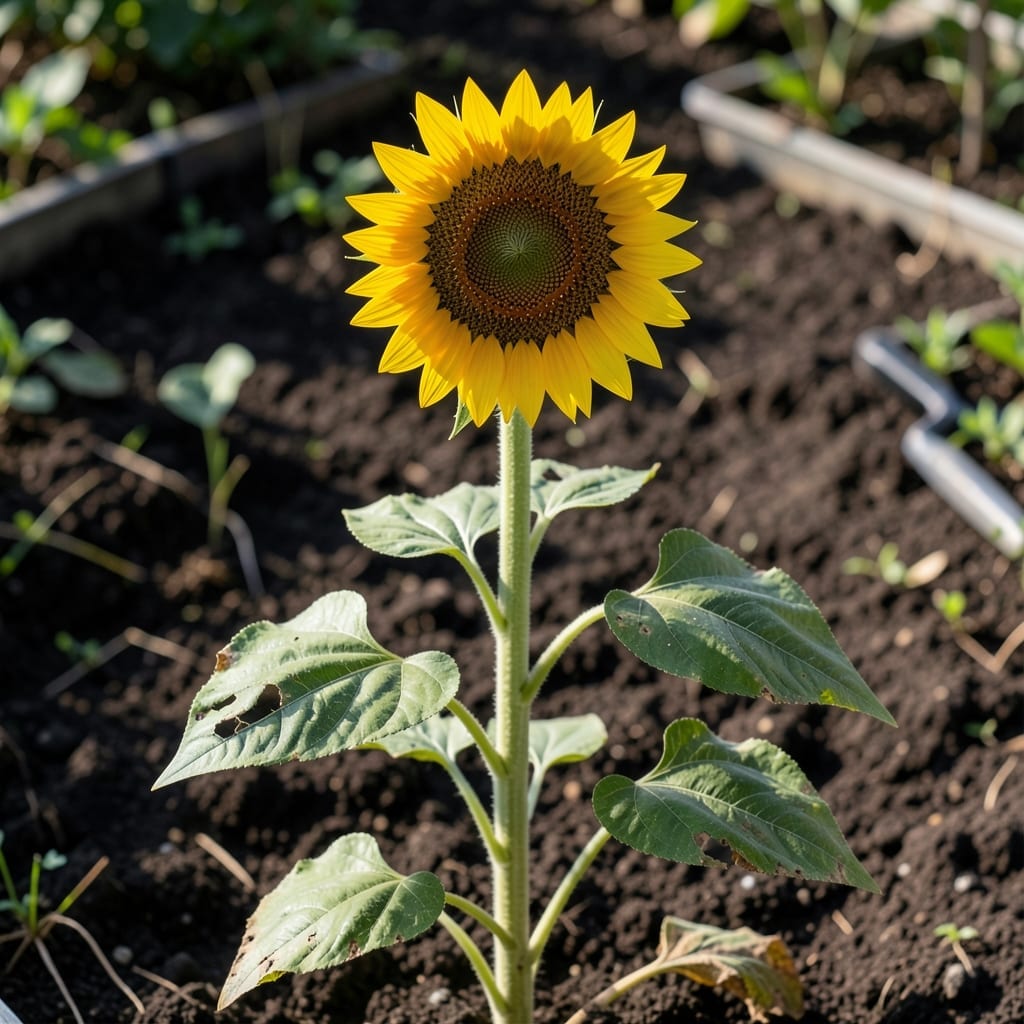
Nothing saddens a gardener like seeing sunflowers droop when they should be reaching for the sky. I’ve lost count of how many times I’ve rushed out with a watering can, only to realize the problem ran deeper than dry soil.
Wilted leaves usually signal one of four culprits: too little water, too much water, sneaky pests, or a silent disease. Each leaves its own fingerprint—yellowing edges, mushy stems, tiny bites, or powdery spots.
Once you learn to read these signs, you can fix the issue in 24-48 hours and get your plants standing tall again. The trick is catching it early before the whole stalk gives up.
Works for all varieties, from dwarf patio types to towering giants. Here’s how to play plant detective.
Sunflower leaves wilt for several reasons, often tied to environmental stress, disease, or poor care. Below are the most common causes, explained in clear, scientific terms.
Underwatering: Sunflowers need consistent moisture, especially during germination and bud formation. When the soil dries out, the plant’s vascular system fails to transport water to the leaves, causing turgor loss—the pressure that keeps cells rigid. Without it, leaves droop and wilt.
Overwatering: Excess water suffocates roots, preventing oxygen uptake. This leads to root rot (often caused by Phytophthora or Pythium fungi), which destroys root tissue. Damaged roots can’t absorb water, so leaves wilt despite soggy soil.
Sclerotinia sclerotiorum (white mold) and Alternaria helianthi (leaf blight) are common culprits. These pathogens attack stems and leaves, blocking water transport. Look for white fuzzy growth (Sclerotinia) or brown spots with concentric rings (Alternaria). Infected tissue dies, leading to wilting.
Sunflower stem weevils (Cylindrocopturus adspersus) and root maggots (Tetanops myopaeformis) bore into stems or roots, disrupting nutrient and water flow. Sunflower beetles (Zygogramma exclamationis) defoliate plants, reducing photosynthesis. Severe infestations weaken the plant, causing leaves to wilt from stress.
Sunflowers thrive in 70–85°F (21–29°C) but wilt under extreme heat (>95°F/35°C) due to transpiration overload—water evaporates faster than roots can replace it. Conversely, frost damage (below 32°F/0°C) ruptures cell membranes, leading to immediate wilting and blackened tissue.
A lack of potassium or magnesium weakens cell walls, making leaves more prone to wilting. Potassium deficiency often shows as yellowing leaf edges, while magnesium deficiency causes interveinal chlorosis (yellowing between veins). Both reduce the plant’s ability to regulate water.
Here’s how to revive your sunflowers and prevent future wilting, organized by the most common causes.
Give your sunflowers a slow, deep soak at the base (1–2 inches of water per week). Water in the early morning to reduce evaporation. Prevention: Check soil moisture 2 inches down—if dry, it’s time to water. Mulch with straw to retain moisture.
Stop watering immediately and let the soil dry out. If the roots are soggy, amend the soil with compost or perlite to boost drainage. Prevention: Use well-draining soil and pots with drainage holes. Water only when the top inch of soil feels dry.
For aphids or beetles, spray leaves with neem oil or a soapy water solution (1 tsp mild soap per quart of water). Remove heavily infested leaves. Prevention: Encourage ladybugs (natural predators) by planting companion flowers like marigolds.
Remove wilted or spotted leaves with sterilized pruners to stop the spread. Apply a copper-based fungicide for powdery mildew or rust. Prevention: Space plants 2–3 feet apart for airflow. Avoid overhead watering to keep leaves dry.
Provide temporary shade cloth during peak afternoon heat. Increase watering frequency (but avoid soggy soil). Prevention: Plant sunflowers where they get morning sun and afternoon shade in extreme climates.
💡 Pro Tip: Yellowing lower leaves are often natural aging—trim them to redirect energy to healthy growth.
Water deeply once a week with 1-2 inches of water, adjusting for rain. Check soil 2 inches down—if dry, water more frequently. Morning watering reduces evaporation.
First, check soil moisture. If dry, give a deep soak. If soggy, stop watering and improve drainage. For heat stress, add temporary shade and hydrate. Most recover in 24-48 hours.
Yes! Overwatering causes root rot, which blocks water uptake. Look for yellowing leaves and soggy soil. Let the soil dry out and amend with perlite for better drainage.
Remove only severely damaged or diseased leaves with sterilized pruners. If the wilting is from stress, the leaves may recover. Never remove more than 1/3 of foliage at once.