
Beautiful Plants For Your Interior
Beautiful Plants For Your Interior
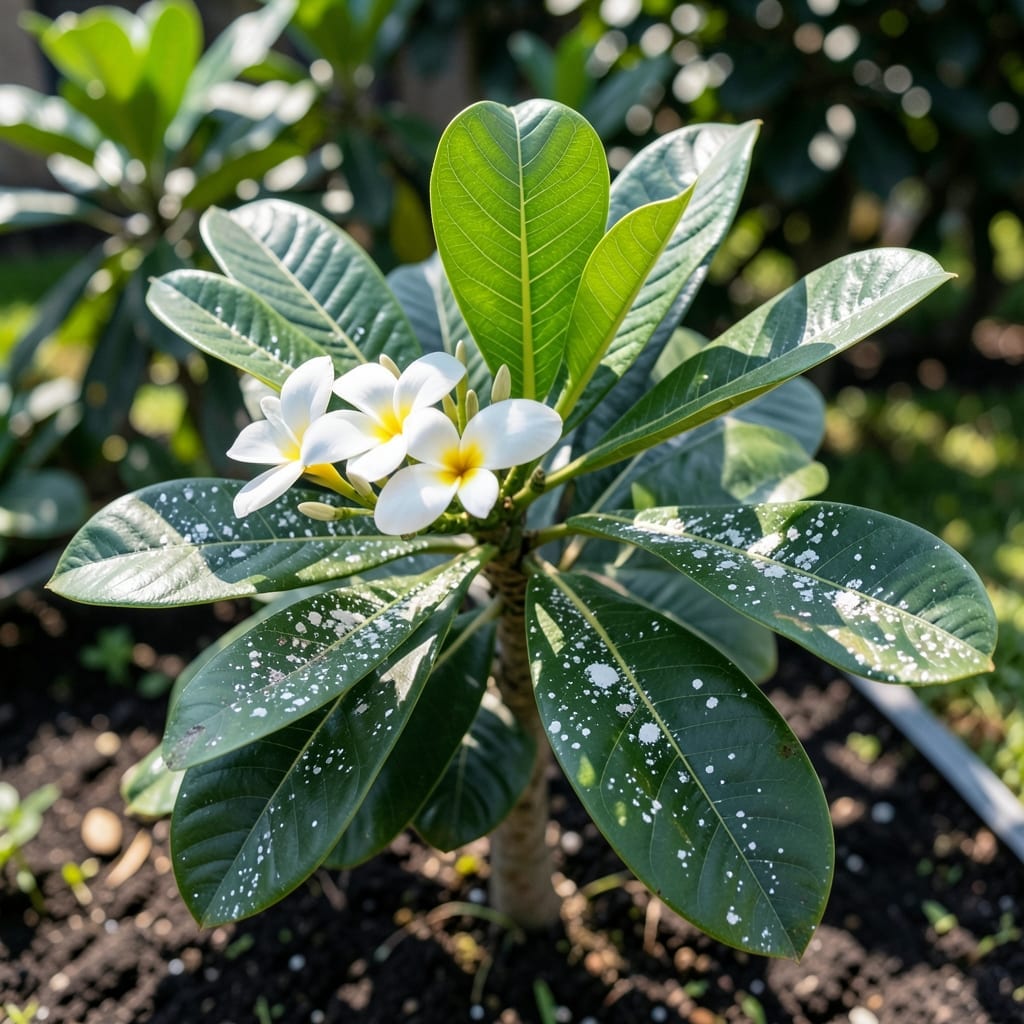
Those white spots on your plumeria leaves aren’t just unsightly—they’re a warning sign. I’ve seen this exact pattern before, and it usually means a fungal infection is taking hold.
The good news is that early action stops the spread. Most cases come from too much moisture on the leaves, especially in humid weather. Proper air circulation and a simple organic treatment can turn this around.
You’ll notice the spots start small, then grow and merge if left untreated. Catching them now means your plant can recover with minimal leaf loss.
Works for potted plants and garden specimens alike. Here’s how to diagnose and fix it fast.
White spots on plumeria leaves are a distress signal from your plant, and several culprits could be behind the issue. Understanding the root cause helps you address it effectively.
Powdery mildew (Oidium spp.) is a common fungal disease that thrives in humid, poorly ventilated environments. It appears as white, powdery patches on the surface of leaves, often spreading quickly if left untreated. Warm days and cool nights create ideal conditions for spores to germinate, especially when foliage stays wet for extended periods.
Excess moisture on leaves, whether from rain, overhead watering, or high humidity, can lead to leaf spot diseases. Hard water or mineral buildup from tap water may also leave white residues, mimicking fungal symptoms. Plumerias prefer dry foliage, so watering at the base and ensuring good airflow reduces this risk.
Mealybugs and scale insects often leave cottony or waxy white deposits on leaves as they feed on plant sap. These pests weaken the plant and can introduce secondary infections. Check the undersides of leaves and stem joints, where they typically hide.
Intense sunlight or accidental exposure to pesticides can cause chlorotic spots—pale or white areas where leaf tissue has been damaged. Unlike fungal spots, these are usually dry and papery, not powdery or sticky.
Tackling white spots on your plumeria leaves starts with identifying the cause and applying the right fix. Here’s how to address the most common issues:
Mix 1 tablespoon of baking soda and 1 teaspoon of mild liquid soap in a gallon of water. Spray this solution on the affected leaves every 5–7 days until the spots fade. For severe cases, use neem oil (1 tablespoon per gallon of water) as a natural fungicide. Prevention tip: 💡 Avoid overhead watering and ensure good air circulation around your plants.
For mealybugs or spider mites, wipe leaves with a cotton swab dipped in rubbing alcohol or spray with insecticidal soap (1 teaspoon per quart of water). Repeat every 3–4 days until pests are gone. Prevention tip: 🌡️ Regularly inspect the undersides of leaves and keep the area free of debris.
If leaves show crispy white patches, move your plumeria to a spot with dappled shade or reduce direct afternoon sun. Gradually reintroduce sunlight to avoid shock. Prevention tip: ✨ Acclimate new plants slowly and use shade cloth during peak summer.
Wipe leaves with a damp cloth or rinse with distilled water to remove hard water stains. Avoid tap water if your area has high mineral content. Prevention tip: 🎯 Use rainwater or filtered water for misting.
Yes, fungal spores and pests can travel between plants, especially in crowded gardens. Isolate affected plumerias immediately and avoid watering nearby plants overhead to prevent contamination.
With consistent application, organic fungicides like neem oil typically show improvement in 7–10 days. Pest treatments may work faster—expect mealybugs to disappear within 3–5 days of proper care.
Existing spots won’t vanish but new growth will be healthy. Damaged leaves may eventually fall off, replaced by spot-free foliage if the underlying issue is resolved.
Chemical options work faster but can harm beneficial insects. Stick to organic treatments like baking soda or neem oil first for a gentler, eco-friendly approach.