
Beautiful Plants For Your Interior
Beautiful Plants For Your Interior
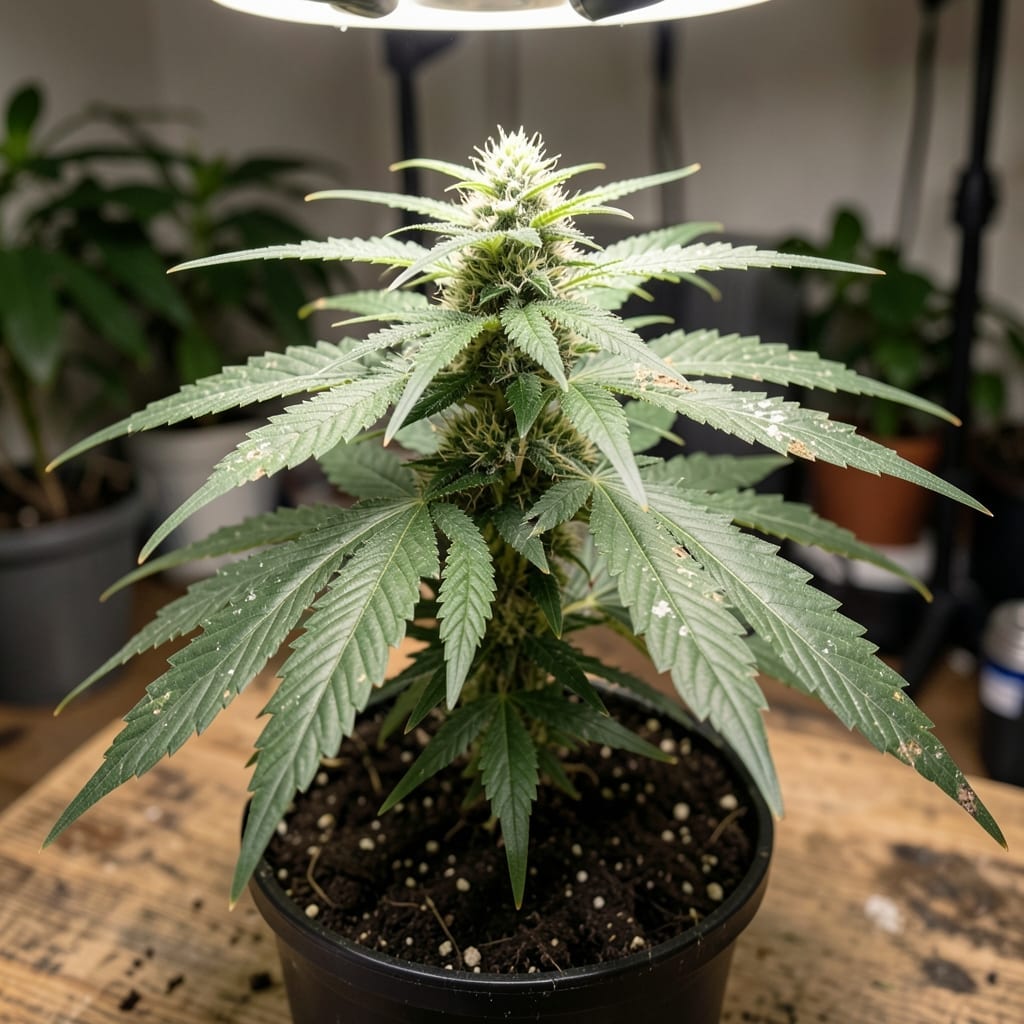
White spots on fan leaves always send my pulse racing. I’ve lost count of how many plants I’ve saved by catching this early—before it spreads to the entire canopy and beyond.
Here’s the thing—those spots aren’t random. They’re your plant’s way of waving a red flag, whether it’s powdery mildew, hungry pests, or a nutrient mix-up. The fix starts with knowing which culprit you’re dealing with.
With the right approach, you’ll restore that vibrant green and stop the damage in its tracks. Most solutions take under a week to show real improvement.
Works for cannabis, houseplants, or any leafy green showing stress. Let’s get to the root of it.
White spots on fan leaves often signal underlying issues that disrupt a plant’s health. Below are the most common causes, explained with actionable insights to help you diagnose and address the problem.
Fungi like Powdery Mildew or Downy Mildew thrive in humid, poorly ventilated environments. These pathogens form white, powdery, or downy spots on the leaf surface as they feed on plant tissues. High humidity (above 60%) and poor airflow accelerate their growth. To confirm, check for spots that spread rapidly and appear on both sides of the leaf.
Pests such as spider mites, whiteflies, or mealybugs can leave behind white residue or stippling. Spider mites, for instance, suck sap from cells, creating tiny white or yellow dots. Whiteflies secrete a sticky substance (honeydew) that can develop into white mold. Inspect the undersides of leaves for webbing, eggs, or crawling insects.
Hard water or foliar sprays with high mineral content (e.g., calcium, magnesium) can leave white, chalky deposits on leaves. These spots are superficial and can often be wiped off. If your water source has a high pH (above 7.5) or contains excess dissolved solids, it may contribute to this issue.
Exposure to intense light (e.g., direct sunlight or grow lights too close) can cause bleaching or white patches due to chlorophyll breakdown. Similarly, heat stress (temperatures above 90°F) or cold shock (below 50°F) may lead to localized discoloration. Check for spots that appear dry or crispy.
While less common, imbalances in nutrients like zinc or iron can manifest as white or yellow interveinal spots. Conversely, over-fertilization (especially with calcium or magnesium) may cause salt buildup, leading to white residues. Test your soil or growing medium to rule out nutritional issues.
Addressing white spots on fan leaves starts with identifying the root cause. Below are targeted solutions for the most common issues, paired with prevention tips to keep your plants thriving.
If the spots are fuzzy or spread quickly, a fungal issue like powdery mildew is likely. Fix: Remove infected leaves and apply a fungicide (neem oil or sulfur-based sprays work well). Improve airflow around the plant by pruning dense foliage and ensuring proper spacing.
Prevention: Avoid overhead watering, water early in the day, and maintain humidity below 60%. 💡 Regularly clean garden tools to prevent spore spread.
Tiny white spots may signal pests like spider mites or mealybugs. Fix: Wipe leaves with a soapy water solution (1 tsp mild dish soap per quart of water) or use insecticidal soap. For severe cases, introduce beneficial predators like ladybugs.
Prevention: Inspect plants weekly for early signs of pests. Keep the growing area clean and free of debris where pests can hide. ✨ Quarantine new plants before introducing them to your garden.
White spots from sunburn or heat stress often appear on leaves exposed to intense light. Fix: Move potted plants to a shadier spot or use shade cloth to diffuse sunlight. For outdoor plants, ensure they’re acclimated to direct sun gradually.
Prevention: Monitor light exposure, especially during peak hours (10 AM–4 PM). 🌡️ Use a thermometer to track temperature fluctuations in your growing area.
Calcium or magnesium deficiencies can cause white or yellowish spots. Fix: Test your soil and amend it with the missing nutrients. For calcium, add crushed eggshells or lime; for magnesium, use Epsom salt (1 tbsp per gallon of water) as a foliar spray.
Prevention: Use a balanced fertilizer and rotate nutrient sources to avoid depletion. 📊 Conduct soil tests every 6 months to catch deficiencies early.
Yes, fungal spores and pests can travel between plants. Isolate affected ones immediately and check nearby foliage for early signs.
Pests often leave tiny dots or webbing, especially on leaf undersides. Fungal spots spread quickly and may feel fuzzy. Use a magnifying glass for close inspection.
Only if the spots are from mineral deposits. For pests or fungus, water alone won’t fix it—use treated solutions like neem oil or soapy water.
Yes, intense light can bleach leaves permanently. Move plants to shade or adjust grow lights to 18-24 inches above the canopy to prevent burning.