
Beautiful Plants For Your Interior
Beautiful Plants For Your Interior
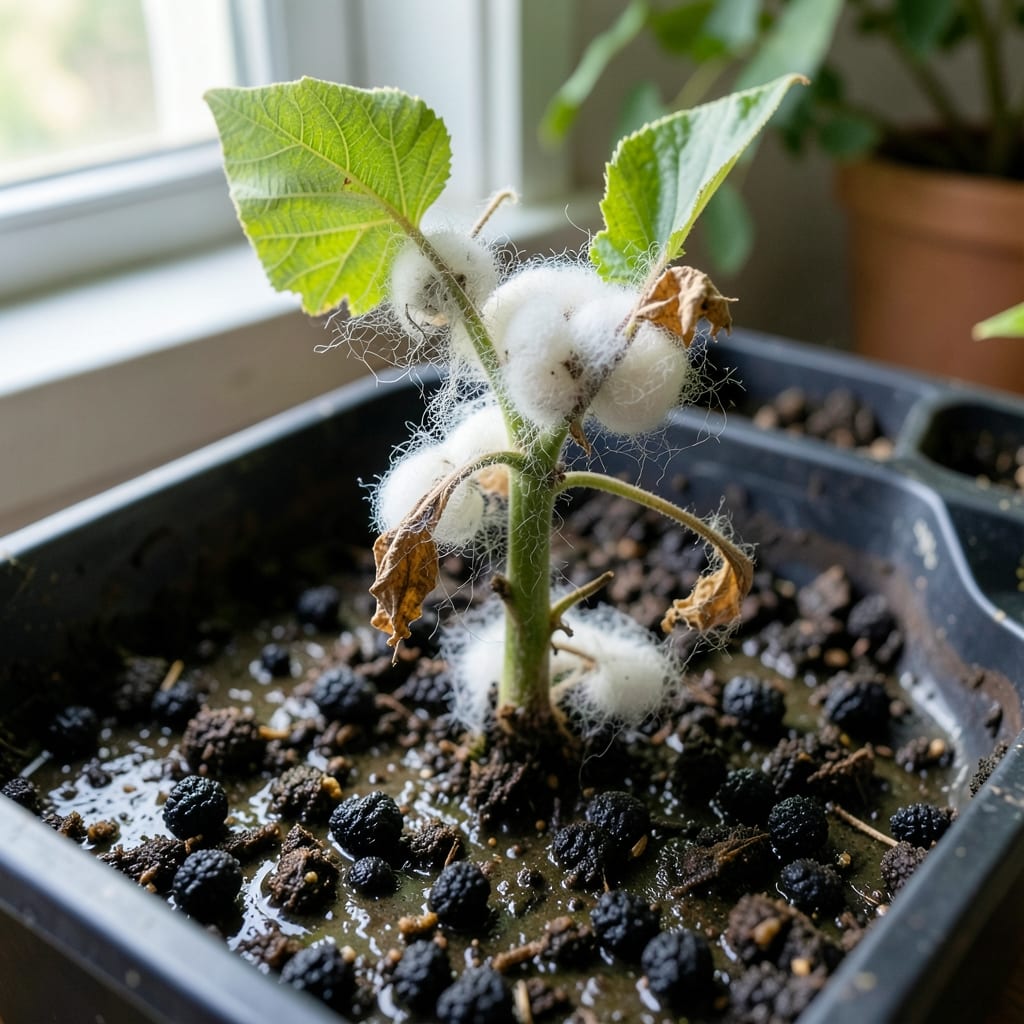
I lost an entire tray of seedlings to white mold last spring. It starts as a fuzzy white coating on stems and soil—easy to miss until it’s too late.
High humidity and poor air flow create the perfect conditions. I now run a small fan near my seed trays and thin seedlings early to improve circulation.
For infected plants, remove them immediately and treat the rest with a baking soda spray or organic fungicide. Catching it early saves the batch.
Prevention is simpler than cure: use sterile soil, avoid overwatering, and space plants properly. This season, my seedlings are thriving.
White mold on seedlings often stems from environmental and biological factors that encourage fungal growth. Here are the primary causes:
Excess moisture in the air (relative humidity above 60%) combined with stagnant air creates the perfect breeding ground for Sclerotinia sclerotiorum, the fungus responsible for white mold. Seedlings in crowded trays or poorly ventilated greenhouses are especially vulnerable.
Overwatered soil or leaves that remain wet for extended periods invite fungal spores to germinate. Watering seedlings from above or splashing soil onto leaves can introduce the fungus to susceptible tissues.
The fungus can survive in soil or on seed surfaces as dormant sclerotia (hardened fungal bodies). Using unsterilized potting mix or infected seeds introduces the pathogen directly to young plants.
Crowded seedlings limit airflow, trapping humidity around stems and leaves. This microclimate accelerates spore germination and hyphal growth, leading to the characteristic white, cottony growth on stems and foliage.
White mold on seedlings can be frustrating, but these targeted fixes will help you restore health to your young plants. Below are solutions mapped to common causes, along with prevention tips to keep your garden thriving.
Stagnant air encourages mold growth. Fix it by:
Prevention tip: 💡 Avoid overcrowding trays—give each seedling its own space to breathe.
Excess moisture is a breeding ground for mold. Fix it by:
Prevention tip: 🌡️ Water in the morning so excess moisture evaporates during the day.
Mold spores in soil can spread quickly. Fix it by:
Prevention tip: ✨ Always start with high-quality, sterile seed-starting mix.
Greenhouses and indoor setups often trap humidity. Fix it by:
Prevention tip: 🎯 Aim for 40-60% humidity—use a hygrometer to monitor levels.
Yes, if caught early! Isolate affected seedlings and treat with a baking soda spray (1 tsp baking soda per 1 quart of water). Remove severely infected plants to prevent spread.
It often lingers in soil or on tools. Sterilize pots with a 10% bleach solution and use fresh, sterile potting mix. Avoid reusing soil from infected trays.
The fungus spreads quickly through spores. Keep infected seedlings away from healthy ones and improve airflow immediately to contain it.