
Beautiful Plants For Your Interior
Beautiful Plants For Your Interior
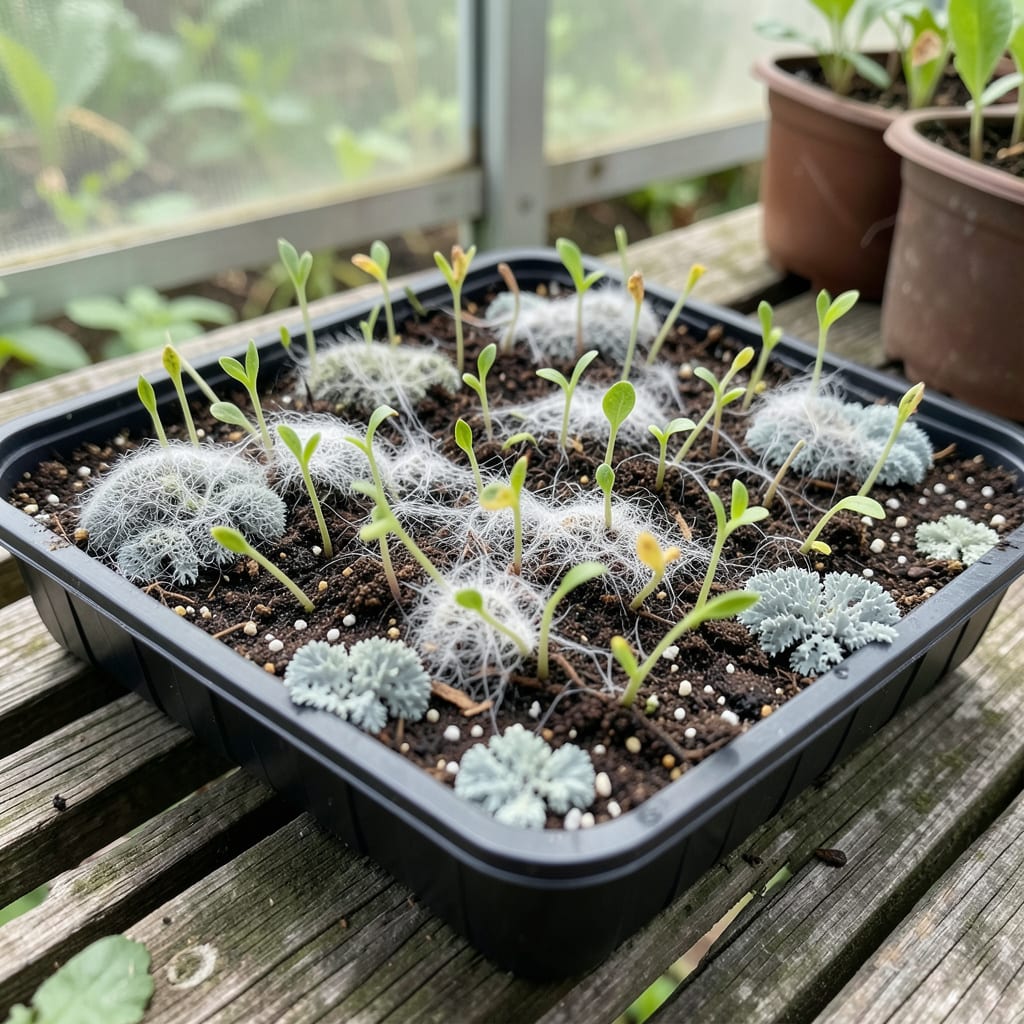
White fuzz on your seedling soil isn’t a death sentence. I’ve saved countless trays with simple fixes that stop mold in its tracks without chemicals.
The culprit is usually too much moisture and not enough airflow. Your seedlings need damp—not soggy—soil and a gentle breeze to keep things dry. A small fan on low does wonders.
Within 24-48 hours, you’ll see the mold retreat. The key is catching it early before it spreads to stems or leaves, which can stunt growth.
Works for any indoor setup, from windowsills to grow lights. Here’s how to keep your starts clean and thriving.
Mold on seedling soil is often a sign of environmental imbalances. Here are the most common causes, backed by science:
Overwatering creates a damp environment where mold spores thrive. Seedlings need consistent moisture, not soggy soil. When water pools or drainage is poor, fungal growth accelerates. Solution: Water only when the top inch of soil feels dry, and ensure pots have drainage holes.
Stagnant air traps humidity around seedlings, promoting mold. In enclosed spaces (like trays with lids), moisture can’t escape. Solution: Use a small fan on low to improve airflow, or remove lids once sprouts emerge.
Rich, undigested compost or fresh manure in seedling mix can feed mold. These materials break down slowly, releasing nutrients that fungi love. Solution: Use a sterile, well-aged seed-starting mix without large chunks of uncomposted material.
Weak or insufficient light slows seedling growth, leaving soil damp longer. Mold capitalizes on this prolonged moisture. Solution: Provide 12–16 hours of bright, indirect light daily (e.g., grow lights) to encourage fast, healthy growth.
Reusing old soil or dirty tools can introduce mold spores. Even new potting mixes may carry dormant fungi. Solution: Sterilize tools with rubbing alcohol and use fresh, high-quality seedling soil for each planting.
Mold on seedling soil can be frustrating, but it’s manageable with the right approach. Below are targeted solutions for common causes, along with prevention tips to keep your seedlings healthy.
If excess moisture is the culprit, let the soil dry out slightly between waterings. Use a spray bottle for gentle, controlled hydration instead of drenching the soil. Prevention tip: Always check the top inch of soil—if it’s dry, it’s time to water. 💡
Stagnant air traps moisture, encouraging mold. Move seedlings to a breezy spot or use a small fan on low to circulate air. Prevention tip: Avoid overcrowding trays—space seedlings at least 1-2 inches apart. 🌬️
If your growing area is too humid, use a dehumidifier or place a moisture absorber (like silica gel) nearby. Prevention tip: Opt for a well-ventilated greenhouse or grow lights with built-in fans. 🎯
Toss moldy soil and repot seedlings in fresh, sterile potting mix. For mild cases, sprinkle cinnamon (a natural fungicide) on the soil surface. Prevention tip: Always use pasteurized soil for seedlings. ✨
Mold thrives in dark, damp conditions. Move seedlings to a sunnier spot or supplement with grow lights (12-16 hours/day). Prevention tip: Rotate trays daily for even light distribution. 🔥
Act quickly at the first sign of mold, and your seedlings will bounce back stronger!
No, it’s usually harmless mold caused by excess moisture. It won’t hurt your seedlings if you address it quickly with better airflow and watering habits.
Use sterile soil, water only when the top inch is dry, and add a small fan for air circulation. Avoid overcrowding seedlings in trays.
Yes! Sprinkle cinnamon or a diluted hydrogen peroxide solution on the soil surface to kill mold naturally. Avoid bleach, as it can damage plants.
if caught early. Remove moldy soil, improve conditions, and your seedlings will bounce back within 2-3 days.
