
Beautiful Plants For Your Interior
Beautiful Plants For Your Interior
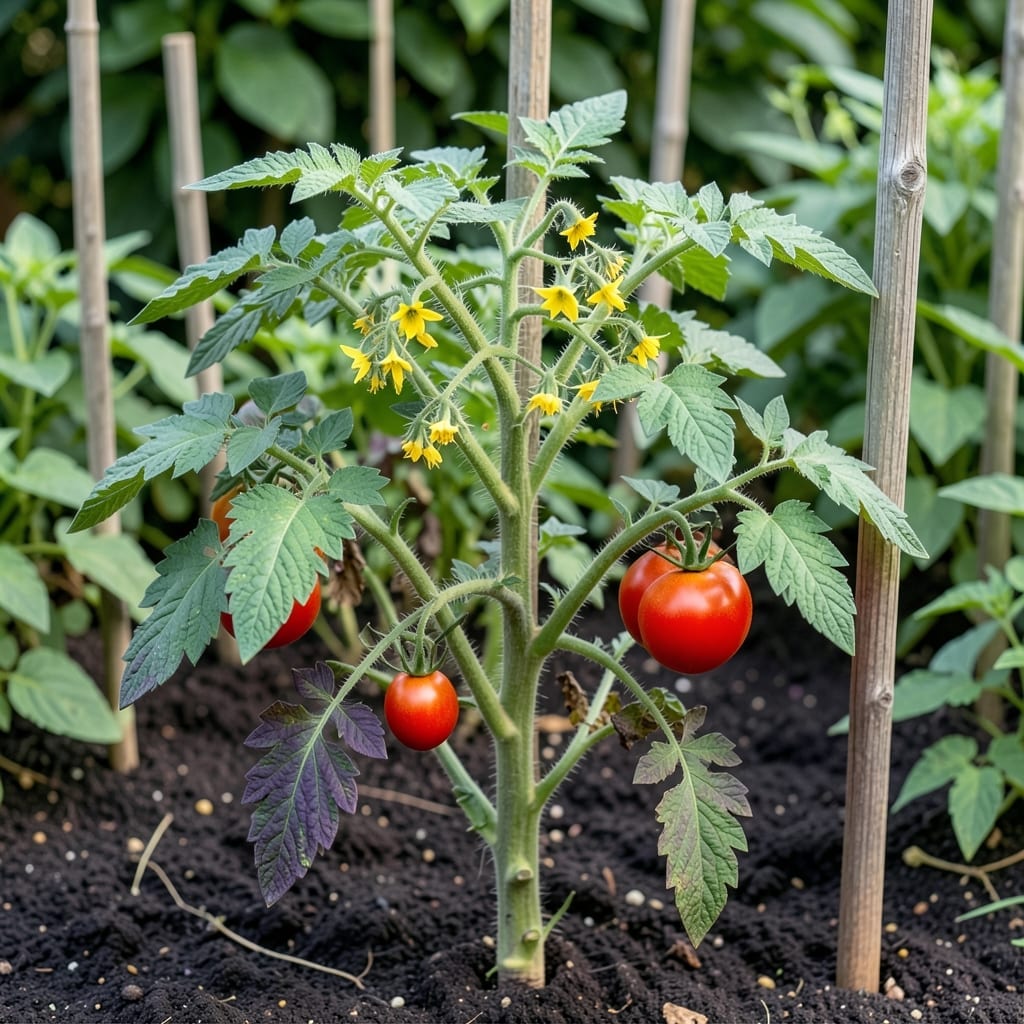
Purple leaves on tomato plants stopped me in my tracks last season. Turns out, it’s usually a phosphorus deficiency or cold shock—both fixable if you catch them early.
I’ve saved plants with a simple phosphorus boost or by shielding them from chilly nights. The fix often takes less than a week to show results, turning those purple hues back to healthy green.
Cold soil can lock up nutrients, so warming the roots with black plastic or compost helps. A balanced fertilizer or bone meal usually does the trick for phosphorus-starved plants.
No need to panic—this is one problem that responds fast to the right care. Your tomatoes will thank you with strong, green growth in no time.
Tomato plants turning purple often signal an underlying issue with their health or growing conditions. Below are the most common causes, explained with actionable insights.
The primary culprit is phosphorus deficiency, a nutrient vital for root development and energy transfer. When soil pH is too high (above 7.0) or temperatures drop below 55°F (13°C), phosphorus becomes less available. Leaves, especially on the underside, turn purple as the plant struggles to produce chlorophyll. Test your soil—amend with bone meal or a phosphorus-rich fertilizer if levels are low.
Tomatoes are warm-season crops. Exposure to chilly nights or cold snaps (below 50°F/10°C) can trigger purple discoloration, particularly on new growth. Cold slows phosphorus uptake, mimicking deficiency symptoms. Protect plants with row covers or move potted tomatoes indoors during cold spells.
Soggy soil suffocates roots, reducing their ability to absorb phosphorus and other nutrients. Waterlogged conditions also encourage fungal diseases that further stress the plant. Ensure your tomato beds have well-draining soil, and water only when the top inch of soil feels dry.
Some heirloom or specialty varieties, like ‘Purple Cherokee’ or ‘Black Beauty’, naturally develop purple hues in their leaves or stems due to anthocyanin pigments. If the discoloration is uniform and the plant appears healthy, it may simply be a cultivar characteristic rather than a problem.
If your tomato plants are turning purple, don’t panic—there are easy fixes to restore their health. Below are targeted solutions for the most common causes, along with prevention tips to keep your plants thriving.
If cold soil or low phosphorus is the culprit, warm up the roots and boost nutrients. Add compost or well-aged manure to the soil to improve phosphorus availability. For a quick fix, use a balanced, water-soluble fertilizer (like 10-10-10) or a high-phosphorus option (e.g., 5-10-5). Avoid over-fertilizing with nitrogen, as it can worsen the imbalance.
Prevention tip: 💡 Test your soil before planting and amend it with organic matter. Plant tomatoes in raised beds if your soil stays cold for long periods.
Purple leaves from chilly nights or cold soil? Protect plants with row covers or cloches to trap heat. Black or red plastic mulch can also warm the soil faster in spring. If potted, move containers to a sunnier, sheltered spot.
Prevention tip: 🌡️ Start seeds indoors or wait until soil temps reach at least 60°F (15°C) before transplanting.
Soggy roots restrict nutrient uptake, leading to purple hues. Check drainage—if water pools, amend the soil with perlite or sand. Water deeply but less frequently, allowing the top inch of soil to dry between waterings.
Prevention tip: ✨ Use drip irrigation to deliver water directly to the roots and avoid wetting the leaves.
If purple streaks or mottling appear, a virus like Tomato Yellow Leaf Curl may be to blame. Remove infected plants immediately to prevent spread. Control whiteflies (common carriers) with neem oil or insecticidal soap.
Prevention tip: 🎯 Rotate crops yearly and use resistant tomato varieties like ‘Tycoon’ or ‘Volgograd’.
Yes, temperatures below 50°F (10°C) can trigger purple discoloration. Cold slows phosphorus uptake, mimicking deficiency symptoms. Use row covers to protect plants during chilly nights.
Use a soil test kit to check phosphorus levels. If pH is above 7.0, amend with compost or bone meal. Results often show improvement within 1-2 weeks after treatment.
Yes, heirlooms like ‘Purple Cherokee’ or ‘Black Beauty’ develop purple hues naturally. If the plant looks healthy, it’s likely a genetic trait, not a deficiency.
Overwatering can suffocate roots, reducing nutrient absorption. Ensure soil drains well and water only when the top inch feels dry.