
Beautiful Plants For Your Interior
Beautiful Plants For Your Interior
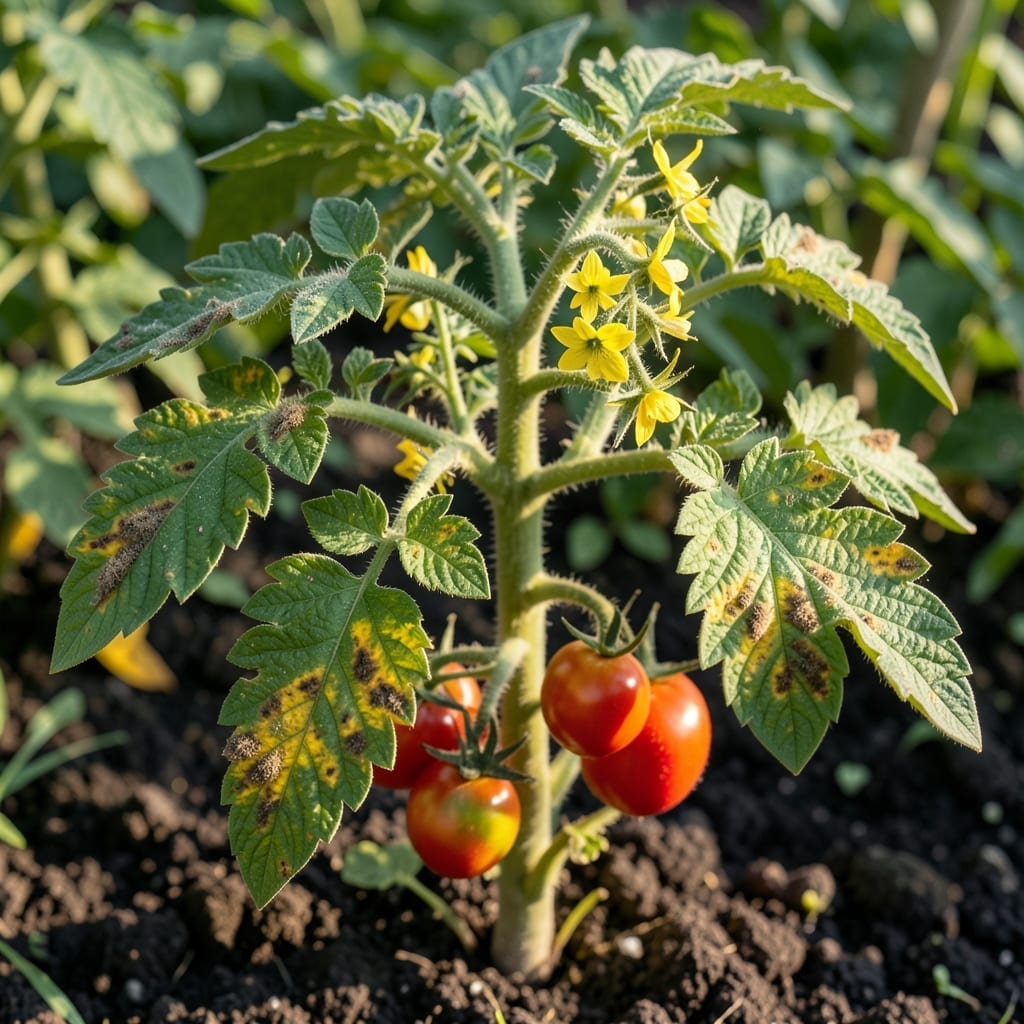
Yellow patches on lower leaves turned my tomato plants into a science experiment. Tomato leaf mold sneaks in when humidity lingers and air can’t move, attacking the leaves that need protection most.
I first spotted the pale yellow splotches on older leaves, then watched as they turned brown and papery. The disease spreads fast in crowded plants, especially during wet summers or in greenhouses with poor airflow.
Catching it early means the difference between a full harvest and a lost season. Remove affected leaves immediately and improve air circulation—your plants will thank you with stronger growth and healthier fruit.
Prevention is simpler than cure: space plants properly, water at the base, and keep leaves dry. This approach stops the fungus before it starts.
Understanding the root causes of this fungal issue helps you prevent and manage it effectively. Here are the primary factors that create the perfect storm for infection:
The fungus Pseudoperonospora belbahrii thrives in high humidity (85%+) and wet foliage. Overhead watering, dense plant spacing, or prolonged rain keeps leaves damp for hours, giving spores time to germinate. Stagnant air in greenhouses or crowded garden beds further traps moisture, accelerating spore spread.
This pathogen favors temperatures between 59–75°F (15–24°C)—ideal for spring and fall outbreaks. Shaded areas or late-season plantings with reduced sunlight slow leaf drying, creating a damp microclimate that encourages spore production and infection.
Some tomato cultivars lack genetic resistance. Additionally, overhead watering (vs. drip irrigation) wets leaves directly, while splashing water spreads spores from soil or infected debris to healthy foliage. Even resistant varieties can succumb if environmental conditions aren’t controlled.
The fungus overwinters in dead leaves, stems, or soil. If old plant material isn’t removed, spores reactivate in spring, infecting new growth. Crop rotation is critical—planting tomatoes in the same spot yearly builds up spores in the soil.
Tackling tomato leaf mold starts with addressing its root causes. Here’s how to treat and prevent this common fungal issue effectively:
Leaf mold thrives in damp, stagnant conditions. Prune affected leaves immediately to reduce humidity around the plant. Space plants at least 18–24 inches apart to ensure proper air circulation. Water at the base of the plant (not overhead) early in the day, so foliage dries quickly. 💡 Pro tip: Use a drip irrigation system to keep leaves dry.
Spores linger on infected debris. Remove all affected leaves and stems (even fallen ones) and dispose of them in the trash—not the compost. For severe cases, replace mulch with fresh, dry material to break the spore cycle. Apply a copper-based fungicide or neem oil spray weekly until the problem subsides.
Greenhouses and dense plantings trap moisture. Ventilate greenhouses daily, especially after rain or watering. If growing outdoors, stake or trellis tomatoes to lift foliage off the ground. Avoid overcrowding with companion plants that block airflow.
Consistency is key—monitor plants weekly and act at the first sign of yellowing or moldy patches.
It can spread rapidly in as little as 48 hours under wet, humid conditions. The fungus produces spores that travel on wind and water, infecting nearby plants if leaves stay damp.
No, never compost infected leaves. The fungus survives composting and can reinfect your garden. Seal and dispose of affected plant material in the trash to prevent further spread.
It rarely affects the tomatoes themselves, but severe cases can reduce yield and plant vitality. Focus on treating the foliage to keep your plants healthy and productive.
Water early in the morning so foliage dries quickly in the sun. This reduces the damp conditions that encourage fungal growth. Always aim for the base, not the leaves.