
Beautiful Plants For Your Interior
Beautiful Plants For Your Interior
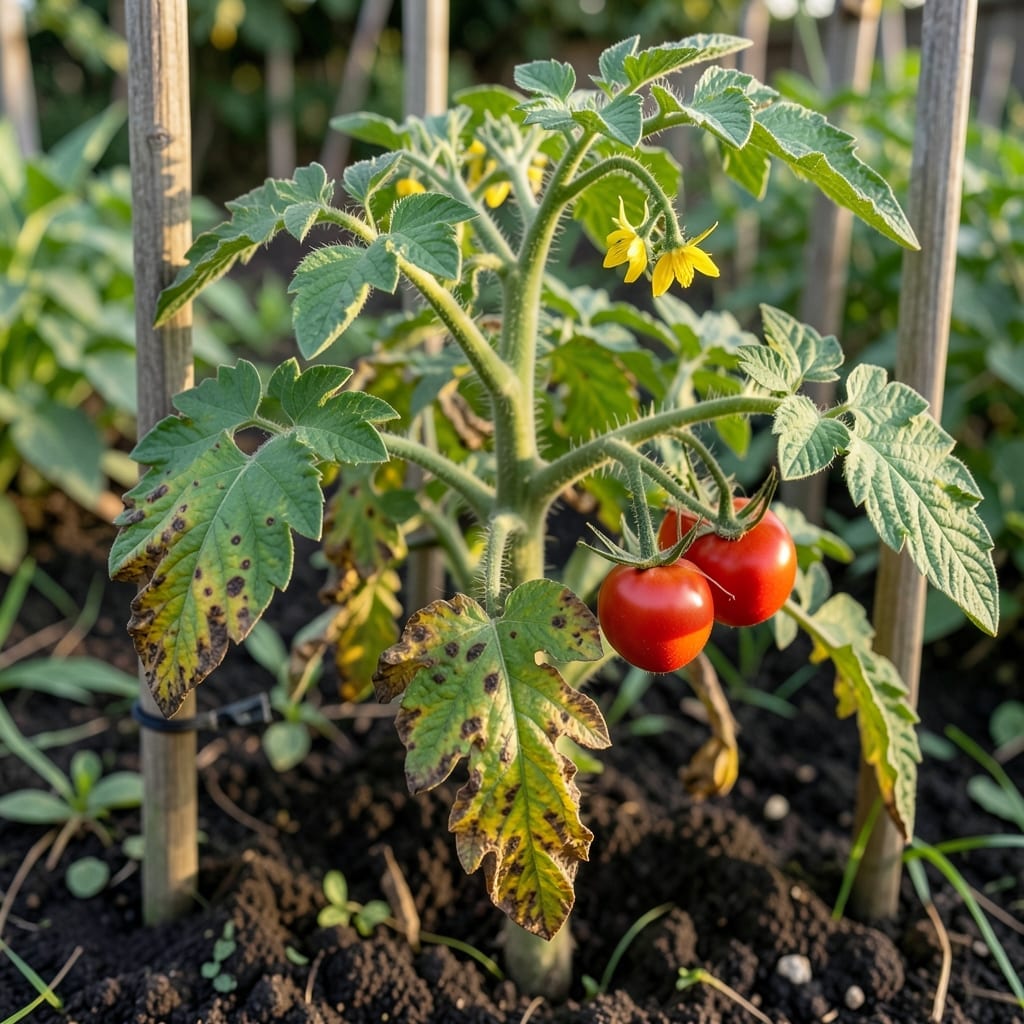
Brown spots on your tomato leaves mean trouble. I lost half my crop to tomato leaf blight last season before figuring out how to stop it.
The disease spreads fast in wet conditions, turning leaves yellow then brown. It starts with small dark spots, often with a lighter center, and moves through the plant quickly.
Organic prevention works best: rotate crops yearly, space plants for airflow, and water at the base. Remove infected leaves immediately to slow the spread.
With these methods, your plants stay healthy and productive. Early action saves your harvest from this common but manageable problem.
Tomato leaf blight doesn’t appear out of nowhere—it’s usually the result of specific environmental or cultural conditions. Understanding these triggers helps you prevent outbreaks before they start.
Fungal spores, like those from Alternaria solani or Phytophthora infestans, thrive in wet, humid conditions. Overhead watering, crowded plantings, or prolonged rain create the perfect breeding ground. Water droplets on leaves allow spores to germinate and penetrate plant tissue within hours.
Blight-causing pathogens are most active in temperatures between 60–75°F (15–24°C). Rapid temperature shifts, especially cool nights with warm days, stress plants and weaken their natural defenses, making them more susceptible to infection.
Fungal spores can overwinter in soil or on garden tools, debris, or infected plant remnants. If you reuse tools or plant in the same spot without rotation, you risk reintroducing the pathogen to new crops.
Plants under stress—whether from nutrient deficiencies, over-fertilization (especially high nitrogen), or physical damage—are less able to resist fungal attacks. Excess nitrogen promotes lush, tender growth that’s more vulnerable to blight.
Tackling tomato leaf blight starts with identifying the cause and applying the right fix. Here’s a practical, step-by-step guide to reclaiming healthy plants. 🌱✨
If fungal blight is the culprit, act fast. Remove infected leaves or entire plants to prevent spread. Dispose of them in sealed bags—do not compost. Apply a copper-based fungicide or a homemade mix of 1 tablespoon baking soda + 1 quart water + a drop of dish soap. Spray leaves thoroughly, focusing on undersides. Reapply every 7–10 days or after rain.
Prevention tip: 💡 Improve air circulation by spacing plants 18–24 inches apart. Water at the base to keep leaves dry.
Overwatering or poor drainage creates a blight-friendly environment. Switch to drip irrigation or water early in the day so foliage dries quickly. Use mulch to reduce soil splashing onto leaves. If plants are in pots, ensure containers have drainage holes.
Prevention tip: 💡 Avoid overhead watering, and thin out dense foliage to boost airflow.
Weak plants are more susceptible. Strengthen soil with compost or well-rotted manure to improve nutrient content. A side dressing of balanced organic fertilizer (like 5-5-5) can also help. Avoid high-nitrogen fertilizers, which promote leafy growth at the expense of disease resistance.
Prevention tip: ✨ Rotate crops yearly—never plant tomatoes in the same spot more than once every 3 years.
Pests like aphids can spread blight. Introduce beneficial insects (ladybugs, lacewings) or use neem oil spray to keep them in check. Inspect leaves weekly for early signs of pests or disease.
Prevention tip: 🎯 Plant companion herbs like basil or marigolds to repel pests naturally.
Look for small dark spots with lighter centers on lower leaves first. These spots grow and merge, turning leaves yellow then brown. Black lesions may appear on stems too.
Yes, it can infect potatoes, peppers and eggplants. These are all nightshade family members. Keep them separated and practice crop rotation.
Remove affected leaves immediately and treat with fungicide. Severe cases may require pulling the entire plant to protect others. Always dispose of infected material in sealed bags.
Space plants 18-24 inches apart, water at the base, and rotate crops yearly. Copper fungicides work well as a preventive spray.