
Beautiful Plants For Your Interior
Beautiful Plants For Your Interior
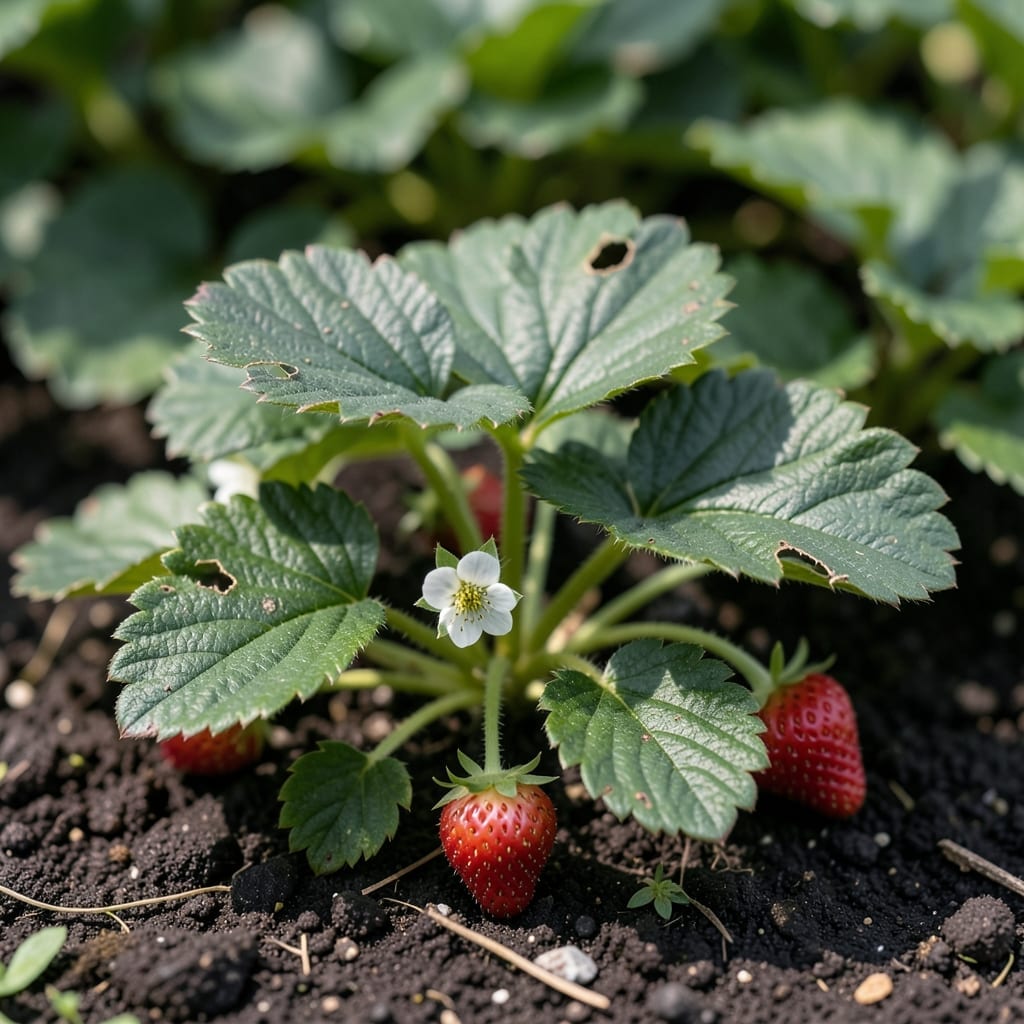
Those ragged holes in your strawberry leaves aren’t just unsightly—they’re a red flag. I’ve lost entire patches to pests that turned lush plants into lace overnight.
Slugs, beetles, and caterpillars are the usual suspects, but each leaves a different calling card. Organic solutions like diatomaceous earth or beer traps work fast once you know what you’re dealing with.
Prevention is simpler than you think: companion plants like marigolds repel invaders, while row covers create a physical barrier that stops pests in their tracks.
Healthy strawberries start with vigilance. Check leaves daily, act at the first sign of damage, and your plants will reward you with a full harvest.
Strawberry leaves with holes are usually a sign of pest activity or environmental stress. Here are the most common causes:
Slugs and Snails: These soft-bodied pests chew irregular holes in leaves, often leaving a slimy trail. They’re most active at night or in damp conditions.
Japanese Beetles: Adult beetles skeletonize leaves by eating tissue between veins, creating a lacy appearance. Their larvae (grubs) also damage roots.
Spider Mites: Tiny but destructive, these pests suck sap from leaves, causing stippling or small holes. Look for fine webbing on the undersides.
Leaf Spot Diseases: Fungal infections like Mycosphaerella fragariae create small, dark spots that may expand into holes as tissue dies. Wet foliage encourages growth.
Bacterial Blight: Caused by Xanthomonas fragariae, this disease leads to water-soaked spots that dry into holes with jagged edges.
Hail or Wind Damage: Physical trauma from severe weather can tear leaves, mimicking pest damage. Check for shredded edges or holes in predictable patterns.
Herbicide Drift: Chemical exposure (e.g., from nearby lawn treatments) can cause leaf distortion or holes as tissue dies unevenly.
Identify the culprit by inspecting leaves closely—look for pests, webbing, or disease symptoms. Early action prevents spread!
If your strawberry plants are sporting holey leaves, don’t panic—here’s how to tackle the most common culprits and restore your garden’s health.
These slimy pests chew irregular holes in leaves, often leaving a silvery slime trail. Fix: Set up beer traps or sprinkle diatomaceous earth around plants. For a chemical-free barrier, try copper tape. Prevention tip: 💡 Remove hiding spots like debris and water early in the day to reduce moisture.
Tiny but destructive, spider mites create stipling or small holes on leaves, often with fine webbing. Fix: Blast them off with a strong stream of water, or apply neem oil or insecticidal soap. Prevention tip: 🌡️ Keep plants well-hydrated—mites thrive in dry conditions.
These metallic green-and-copper beetles skeletonize leaves, leaving lacy patterns. Fix: Handpick them early in the morning when they’re sluggish, or use floating row covers. Prevention tip: ✨ Plant trap crops like marigolds to lure them away.
These caterpillar-like pests create jagged holes and can defoliate plants quickly. Fix: Remove larvae by hand or spray with Bacillus thuringiensis (Bt). Prevention tip: 🎯 Inspect the undersides of leaves regularly for eggs or young larvae.
For all pests, encourage natural predators like ladybugs and lacewings by planting companion flowers such as alyssum or dill. Healthy soil and consistent care go a long way in keeping your strawberries vibrant and hole-free!
Slugs and snails are the top suspects. They leave ragged holes and silvery slime trails, especially in damp conditions. Check at night with a flashlight to catch them in action.
Spider mites cause stippling and small holes, often with fine webbing. They thrive in dry, hot weather and can be controlled with a strong water spray or neem oil.
Yes! Marigolds repel Japanese beetles, while alyssum attracts beneficial insects like ladybugs. These natural allies reduce pest populations without chemicals.
Use floating row covers to create a physical barrier. Secure them tightly at the edges to keep pests out while allowing light and water through.