
Beautiful Plants For Your Interior
Beautiful Plants For Your Interior
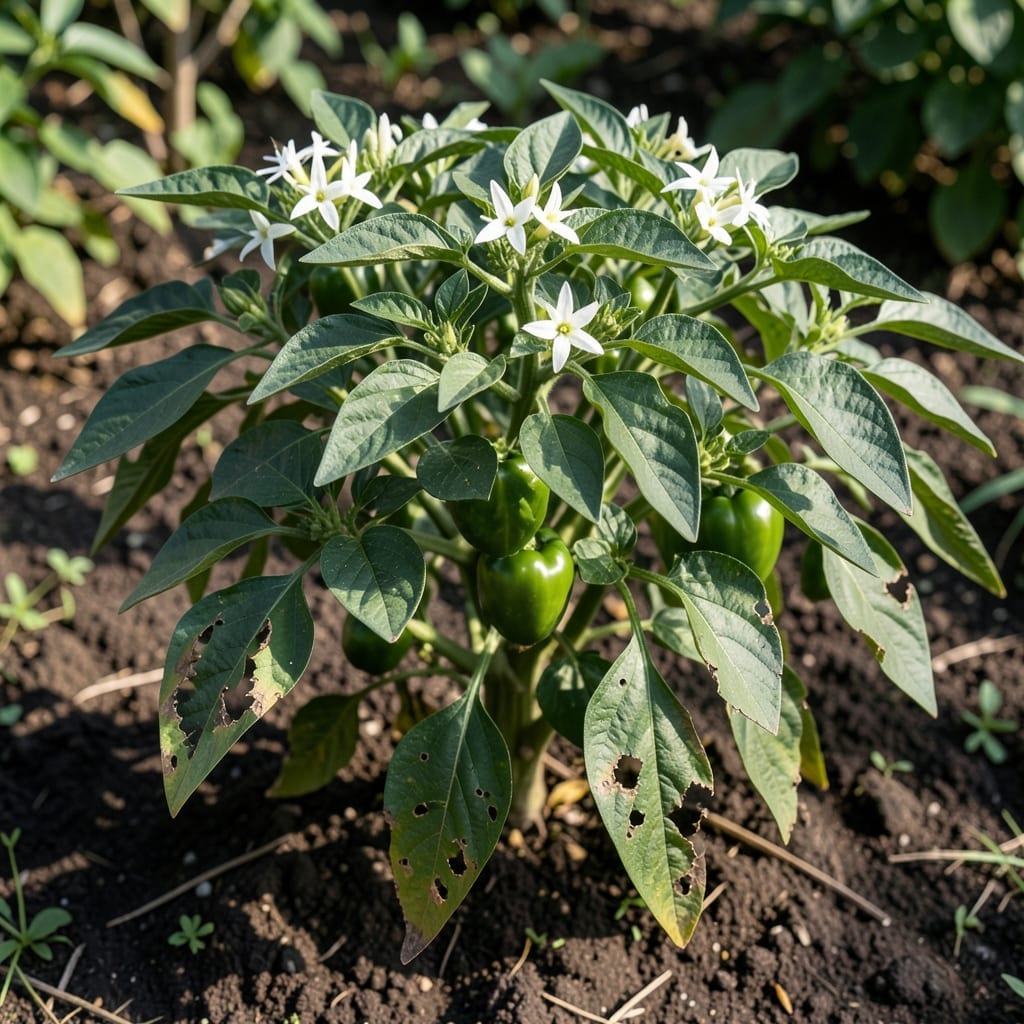
Woke up to Swiss cheese leaves on my pepper plants last week. 🌱 Turns out, holes aren’t just a pest problem—they’re a message. The size, shape, and pattern tell you exactly what’s attacking your plants.
I’ve dealt with everything from tiny flea beetles to greedy tomato hornworms. The good news? Most culprits are easy to spot once you know what to look for. Slugs leave silvery trails, beetles chew jagged edges, and caterpillars roll leaves like tiny burritos.
With the right fixes, your plants can bounce back in 7-10 days. Organic solutions like neem oil, diatomaceous earth, or even hand-picking work shockingly well. No harsh chemicals needed.
Early action saves your harvest. Here’s how to play detective and stop the damage before it spreads.
Holes in pepper plant leaves are rarely random—they’re usually a sign of a specific pest or environmental stress. Below are the most common culprits, explained with actionable insights.
Several insects target pepper foliage, leaving distinct damage patterns. Flea beetles create tiny, scattered holes (often called “shot holes”) as adults chew through leaves. Hornworms and loopers leave larger, irregular holes and can defoliate plants quickly. Aphids and spider mites, while smaller, cause stippling or yellowing by sucking sap, weakening the plant over time.
Though less common, pathogens like Alternaria or Cercospora leaf spot can cause lesions that resemble holes as tissue dies and falls out. These often appear as dark, water-soaked spots with yellow halos, expanding under wet, humid conditions. Bacterial leaf spot (Xanthomonas) may also create ragged holes as infected areas dry and tear.
Physical damage from hail, strong winds, or garden tools can mimic pest activity. Additionally, nutrient deficiencies (e.g., calcium or magnesium) may cause leaf edges to die back, creating a perforated look. Over-fertilization can also lead to salt burn, which manifests as crisp, hole-like lesions.
If pests like aphids, flea beetles, or slugs are chewing on your pepper leaves, start with a neem oil spray (mix 2 tsp neem oil + 1 tsp mild soap in 1 quart of water). Apply in the early morning or late evening for best results. For slugs, set up beer traps or sprinkle diatomaceous earth around the base of plants. Prevention tip 💡: Encourage beneficial insects like ladybugs by planting companion flowers such as marigolds.
For fungal issues (e.g., leaf spot), remove infected leaves immediately and apply a copper fungicide or a homemade baking soda spray (1 tsp baking soda + 1 quart water + a drop of dish soap). Bacterial infections often require removing affected plants to prevent spread. Prevention tip 🌡️: Avoid overhead watering and ensure good air circulation by spacing plants properly.
Yellowing leaves with holes may signal a lack of calcium or magnesium. Treat with crushed eggshells (for calcium) or Epsom salt solution (1 tbsp Epsom salt in 1 gallon of water) applied to the soil. Prevention tip ✨: Use a balanced, organic fertilizer regularly to maintain soil health.
If holes appear due to wind or physical damage, stake your plants for support and move potted peppers to a sheltered location. For heat stress, provide shade cloth during peak sun hours. Prevention tip 🎯: Mulch around plants to retain moisture and protect roots from temperature swings.
Flea beetles are the most common culprit for tiny, scattered holes. Their adults chew “shot holes” through leaves. Aphids and spider mites can also create similar damage while sucking plant sap.
Not directly, but it encourages fungal growth that can mimic hole damage. Wet leaves promote diseases like leaf spot that create dead tissue. Always water at the base and space plants for airflow.
Use row covers to block pests and rotate crops yearly. Companion planting with marigolds deters insects naturally. Remove debris where pests overwinter.
Minor leaf damage rarely impacts fruit production. Focus on protecting new growth. Severe defoliation may reduce yields, so act quickly if damage spreads.