
Beautiful Plants For Your Interior
Beautiful Plants For Your Interior
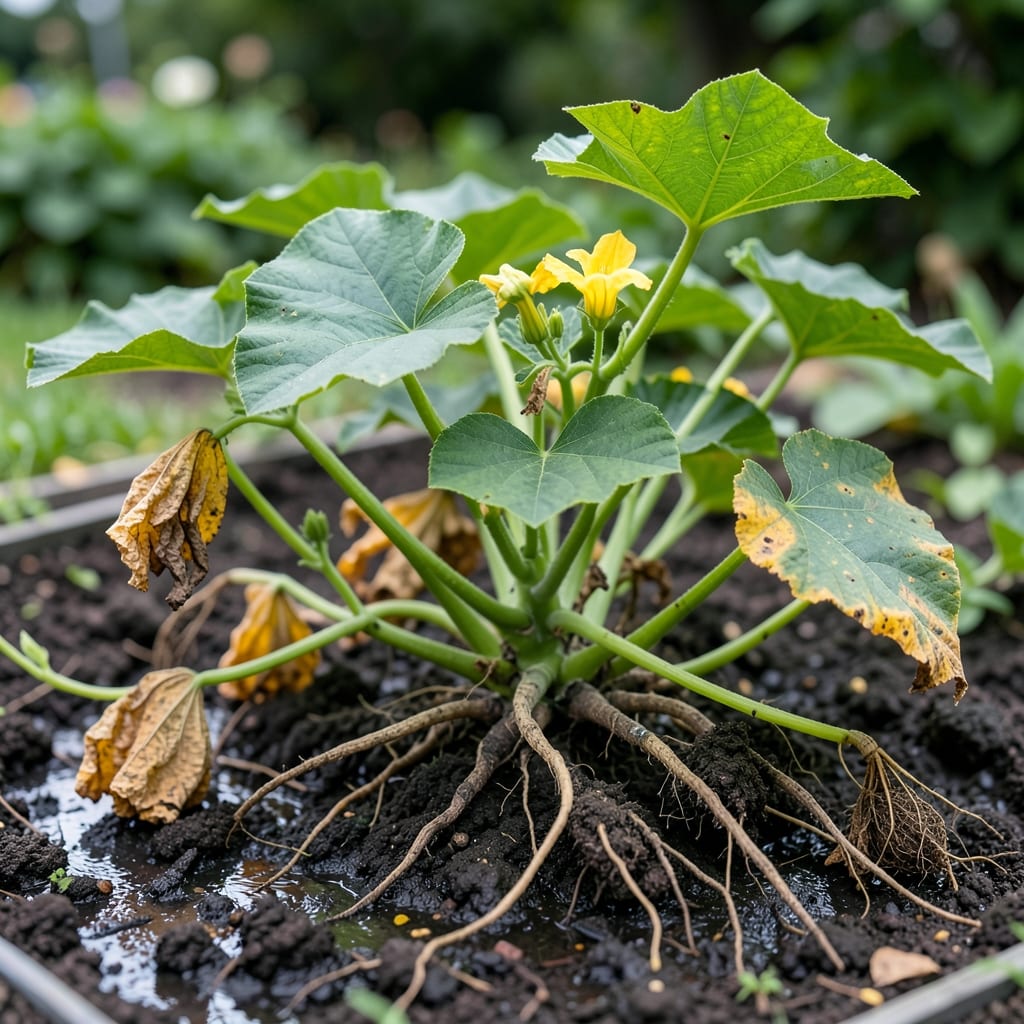
Nothing kills a squash vine faster than root rot. I learned this the hard way after losing an entire patch in one rainy week.
The problem starts with waterlogged soil and spreads invisible deaths through the roots. Most gardeners blame the weather, but poor drainage and overwatering are usually the real culprits.
You’ll see wilting that doesn’t recover overnight, yellowing leaves, and stunted growth. Catching it early means the difference between pulling plants and saving them.
With the right prevention strategies, your squash can stay vibrant and productive all season long. Here’s how to keep them thriving.
Squash root rot is a frustrating issue, but understanding its causes can help you prevent it. Here are the primary culprits behind this problem:
Excess moisture is the leading cause of root rot in squash plants. When soil remains waterlogged, Phytophthora and Pythium fungi thrive, attacking the roots. Poor drainage exacerbates the issue, as water pools around the roots, suffocating them and creating an ideal environment for pathogens.
Squash plants prefer warm soil (70–90°F). Cool, damp soil slows root growth and weakens the plant’s defenses, making it more susceptible to fungal infections. Sudden temperature drops can also stress the plant, increasing vulnerability to rot.
Specific pathogens like Phytophthora capsici and Fusarium spp. directly cause root rot. These organisms spread through contaminated soil, water, or infected plant debris. Once established, they break down root tissues, leading to wilting and plant decline.
Heavy, clay-rich, or compacted soils limit root aeration and water drainage. Without proper airflow, roots weaken and become prone to infection. Amending soil with organic matter improves structure and reduces rot risk.
Root rot in squash can feel like a death sentence, but quick action can save your plants. Below are targeted fixes for common causes, plus prevention tips to keep your garden thriving. 🌱
If soggy soil is the culprit, stop watering immediately and let the top 2 inches of soil dry out. Amend heavy clay soil with compost or sand to boost drainage. For potted squash, ensure containers have drainage holes and elevate them to prevent water pooling.
Prevention tip: 💡 Water only when the soil feels dry 1-2 inches down, and use a moisture meter for precision.
At the first sign of fungal root rot (yellowing leaves, wilting), remove affected plants to stop the spread. Treat remaining plants with a copper-based fungicide or a natural option like neem oil. Apply in the early morning or late evening for best absorption.
Prevention tip: ✨ Rotate crops yearly and avoid planting squash in the same spot to reduce fungal buildup.
Crowded plants trap moisture and encourage rot. Thin seedlings to 18-24 inches apart and prune excess leaves to improve airflow. For vining squash, use a trellis to lift foliage off the ground.
Prevention tip: 🎯 Space rows at least 3-4 feet apart and stake vines early to prevent tangling.
Weak plants are more susceptible to rot. Test your soil and amend with balanced fertilizer (10-10-10) or organic matter like worm castings. Avoid high-nitrogen feeds, which can promote leafy growth over root health.
Prevention tip: 🌱 Work compost into the soil before planting to improve structure and nutrient content.
Look for wilting that doesn’t recover overnight, yellowing leaves, and stunted growth. Roots may appear dark, mushy, or have a foul odor. Early detection is key.
Water deeply 1-2 times per week, allowing the top 1-2 inches of soil to dry between waterings. Use drip irrigation to avoid wetting foliage.
If the rot has spread extensively, it’s best to remove the plant to prevent infecting others. Focus on improving soil conditions for remaining plants.
Some varieties like Butternut and Hubbard show better resistance. Check seed catalogs for disease-resistant options.