
Beautiful Plants For Your Interior
Beautiful Plants For Your Interior
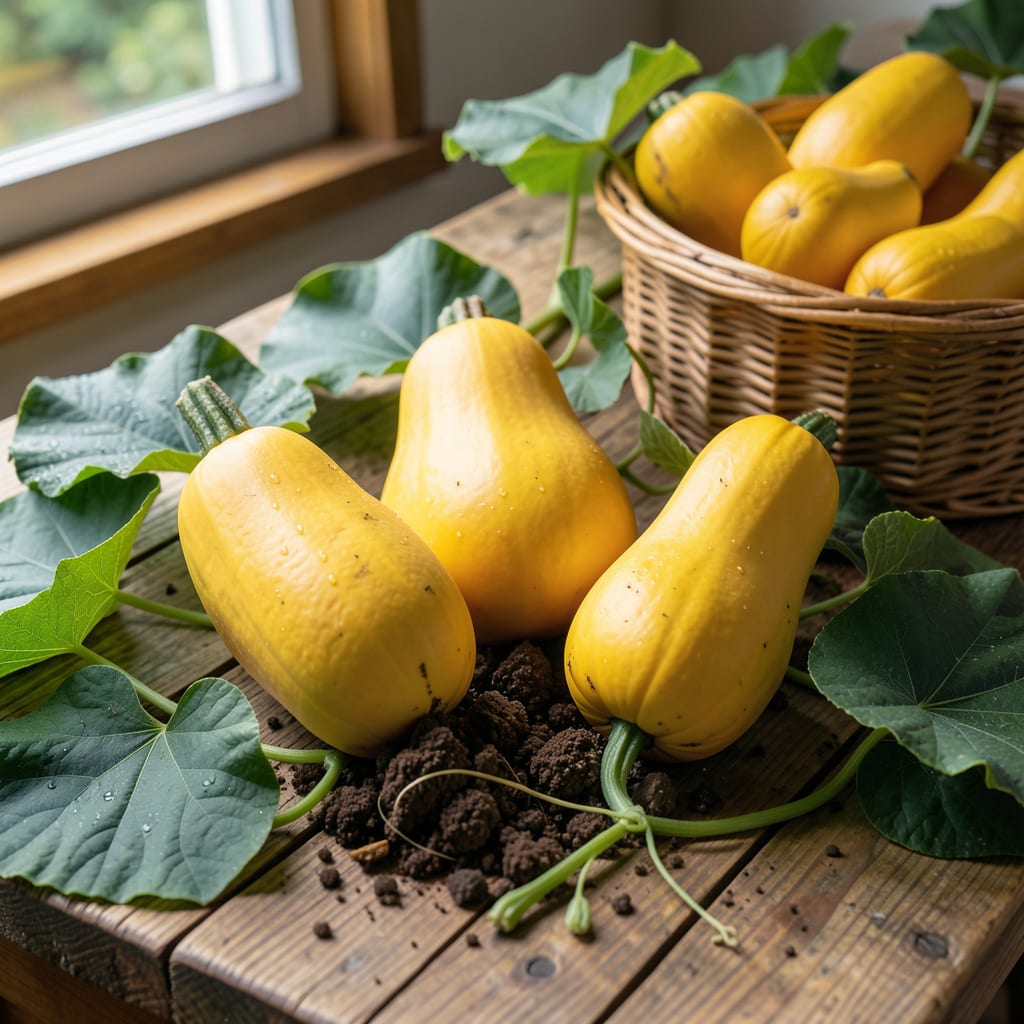
There’s nothing like picking your first crookneck squash before summer even hits. I’ve got the timing down to harvest these golden beauties 2-3 weeks earlier than most gardeners.
The secret starts with warm soil and the right spacing—give them 3-4 feet apart and they’ll reward you with vines that produce like crazy. Just watch for squash bugs and keep the water consistent.
📚 In This Guide
This method ensures a bountiful harvest with minimal effort and maximum flavor.
Select a spot with full sun exposure—at least 6-8 hours of direct sunlight daily. Yellow crookneck squash thrives in warm, well-draining soil, so avoid low-lying areas where water pools after rain. I’ve found that raised beds or small mounds work best to improve drainage and soil warmth.
Test your soil’s readiness by digging a small hole 4-6 inches deep. If the soil feels warm to the touch and crumbles easily, it’s perfect. Cold, compacted soil will delay germination and stunt early growth, so wait until daytime temperatures consistently reach 70°F.
Work the soil to a depth of 12-15 inches, removing rocks, weeds, and debris. Mix in a 2-3 inch layer of aged compost or well-rotted manure to boost fertility. Yellow crookneck squash is a heavy feeder, so rich, organic soil gives it the best start.
Rake the surface smooth and create small mounds or hills spaced 3-4 feet apart. Planting in hills improves drainage and warms the soil faster. If your soil is sandy, add a bit more compost to help retain moisture without waterlogging the roots.
Sow seeds 1 inch deep and 2-3 inches apart within each hill. Once seedlings emerge and develop their first true leaves, thin them to the 2 strongest plants per hill. This spacing prevents overcrowding and ensures each plant has enough room to sprawl.
If using transplants, dig holes slightly larger than the root ball and plant at the same depth they were growing in their containers. Gently firm the soil around the base and water thoroughly to settle the roots. Avoid handling the stems too much—these plants are sensitive to transplant shock.
Water deeply right after planting, ensuring the soil is moist but not soggy. Keep the soil consistently moist during the first 10-14 days as seeds germinate. Once plants are established, water at the base 1-2 times per week, providing about 1-1.5 inches of water total.
Apply a 2-3 inch layer of organic mulch, like straw or shredded leaves, around the plants to retain moisture and suppress weeds. Mulch also keeps the squash clean by preventing soil from splashing onto the fruit during watering or rain. Just keep it an inch away from the stems to avoid rot.
Check plants daily for pests like squash bugs or vine borers, especially under the leaves. Early detection makes control much easier. I’ve lost entire plants overnight to vine borers, so vigilance is key. Handpick pests when you see them, or use row covers early in the season to prevent infestations.
Once vines start running, you can train them gently to grow in a specific direction, but avoid forcing them. Yellow crookneck squash vines are vigorous and will spread 4-6 feet in all directions. Use a trellis if space is limited, though the fruit can get heavy, so support may be needed for the vines.
Here’s what I’ve learned through trial and error to help your squash thrive.
Sunlight Priority: That 6-8 hours of daily sun mentioned in Step 1 isn’t just a suggestion—it’s non-negotiable. I once tried a partially shaded spot and ended up with weak, spindly plants that produced almost no fruit. If your garden doesn’t get full sun, consider containers you can move to follow the light.
Soil Temperature Check: The 70°F soil temperature in Step 1 is your green light. Here’s what nobody tells you—use a meat thermometer to test the soil at that 4-6 inch depth. If it’s below 70°F, wait. Planting too early is the most common reason for poor germination.
Hill Planting Advantage: Those 3-4 feet apart hills in Step 2 do more than improve drainage. They warm up faster in spring, which gives your squash a head start. I’ve noticed plants in hills produce fruit a full week earlier than those in flat ground. Between us, this is the easiest way to beat the season.
Watering Wisdom: During that critical 10-14 day germination period in Step 4, consistency beats quantity. A deep watering every 2-3 days works better than daily light sprinkles. I learned this the hard way after my first planting washed away in a downpour because I’d kept the soil too loose from frequent shallow watering.
Plant seeds 2-3 weeks after the last frost when soil temperatures reach at least 60°F. Warm soil ensures faster germination and healthier seedlings.
Space plants 24-36 inches apart in rows 4-6 feet apart. This gives vines room to spread and improves airflow, reducing disease risk.
Yes! Use a large container (at least 5 gallons) with drainage. Dwarf varieties work best. Ensure full sun and consistent watering for container success.
Lack of pollination is a common issue. Hand-pollinate by transferring pollen from male to female flowers with a small brush, or attract bees with companion plants.
Water deeply 1-2 times per week, providing 1-1.5 inches of water. Keep soil moist but not soggy, especially during flowering and fruiting.
