
Beautiful Plants For Your Interior
Beautiful Plants For Your Interior
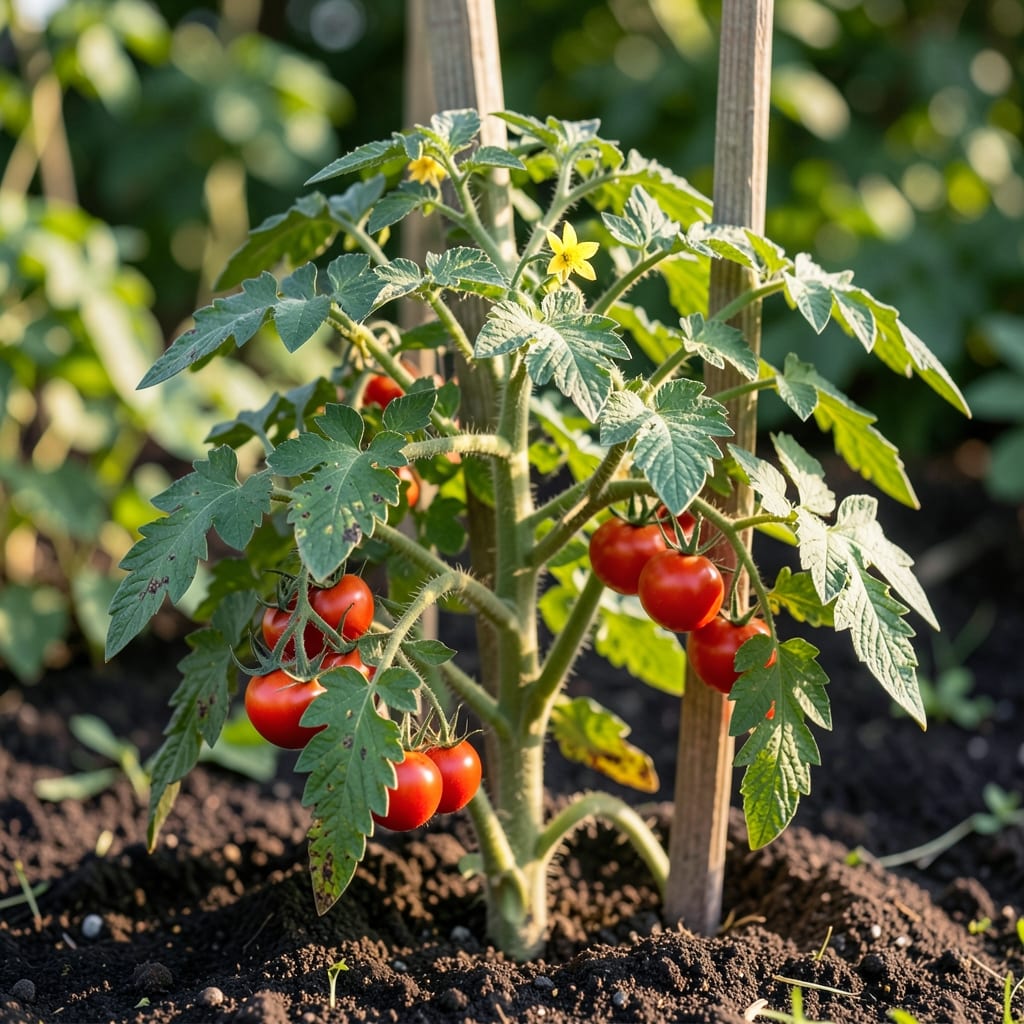
Those brown spots on your tomato leaves aren’t just ugly—they’re a warning sign. I’ve lost entire plants to early season spots that I ignored for too long, thinking they’d go away on their own.
Most cases trace back to one of three culprits: fungal infections spreading from wet foliage, hungry pests leaving behind damage, or environmental stress like uneven watering. The good news? Each has a simple fix if you catch it early.
With the right diagnosis and quick action, you can stop the spread within 48 hours. Your plants will bounce back faster than you think, often showing new healthy growth in under a week.
Works for all tomato varieties, whether you’re growing in containers or garden beds. Here’s how to identify and treat the problem before it takes over.
Spotty foliage on tomato plants is rarely random. Each pattern points to a specific stressor, and knowing the why lets you fix it fast. Below are the most common culprits behind those unsightly leaf spots.
Septoria leaf spot and early blight are the usual fungal suspects. Septoria starts as tiny, water-soaked circles that turn tan or gray with dark edges, while early blight creates concentric “bull’s-eye” rings. Both thrive in high humidity and poor air circulation, spreading via splashing water and contaminated debris.
Bacterial leaf spot (caused by Pseudomonas syringe or Xanthomonas spp.) produces small, greasy-edged spots that can coalesce into larger dead patches. Bacteria enter through natural leaf openings or wounds, often during overhead watering or rain. Warm, wet conditions accelerate infection and spread.
Sap-sucking insects like spider mites and aphids create stippling or yellow halos as they feed. Their piercing mouthparts damage cells, leading to necrotic spots. Heavy infestations can also introduce secondary infections through open wounds.
Extreme heat, sunscald, or chemical burns (from over-fertilization or herbicide drift) can mimic disease symptoms. These spots are often irregular, appear suddenly after stress events, and are not contagious to neighboring plants.
A lack of calcium, magnesium, or potassium can cause interveinal chlorosis or necrotic spotting. Unlike pathogens, these issues develop uniformly across older leaves first and often coincide with stunted growth or poor fruiting.
Spotty tomato leaves can often be treated with the right approach. Below are practical solutions tailored to common causes, along with prevention tips to keep your plants healthy.
If the spots are caused by fungi like Septoria or Early Blight, remove infected leaves immediately to prevent spread. Apply a copper-based fungicide or a homemade mix of baking soda and water (1 tsp baking soda + 1 quart water + a few drops of dish soap). Spray every 7–10 days until the issue clears.
Prevention: Improve air circulation by pruning dense foliage, water at the base (not overhead), and avoid wetting leaves. 💡 Rotate crops yearly to break fungal cycles.
For pests like aphids or spider mites, blast them off with a strong stream of water or apply neem oil or insecticidal soap. For severe infestations, use pyrethrin-based sprays.
Prevention: Introduce beneficial insects like ladybugs, and inspect plants regularly for early signs of pests. 🎯 Companion planting with basil or marigolds can deter pests naturally.
Overwatering or drought can cause leaf spots. Let the top inch of soil dry between waterings, and ensure pots have drainage holes. For underwatered plants, water deeply but less frequently to encourage strong roots.
Prevention: Use a moisture meter to monitor soil hydration, and mulch around plants to retain moisture. ⏰ Water early in the morning to reduce evaporation and fungal risks.
Yellowing or brown spots may signal a lack of calcium, magnesium, or potassium. Test your soil and amend with compost, Epsom salts (magnesium), or crushed eggshells (calcium).
Prevention: Feed plants with a balanced fertilizer every 2–3 weeks during the growing season. ✨ Organic matter like worm castings improves long-term soil health.
Fungal spots often have defined edges or rings, while pest damage looks like tiny dots or stippling. Check undersides of leaves for insects or webbing to confirm pests.
Yes, pruning infected leaves prevents spread to healthy foliage. Use clean scissors and dispose of leaves in the trash, not compost. Always sanitize tools after use.
Too much water creates ideal conditions for fungal growth. Let soil dry slightly between waterings and ensure proper drainage.
Remove affected leaves immediately and apply copper-based bactericide. Avoid overhead watering to prevent further spread. Treat at first sign for best results.