
Beautiful Plants For Your Interior
Beautiful Plants For Your Interior
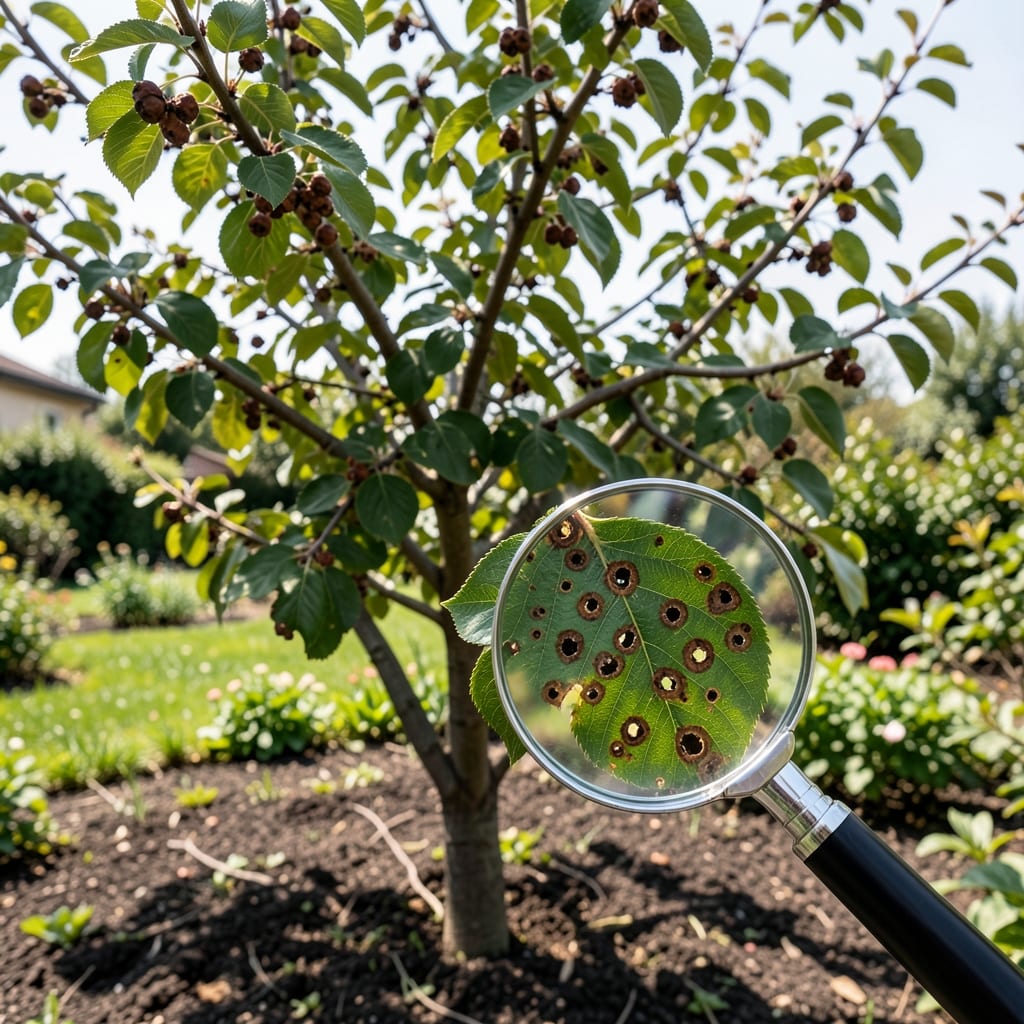
Those tiny holes in your leaves aren’t from hungry bugs. I first noticed shot hole fungus on my cherry laurel three springs ago—looked like someone had taken a shotgun to the foliage.
Turns out, this sneaky disease spreads fastest in wet, cool weather when plants stay damp for 24+ hours. It loves ornamentals like roses and fruit trees, leaving them stressed and vulnerable.
Here’s the thing—prevention beats cure every time. Proper spacing, morning watering, and removing infected leaves stops the spread before it starts.
With consistent care, your plants bounce back healthier than before. The key is acting at the first sign of those telltale spots.
Understanding why shot hole fungus develops helps you stop it before it spreads. Here are the primary causes:
Prolonged wetness on leaves, stems, or fruit creates the perfect breeding ground. The fungus Wilsonomyces carpophilus thrives in damp conditions, especially after rain or overhead irrigation. Poor drainage or high humidity can also encourage its growth.
Shot hole fungus flourishes in mild to warm climates (60–75°F). These temperatures accelerate spore germination and infection. Regions with wet springs or fall seasons see higher incidence rates.
Poor air circulation traps moisture and limits drying time, giving the fungus more opportunities to take hold. Pruning for better airflow and spacing plants properly reduces risk.
Certain plants, like almond, peach, and cherry trees, are highly vulnerable. The fungus targets young leaves and fruit, entering through tiny openings or wounds. Regularly inspecting these plants can help catch early signs.
Once shot hole fungus appears, act fast to stop its spread and restore your plants’ health. Below are targeted fixes for the most common causes, along with prevention tips to keep your garden resilient.
Remove infected leaves and branches immediately using sterilized pruning shears (dip in rubbing alcohol between cuts). Destroy the debris—do not compost it, as spores can linger. Disinfect tools after use to prevent cross-contamination.
Prevention: Thin out dense foliage to improve air circulation, and avoid overhead watering to reduce moisture on leaves.
If poor drainage or excessive rain is the culprit, amend the soil with organic matter like compost or sand to enhance water flow. For potted plants, ensure containers have drainage holes. Water at the base of the plant in the early morning so leaves dry quickly.
Prevention: Space plants properly and use drip irrigation to keep foliage dry.
In humid climates, apply a copper-based fungicide or neem oil spray at the first sign of disease. Follow label instructions carefully, and reapply after rain. For organic gardens, sulfur-based sprays can also be effective.
Prevention: Monitor humidity levels and increase spacing between plants to reduce dampness.
Boost plant resistance with balanced fertilization (avoid excess nitrogen) and proper pruning to encourage airflow. Healthy plants are less susceptible to fungal attacks!
Cherry, peach, and almond trees are highly susceptible. Ornamentals like roses and laurel often show symptoms first, especially in wet, cool conditions.
Under ideal damp conditions, spores can germinate within 12-24 hours. Warm weather speeds up the process, so act fast to remove infected leaves and improve airflow.
Yes! A baking soda solution (1 tbsp per gallon of water) with a drop of dish soap can help prevent spread. For severe cases, copper fungicides are more reliable.
Rarely. While it stresses plants and reduces yields, healthy trees usually recover with proper care. Remove infected parts and avoid overhead watering to aid recovery.