
Beautiful Plants For Your Interior
Beautiful Plants For Your Interior
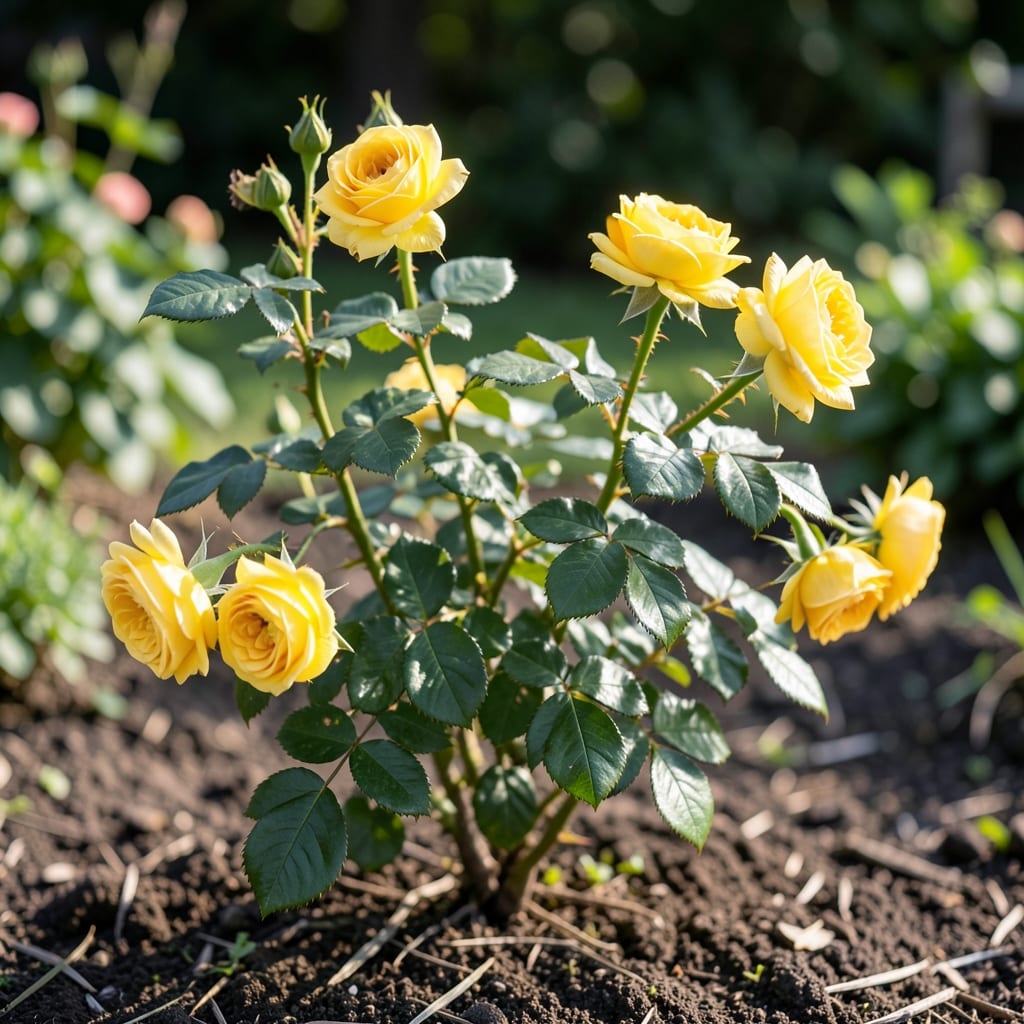
There’s something about a yellow rose that stops you in your tracks. I planted my first one five years ago and it still makes me smile every spring.
These aren’t your grandma’s fussy roses. With the right spot—full sun and well-draining soil—they reward you with months of golden blooms that brighten any garden.
📚 In This Guide
Here’s the method I use to keep yellow roses thriving with vibrant blooms and healthy growth.
Choose a spot with full sun exposure, as yellow roses require at least 6-8 hours of direct sunlight daily to produce their brightest blooms. The location should also have well-draining soil to prevent waterlogging, which can lead to root rot. I always test the soil by digging a 12-inch hole and filling it with water—if it drains completely within 30 minutes, the site is suitable.
Avoid areas with strong winds, which can damage delicate petals and stress the plant. If your garden has heavy clay soil, amend it with organic matter like compost to improve drainage and fertility. This ensures the roots have room to spread and access to nutrients.
Dig a hole roughly twice as wide and deep as the root ball of your yellow rose. This gives the roots plenty of space to establish without crowding. Place the rose in the hole, ensuring the graft union (the swollen area where the rose was budded onto the rootstock) sits 2-3 inches above soil level in cold climates or at soil level in warmer regions.
Backfill the hole with native soil mixed with compost, gently firming it around the roots to eliminate air pockets. Water thoroughly after planting to settle the soil and hydrate the roots. I always add a 2-3 inch layer of mulch around the base, keeping it a few inches away from the stem to prevent rot.
Water yellow roses deeply 2-3 times per week, ensuring the soil stays consistently moist but not soggy. The best way to check is by sticking your finger 2 inches into the soil—if it feels dry, it’s time to water. Morning watering is ideal, as it allows foliage to dry before evening, reducing the risk of fungal diseases.
Fertilize every 4-6 weeks during the growing season with a balanced rose fertilizer or organic compost. Yellow roses are heavy feeders and respond well to regular feeding. Stop fertilizing 6-8 weeks before the first frost to avoid encouraging new growth that won’t harden off before winter.
Prune yellow roses in early spring, just as new growth begins to emerge. Remove any dead, diseased, or crossing branches to improve air circulation and shape the plant. Use clean, sharp pruners to make cuts at a 45-degree angle, about ¼ inch above an outward-facing bud to encourage outward growth.
Deadhead spent blooms regularly to promote continuous flowering. Cut the stem back to the first set of five-leaflet leaves below the flower. This prevents the plant from setting hips (seed pods) and redirects energy toward producing more blooms. I always sanitize my pruners between cuts with rubbing alcohol to prevent disease spread.
Yellow roses are susceptible to common rose pests like aphids, spider mites, and thrips. Inspect the plant regularly, especially the undersides of leaves, for signs of infestation. A strong blast of water can dislodge aphids, while neem oil or insecticidal soap can treat more stubborn pests.
Watch for diseases like black spot, powdery mildew, or rust, which thrive in humid conditions. Remove and destroy infected leaves immediately to prevent spread. Improve air circulation by spacing plants properly and avoiding overhead watering. Applying a fungicide preventatively in early summer can also help keep these issues at bay.
These practical insights will help you avoid the most common pitfalls when growing yellow roses.
Sunlight Essentials: The 6-8 hours of direct sunlight daily isn’t just a suggestion—it’s critical for those vibrant yellow blooms. I learned this the hard way when my first attempt resulted in pale, lackluster flowers. If your garden has partial shade, consider container planting so you can move the roses to follow the sun.
Soil Drainage Test: That 12-inch hole drainage test in Step 1 is your best insurance against root rot. If water doesn’t drain within 30 minutes, don’t plant yet—amend the soil with compost or consider raised beds. I’ve seen more yellow roses killed by soggy soil than by any other factor.
Pruning Precision: When pruning in Step 4, that 45-degree angle cut ¼ inch above an outward-facing bud isn’t just for aesthetics. It prevents water from pooling on the cut surface and directs new growth outward for better air circulation. Sanitizing pruners between cuts, as mentioned, stops disease spread between branches.
Watering Wisdom: For the 2-3 times per week watering schedule in Step 3, remember that deep watering beats frequent shallow watering. Stick your finger 2 inches into the soil as suggested—if it’s dry at that depth, it’s time to water. Morning watering is non-negotiable for preventing fungal issues.
Brown or wilting yellow roses often signal fungal diseases like black spot or powdery mildew. Overwatering, poor drainage, or high humidity can also stress the plant. Prune affected areas and improve airflow to prevent spread.
Early spring or fall is ideal for planting yellow roses, as mild temperatures reduce transplant shock. Avoid extreme heat or frost. Bare-root roses should go in the ground in late winter or early spring.
Yes! Choose a large container (at least 15-20 inches deep) with drainage holes. Use well-draining potting mix and ensure the container receives 6+ hours of sunlight daily. Water consistently but avoid soggy soil.
Yellow leaves may indicate nutrient deficiencies (like nitrogen or iron) or overwatering. Test soil pH (aim for 6.0-6.5) and fertilize with a balanced rose food. Trim yellow leaves to redirect energy to healthy growth.