
Beautiful Plants For Your Interior
Beautiful Plants For Your Interior
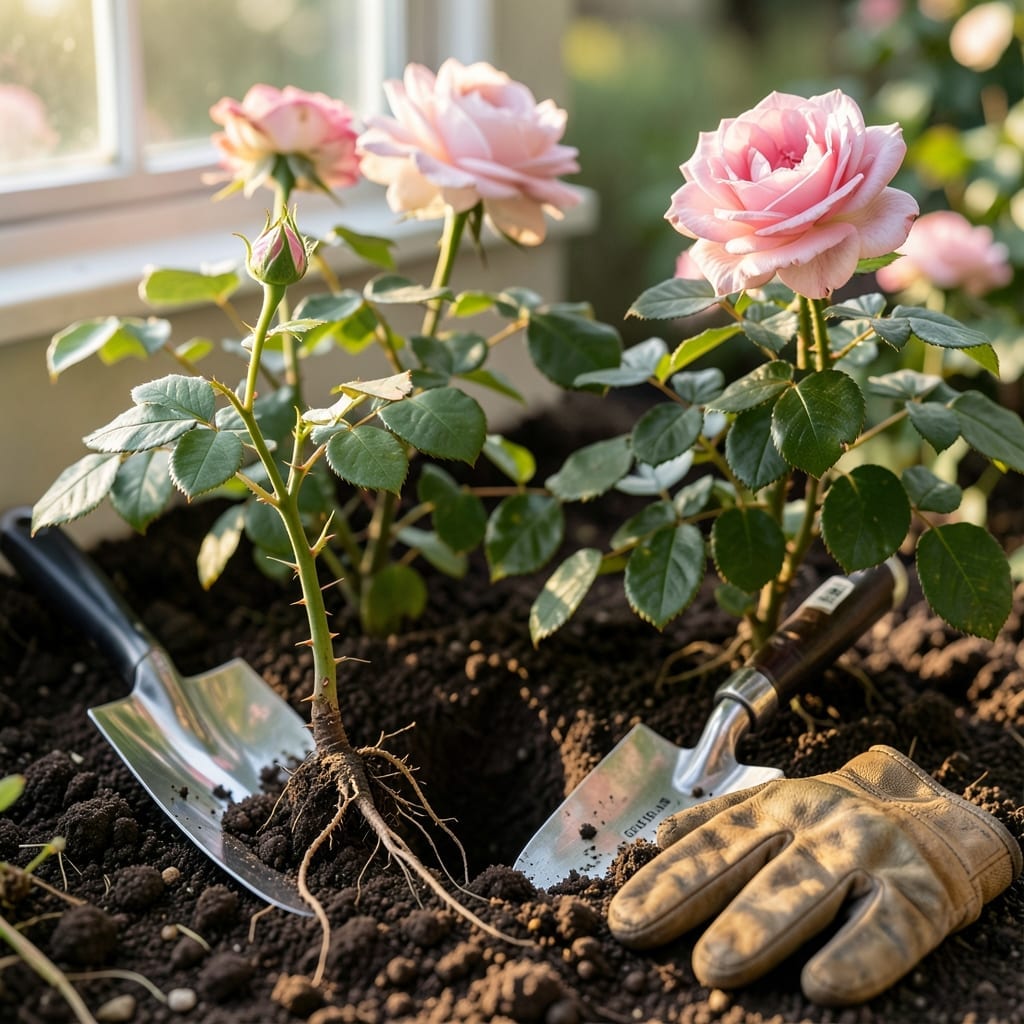
Planting roses changed my garden from ordinary to extraordinary. The key isn’t luck—it’s getting the basics right the first time.
Proper soil prep, the right depth, and smart spacing turn struggling bushes into thriving bloom machines. I’ll show you how to avoid the common mistakes that kill young roses before they ever get going.
📚 In This Guide
Here’s the method I use for planting roses that ensures vibrant blooms and healthy growth.
Select a site with full sun (at least 6-8 hours of direct sunlight daily). Roses thrive in well-draining soil, so avoid low-lying areas where water pools. I always test the soil first—if it feels heavy or compacted, amending it with organic matter is non-negotiable.
Dig a hole that’s 2 feet wide and 18 inches deep to give the roots plenty of room. Loosen the soil at the base to encourage deep root penetration. If your soil is clay-heavy, mix in compost or aged manure to improve drainage and fertility.
If planting bare–root roses, soak the roots in lukewarm water for 2-4 hours before planting to rehydrate them. For container-grown roses, gently remove the plant and loosen the root ball to prevent circling roots, which can strangle the plant over time.
Trim any damaged or broken roots with clean pruners. This step is often overlooked, but it’s critical for preventing disease and ensuring the plant directs energy toward healthy growth. I also remove any weak or crossing canes to open up the center of the plant.
Place the rose in the hole, ensuring the bud union (the swollen area where the canes emerge) sits 1-2 inches above the soil line in warmer climates and 2-3 inches below in colder regions to protect it from frost. For container roses, the soil level should match the surrounding ground.
Backfill the hole with amended soil, pressing it gently around the roots to eliminate air pockets. Water thoroughly with 1-2 gallons of water to settle the soil. This initial deep watering ensures the roots make good contact with the soil and reduces transplant shock.
Apply a 2-3 inch layer of organic mulch (like wood chips or straw) around the base of the rose, keeping it 2 inches away from the stem to prevent rot. Mulch helps retain moisture, suppress weeds, and regulate soil temperature—key for a strong start.
Water deeply 2-3 times a week for the first month, then taper off to once a week unless the weather is particularly dry. Avoid overhead watering to keep the foliage dry and reduce the risk of fungal diseases like black spot. I check the soil by sticking my finger in 1-2 inches—if it feels dry, it’s time to water.
After planting, watch for signs of stress like wilting or yellowing leaves. If the rose struggles, it might need more water or protection from wind. I often use a temporary shade cloth for the first week to ease the transition, especially in hot climates.
Fertilize lightly 4-6 weeks after planting with a balanced rose fertilizer to encourage new growth. Avoid fertilizing at planting—it can burn tender roots. Prune any dead or diseased canes immediately to keep the plant healthy and focused on establishing itself.
Small details make the difference between struggling roses and spectacular blooms.
The Sun Factor: That 6-8 hours of daily sunlight isn’t just a suggestion—it’s critical for vigorous growth and abundant flowers. I’ve seen roses planted in partial shade produce weak stems and sparse blooms. If your garden doesn’t get full sun, consider container planting so you can move them to the sunniest spot.
Soaking Secret: For bare-root roses, don’t rush the 2-4 hour soaking time in Step 2. This rehydration period revives dormant roots and gives your plant the best possible start. I once skipped this step and lost two plants to transplant shock within a week.
Depth Matters: Getting the bud union at the right level in Step 3 is non-negotiable. In warmer climates, 1-2 inches above soil prevents heat stress, while in colder areas, 2-3 inches below protects from frost damage. I use a ruler to be precise—guessing often leads to poor performance.
Watering Wisdom: The 1-2 gallons of water immediately after planting in Step 3 isn’t excessive—it’s essential for eliminating air pockets. I water in stages: first gallon, let it settle, then the second. This ensures the soil compacts properly around the roots.
Spring or fall is ideal—cool temps and moist soil help roots establish. Avoid extreme heat or frost.
Dig a hole twice as wide and deep as the root ball. The graft union (bulge near the base) should be 2–3 inches below soil level in cold climates.
Yes! Use a large container (15+ gallons) with drainage, quality potting mix, and full sun. Dwarf or mini varieties thrive best.
Common causes: overwatering, poor drainage, or nutrient deficiency (especially nitrogen). Check soil moisture and fertilize as needed.
Most roses need 6+ hours of direct sunlight daily. Some shade-tolerant varieties exist, but blooms may be fewer.