
Beautiful Plants For Your Interior
Beautiful Plants For Your Interior
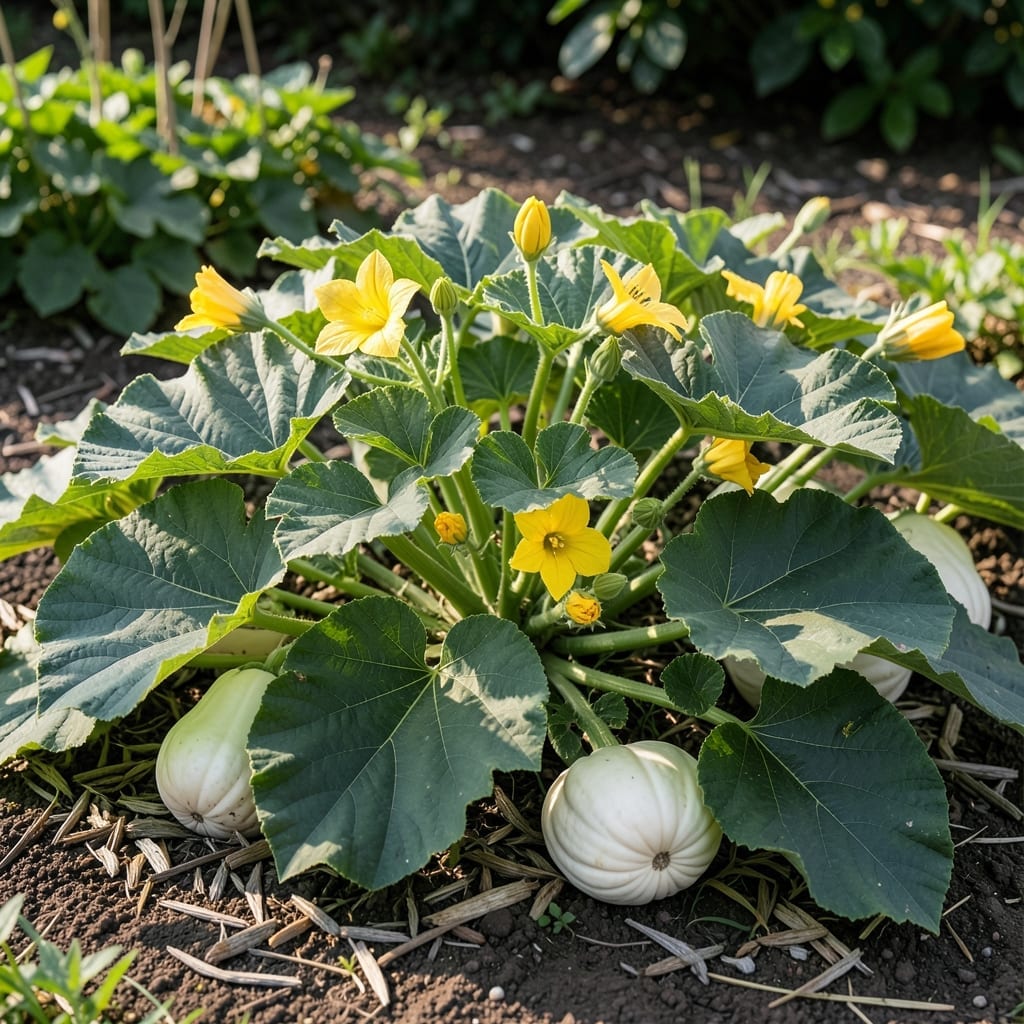
I once harvested white winter squash in a light snowstorm. These tough plants laugh at cold weather and keep producing when other crops have given up.
Plant them in full sun with rich soil, and you’ll get storage-friendly squash that lasts months after harvest. The vines spread wide, so give them room to roam and watch them thrive through early frosts.
📚 In This Guide
Here’s my trusted method for producing robust plants that thrive even when temperatures drop.
Choose a location with full sun and well-draining soil. White winter squash needs room to sprawl, so I space plants 4-6 feet apart in rows that are 8-10 feet apart. This gives the vines enough space to spread without overcrowding.
Work the soil to a depth of 12-15 inches, removing any rocks or debris that could obstruct root growth. Mix in a 2-3 inch layer of compost to enrich the soil with nutrients. The soil should feel loose and crumbly, not compacted.
If starting from seeds, plant them 1 inch deep and 3-4 seeds per hill, spacing hills 4-6 feet apart. After germination, thin to the strongest 1-2 plants per hill. I prefer hills because they warm up faster in spring, which squash loves.
For transplants, dig holes slightly larger than the root ball and place each plant at the same depth it was in its container. Water thoroughly after planting to settle the soil around the roots. You’ll see new growth within 7-10 days if conditions are right.
Water plants deeply 1-2 times per week, ensuring the soil stays evenly moist but not waterlogged. I check by sticking my finger 1 inch into the soil—if it feels dry, it’s time to water. Drip irrigation works best to keep leaves dry and prevent disease.
Apply a 2-3 inch layer of mulch around the base of the plants to retain moisture and suppress weeds. Straw or shredded leaves work well. Mulch also keeps the fruit clean as it grows, which is especially important for white varieties that show dirt easily.
Feed plants with a balanced fertilizer every 3-4 weeks to support vigorous growth. I use a 10-10-10 formula and apply it at the base of the plants, avoiding contact with leaves. Over-fertilizing can lead to excessive vine growth at the expense of fruit.
Watch for common pests like squash bugs or cucumber beetles. I inspect the undersides of leaves weekly and remove any pests by hand. Row covers can help early in the season, but remove them once flowers appear to allow for pollination.
White winter squash is ready to harvest when the rind is hard and cannot be punctured with a fingernail. The stem should be dry and the fruit should have a dull, not shiny, appearance. I use a sharp knife to cut the stem, leaving 2-3 inches attached to the fruit.
Cure the squash in a warm, dry place with good air circulation for 10-14 days. This hardens the skin and improves storage life. Store in a cool, dry location where temperatures stay between 50-55°F. Properly cured squash can last 3-6 months.
Small details make the difference between a mediocre harvest and an exceptional one.
Site Preparation: In Step 1, work that soil to the full 12-15 inches depth. I learned the hard way that shallow prep leads to stunted roots. Mix in that 2-3 inch layer of compost thoroughly—it’s your insurance against poor drainage and nutrient deficiency.
Planting Depth Matters: For Step 2, that 1 inch planting depth for seeds isn’t arbitrary. Too shallow and they’ll dry out; too deep and they’ll struggle to emerge. And don’t crowd those hills—stick to 4-6 feet apart to give vines room to thrive.
Watering Wisdom: The 1-2 times per week in Step 3 is a guideline, not a rule. Check that top 1 inch of soil with your finger as I do. Drip irrigation really is worth the investment—it prevents those dreaded leaf diseases that come from overhead watering.
Storage Secret: That 10-14 day curing period in Step 5 is non-negotiable for long storage. I once skipped it and lost half my crop to rot within weeks. And maintain that 50-55°F storage temperature religiously—any warmer and they’ll spoil faster than you think.
White winter squash is a hard-skinned variety with sweet, dense flesh, ideal for storage. Unlike summer squash, it’s harvested in fall and cures for long-term use. Its mild, nutty flavor sets it apart.
Plant seeds in late spring or early summer after the last frost, when soil temperatures reach at least 60°F. This gives the vines 80-100 days to mature before the first fall frost.
Yes, but choose compact varieties like ‘Sweet Dumpling’ and use large containers (at least 5 gallons). Ensure full sun and consistent watering, though yields may be smaller than in-ground plants.
Rot often stems from poor drainage or excessive moisture. Use well-draining soil, avoid overhead watering, and harvest before heavy rains. Curing in a dry, warm place post-harvest also prevents spoilage.
Try butternut, acorn, or hubbard squash for similar texture and flavor. Pumpkins or kabocha can also work in recipes, though their taste and moisture levels may vary slightly.