
Beautiful Plants For Your Interior
Beautiful Plants For Your Interior
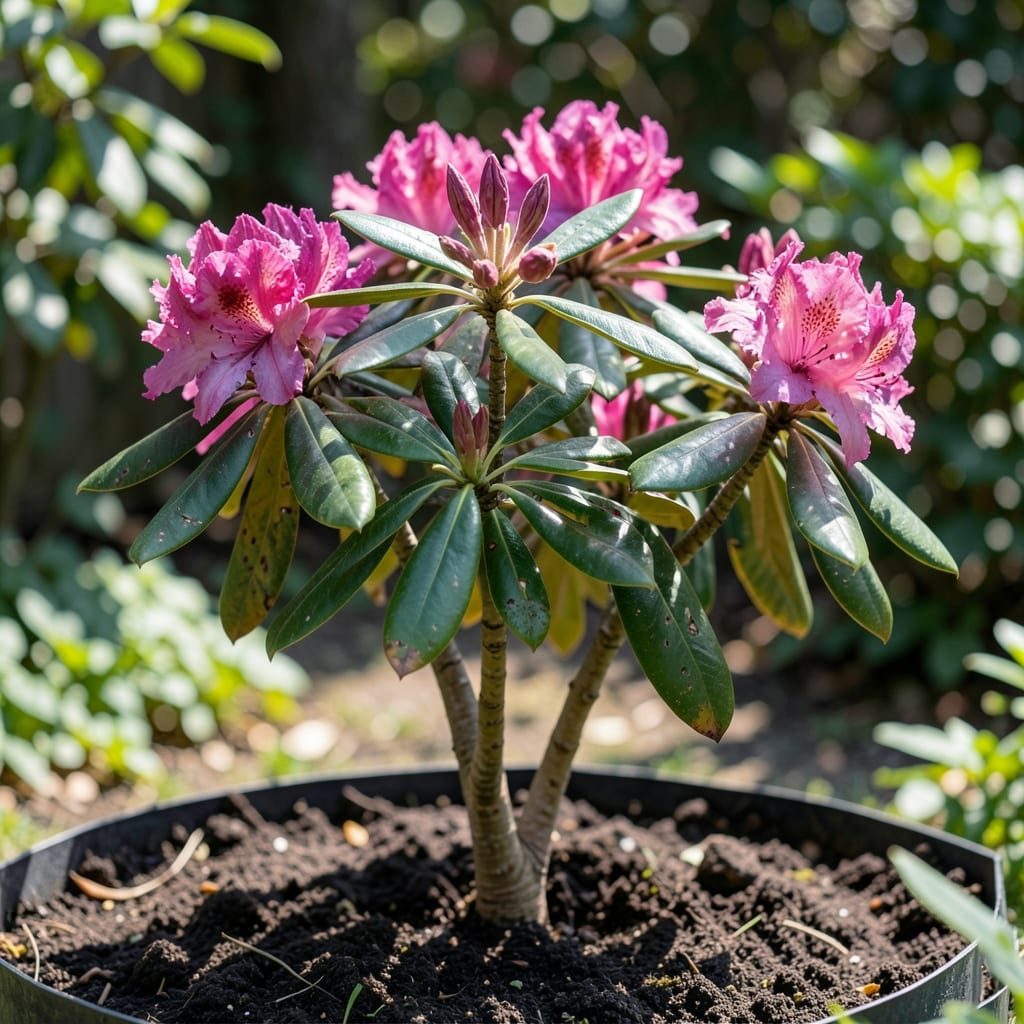
Those brown spots on your rhododendron leaves aren’t random. I’ve seen this pattern a hundred times—it’s your plant’s way of waving a white flag about something gone wrong in its environment.
Most often, it’s fungal trouble, usually from too much moisture sitting on those broad leaves. But don’t jump to conclusions—pests and even your watering schedule could be the culprits. The good news? This is 100% fixable with the right approach.
You’ll learn to spot the difference between leaf spot fungus, pest damage, and cultural stress. Each has its own telltale signs, and knowing which is which means you can apply the perfect organic fix.
By next season, your rhododendron can be back to its glossy, vibrant self with leaves that make neighbors stop and stare.
Brown spots on rhododendrons are a clear sign of distress, and several underlying causes could be to blame. Here’s a breakdown of the most common culprits:
Fungi like Phytophthora and Pestallotia thrive in wet, poorly drained conditions. These pathogens attack leaves, stems, and roots, leading to irregular brown or black spots with yellow halos. Overhead watering and high humidity accelerate their spread.
Both overwatering and underwatering can cause brown spots. Overwatering suffocates roots, reducing nutrient uptake and leading to leaf scorch. Underwatering, on the other hand, causes edge browning as cells die from dehydration.
Extreme temperatures, sudden frost, or intense sunlight can damage rhododendron foliage. Winter burn appears as dry, brown patches, while sunscald creates bleached or crispy spots. These plants prefer partial shade and consistent moisture.
Insects like lace bugs and spider mites pierce leaf cells, causing stippling or mottled brown spots. Their feeding disrupts the plant’s ability to photosynthesize, leading to discoloration and weakened growth.
A lack of magnesium, iron, or manganese can manifest as brown or yellow spots. Rhododendrons require acidic soil (pH 4.5–5.5) to absorb these nutrients properly. Test soil pH and amend with sulfur or chelated iron if needed.
Tackling brown spots on your rhododendron starts with pinpointing the cause and applying the right fix. Here’s a practical, step-by-step guide to revive your plant’s health.
If spots are spreading with yellow halos, it’s likely a fungal or bacterial issue. Remove affected leaves first to stop the spread. Then, spray the plant with a neem oil solution (1 tbsp neem oil + 1 tsp dish soap + 1 gallon water) or baking soda mix (1 tsp baking soda + 1 quart water + a few drops of soap). Apply weekly until the spots disappear. Prevention tip: 💡 Improve air circulation by pruning dense branches and avoid overhead watering.
Pests like lace bugs or spider mites cause stippling or brown patches. Blast them off with a strong stream of water, then apply insecticidal soap (1 tbsp mild soap + 1 quart water). For stubborn cases, introduce beneficial insects like ladybugs. Prevention tip: ✨ Regularly inspect the undersides of leaves and keep the garden free of debris where pests hide.
Over- or under-watering leads to brown edges or crispy spots. Check soil moisture by sticking your finger 2 inches deep—water only if dry. Mulch with pine bark or wood chips to retain moisture and regulate temperature. Prevention tip: 🌡️ Use a drip irrigation system to deliver water directly to the roots and avoid wetting the foliage.
Yellowing leaves with brown spots often signal a lack of iron or magnesium. Test your soil and amend with chelated iron or Epsom salt (1 tbsp per gallon of water) as needed. Prevention tip: 🎯 Feed your rhododendron with an acid-loving plant fertilizer in early spring and again after blooming.
Not always. While fungi often cause brown spots, environmental stress like sunscald or winter burn can too. Check for patterns—irregular spots suggest disease, while uniform browning often points to weather or watering issues.
Look for tiny webbing (spider mites) or stippling on leaf undersides (lace bugs). Pests often cause mottled brown spots rather than distinct patches. Shake a leaf over white paper to spot tiny insects.
Yes, but only if done correctly. Remove leaves with severe damage to prevent spread, but avoid over-pruning. Sterilize tools with rubbing alcohol between cuts to avoid transmitting pathogens.
Too much fertilizer, especially high-nitrogen types, can burn roots and leaves, creating brown edges or tips. Always follow package instructions and test soil before amending.