
Beautiful Plants For Your Interior
Beautiful Plants For Your Interior
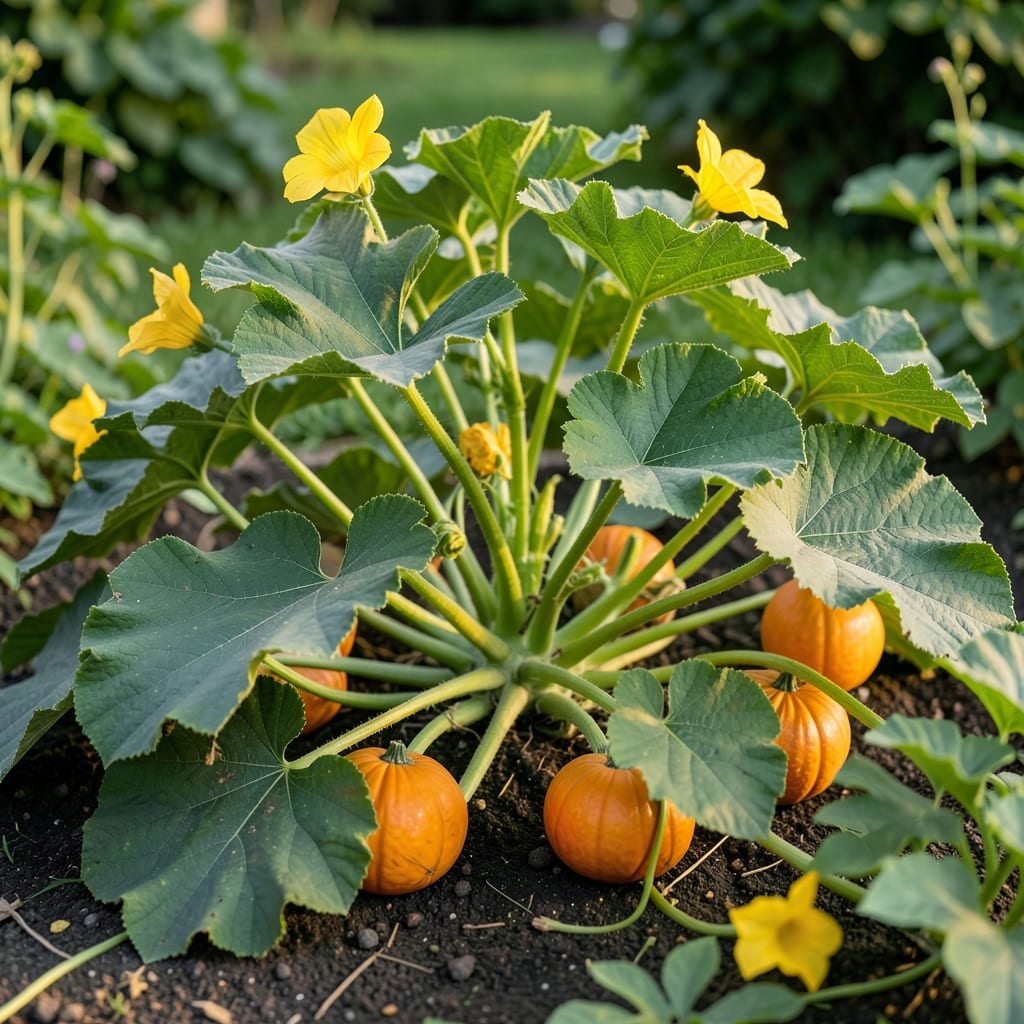
Spotting yellowing or dropping pumpkin leaves means trouble—often fungal. I’ve lost entire vines overnight to powdery mildew because I missed the early signs: white spots, curled edges, or blackened stems.
Catching it fast saves your harvest. Check undersides of leaves daily, remove infected ones immediately, and improve airflow. A simple copper spray at first sign stops spread without harsh chemicals.
📚 In This Guide
Use this method to confirm the issue and take action before your entire crop is compromised.
Start by inspecting the undersides of affected leaves with a hand lens for tiny water-soaked spots or white, powdery growth. Downy mildew presents as pale yellow patches on the upper surface with corresponding fuzzy gray spores below, while powdery mildew creates a white talc-like coating on both sides.
I always check at dawn when dew is present—this is when fungal growth is most visible. Note that yellowing between veins often indicates a systemic issue rather than environmental stress. The pattern is your first diagnostic clue.
Fungal lesions typically start as small, circular spots that expand into irregular shapes with concentric rings. Anthracnose creates sunken, tan to brown spots with dark edges, while alternaria produces target-like patterns with alternating light and dark bands.
Trace the progression from older to newer leaves. If the disease moves upward from the soil line, it’s likely a soil-borne pathogen like phytophthora. Rapid spread during humid weather confirms fungal activity rather than nutrient deficiency.
Real talk: if you see black pustules or orange spores, you’re dealing with rust—not a typical pumpkin issue but possible in wet seasons.
Fungal infections often manifest on stems before leaves show severe damage. Look for dark, water-soaked streaks on vines or sunken cankers at leaf nodes. These indicate vascular infection, which will eventually cut off water flow to entire sections of the plant.
Gently scrape a suspicious area with your fingernail. A reddish-brown discoloration beneath the surface confirms vascular involvement. This is the moment that matters: stem symptoms mean the infection has progressed beyond early treatment.
Fungi thrive in 70-80°F temperatures with high humidity. Track your local conditions—if nights stay above 60°F with persistent dew, your plants are in the danger zone. I know it seems weird, but morning humidity above 85% for several days creates perfect infection conditions.
Check your irrigation timing. Overhead watering in the evening creates the moisture window fungi need to establish. Switch to drip irrigation at the base and water only in the early morning to allow foliage to dry by dusk.
For powdery mildew, press a piece of clear tape against affected leaves and examine under magnification. The spores will stick to the tape, appearing as chains of barrel-shaped structures—this is definitive.
For downy mildew, place a white paper towel under affected leaves and gently shake. The presence of grayish spores that dust off confirms the diagnosis. This test works best when leaves are damp, so perform it after a rain or heavy dew.
Here’s the thing—these tests remove all guesswork. If you see these characteristics, you can move straight to treatment without wasting time on the wrong solution.
These are the details that separate early detection from a lost crop.
The Timing Factor: Check leaves at dawn as mentioned in Step 1—this is when dew makes fungal growth most visible. I’ve found this single timing adjustment catches infections days earlier than afternoon inspections. The pale yellow patches of downy mildew practically glow in morning light.
Environmental Awareness: Monitor those 70-80°F temperature ranges and 85% humidity levels from Step 4 religiously. I keep a small weather station in my garden because missing even one day of these conditions can mean the difference between saving your crop and losing it.
The Scraping Test: Step 3’s fingernail scrape is non-negotiable. That reddish-brown discoloration beneath the surface is your definitive vascular infection indicator. Confession: I skipped this step for years and wondered why my treatments kept failing—don’t make my mistake.
Test Conditions: For Step 5’s confirmation tests, always perform them when leaves are damp. The tape test for powdery mildew and paper towel shake for downy mildew only work reliably with moisture present—this is what nobody tells you about these “simple” tests.
Yellowing and leaf drop often signal fungal infections like powdery mildew or downy mildew, especially in humid conditions. Nutrient deficiencies or overwatering can also cause this.
Yes! Remove infected leaves immediately, improve airflow, and apply fungicides like copper or neem oil. Ensure proper watering and avoid wetting the foliage.
Treat at the first sign of infection—early morning is ideal. Preventative sprays every 7-10 days work best during wet seasons.
Try baking soda spray (1 tsp baking soda + 1 quart water + a drop of soap) or neem oil. These are effective and eco-friendly for mild fungal issues.
Rotate crops, use resistant varieties, space plants properly for airflow, and avoid overhead watering. Clean up debris after harvest to reduce fungal spores.