
Beautiful Plants For Your Interior
Beautiful Plants For Your Interior
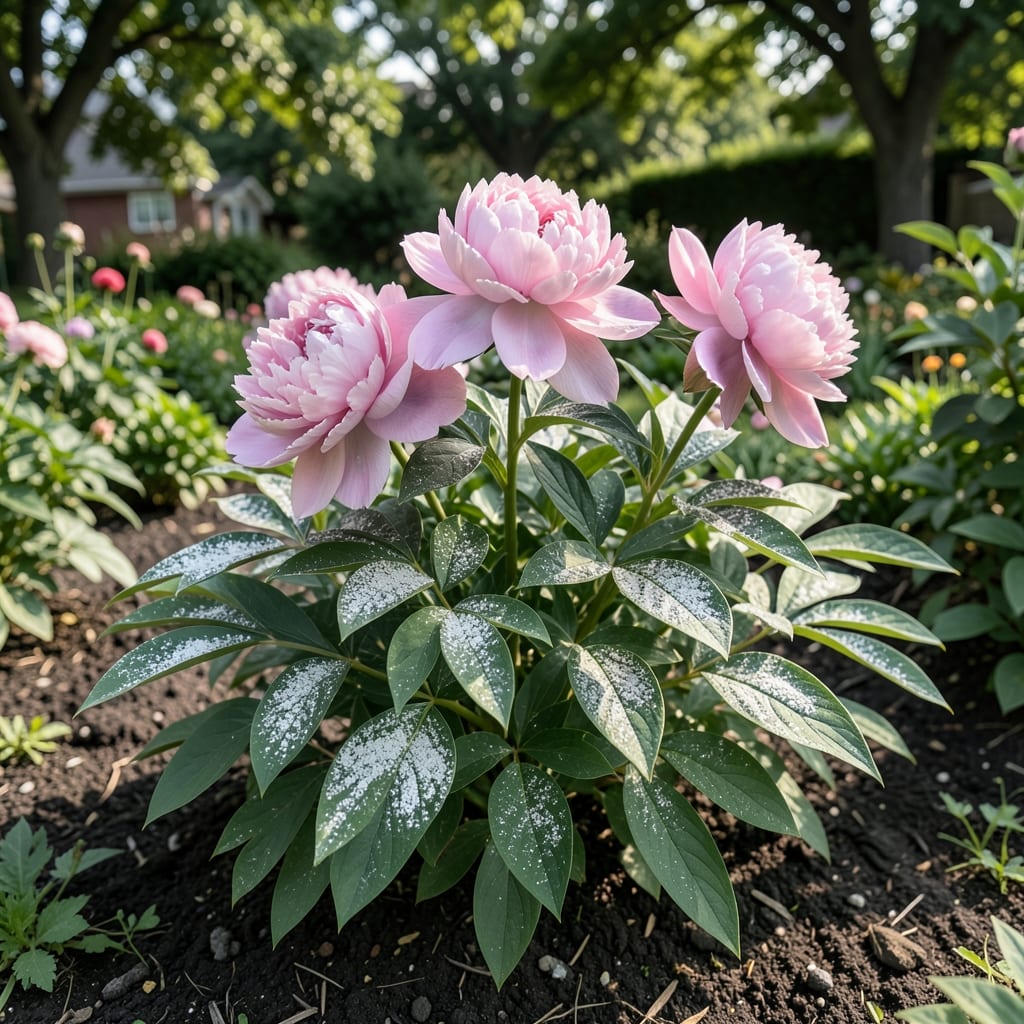
Powdery mildew on peonies appears as white, powdery spots on leaves and stems. Remove infected foliage immediately, improve air circulation, and apply fungicide or a baking soda solution for control.
I’ve seen this fungal issue flare up when peonies sit in shaded, humid spots with poor airflow. 🌿 The spores love to hitch a ride on water droplets, so morning watering gives foliage time to dry. Planting disease-resistant varieties like Sarah Bernhardt or Duchesse de Nemours can save you headaches down the road.
💡 In This Article
The fungus Podosphaera pannosa thrives in environments with 60-80% humidity and temperatures between 60-80°F. These conditions create the perfect breeding ground for spores to germinate and infect peony leaves. Unlike many plant diseases, powdery mildew doesn’t require free water to spread—it can develop in dry conditions as long as humidity remains high. 🔥
Spores travel through air currents, landing on new plant surfaces within 6-12 hours of release. Crowded plantings with poor air circulation accelerate this process, as stagnant air allows spores to settle undisturbed. The disease overwinters in plant debris, so infected leaves left on the ground become next season’s inoculum source.
Peonies in shaded areas receive 30-50% less sunlight, which prolongs leaf wetness and creates ideal conditions for spore germination. Morning dew on shaded plants often lingers until late morning, giving spores extra hours to establish infections. Even well-spaced plants can develop mildew if they’re surrounded by dense vegetation that traps moisture.
What most gardeners don’t realize is that new growth is most vulnerable. The tender leaves emerging in spring have thinner cuticles, making them 2-3 times more susceptible to infection than mature foliage.
This is why early season prevention is so critical—once the fungus establishes in new shoots, it can spread throughout the entire plant within days. ✨
The disease progresses fastest during periods of warm days followed by cool, humid nights—a common spring weather pattern in many peony-growing regions. These temperature swings stress the plants while creating optimal conditions for spore production and dispersal. A single infected leaf can produce millions of spores in just 72 hours under ideal conditions.
It appears as white or grayish powdery spots on leaves, stems, and sometimes buds. These patches often start small but can spread quickly, covering entire leaves. Check undersides too, as spores may develop there first.
Spores overwinter in plant debris and reinfect new growth in spring. Crowded plants, poor airflow, or shaded locations create perfect conditions. Removing all foliage in fall and improving spacing helps break the cycle.
Yes! A baking soda solution (1 tbsp per gallon of water with dish soap) works as a preventive spray. Apply in cooler temperatures to avoid leaf burn. Neem oil is another organic option for mild cases.
Continue treatments until 2-3 weeks before your area’s typical last frost date. This ensures protection during vulnerable new growth. Reduce frequency if weather turns hot and dry, as spores struggle in these conditions.