
Beautiful Plants For Your Interior
Beautiful Plants For Your Interior
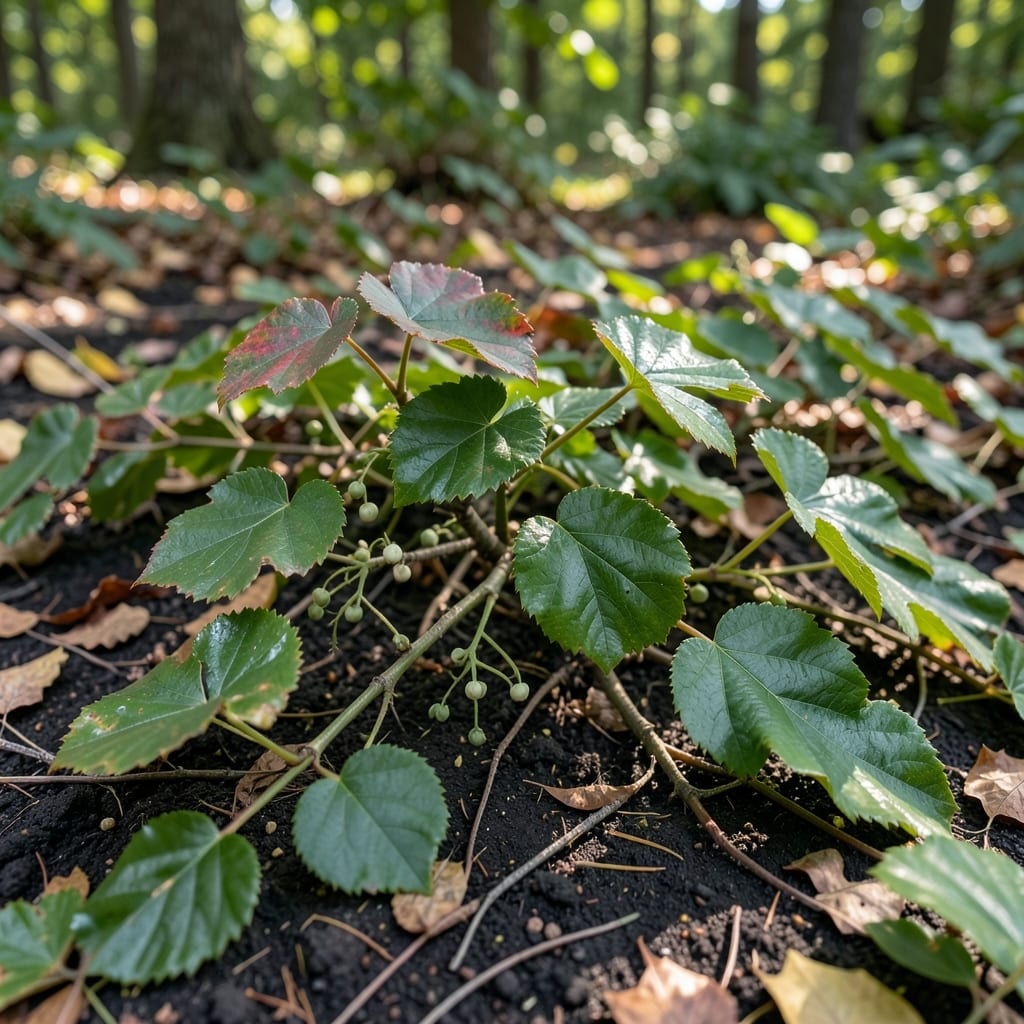
This rhyme helps distinguish poison ivy (three leaflets) from Virginia creeper (five leaflets). Poison ivy causes itchy rashes, while Virginia creeper is harmless but often confused with it.
I rely on this saying when hiking because poison ivy’s three glossy leaflets often have a middle stem that’s slightly longer. Meanwhile, Virginia creeper’s five leaflets fan out from a single point, resembling an open hand. The difference matters because contact with poison ivy can trigger a painful, blistering reaction within 12-48 hours. ✨
💡 In This Article
Poison ivy’s three leaflets grow in a symmetrical arrangement, with the center stem often appearing slightly longer than the side ones. The leaves are glossy, with smooth or slightly toothed edges, and turn reddish in spring and yellow in fall.
This distinct pattern is caused by the plant’s unique growth hormone distribution, which creates its signature trifoliate structure. 🌟
Virginia creeper, on the other hand, has five leaflets that radiate from a single point like fingers on a hand. These leaves are typically 2-6 inches long, with a more rugged texture and prominent veins. The plant’s compound leaf structure is an evolutionary adaptation to maximize sunlight absorption in its native woodland habitats. ✨
The stems offer another clue. Poison ivy stems are thin, woody, and may have a fuzzy appearance, while Virginia creeper stems are thicker and often develop small tendrils. Poison ivy also produces small white berries in fall, whereas Virginia creeper bears dark blue berries.
These differences are rooted in their distinct botanical families—poison ivy belongs to the cashew family, while Virginia creeper is part of the grape family. 🔥
Growth patterns differ too. Poison ivy grows as a vine or shrub, often climbing trees with hairy aerial roots. Virginia creeper is a fast-growing vine that clings to surfaces using adhesive discs on its tendrils.
This climbing method allows Virginia creeper to scale walls and trees more efficiently than poison ivy, which relies on physical support. 💫
Both plants thrive in similar environments—wooded areas, fence rows, and garden edges—but their visual distinctions become clearer with practice. Learning these differences helps prevent accidental exposure to poison ivy’s skin-irritating oil, urushiol, which affects about 85% of the population. 🌟
It’s a simple way to tell poison ivy from Virginia creeper by counting leaflets. The first has three, while the latter has five. This matters because poison ivy causes rashes.
Poison ivy contains urushiol oil, which triggers itchy rashes in 85% of people. Virginia creeper is harmless. Mistaking one for the other can lead to uncomfortable skin reactions.
Yes! Poison ivy has glossy leaves with a longer middle stem, while Virginia creeper’s five leaflets fan out like fingers. Their berries and climbing methods also differ.
Wash the area with soap and cool water within 10 minutes. This removes the oil before it bonds to skin. Avoid warm water, as it can spread the oil faster.