
Beautiful Plants For Your Interior
Beautiful Plants For Your Interior
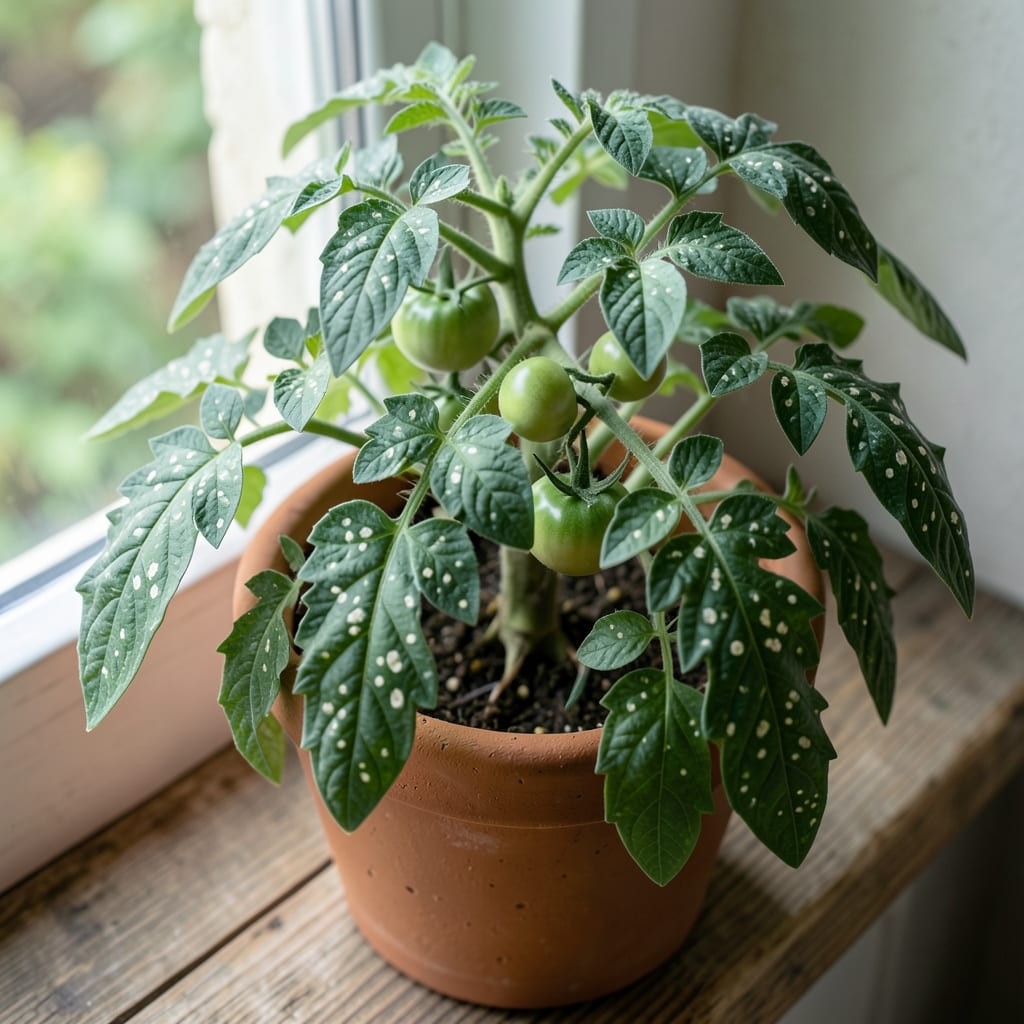
White spots on tomato leaves hit me hard last summer. 🌱 The plants looked healthy one day, then suddenly sported those telltale powdery patches that spread fast.
Between you and me, I panicked—until I learned these spots usually mean powdery mildew, spider mites, or nutrient issues. Each has a different fix, but they all start with the same fast action.
You can stop the spread with simple sprays like baking soda solution or neem oil. Prevention is even easier: better airflow, consistent watering, and resistant varieties.
Your tomatoes will bounce back. I saved my crop with these exact steps, and you can too.
White spots on tomato leaves often signal underlying issues that disrupt the plant’s health. Here’s a breakdown of the most frequent culprits and the science behind them:
Powdery mildew (Oidium neolycopersici) and early blight (Alternaria solani) are primary fungal offenders. These pathogens thrive in humid conditions (60–80% relative humidity) and temperatures between 60–80°F (15–27°C). Powdery mildew appears as white, powdery patches on upper leaf surfaces, while early blight causes concentric white rings. Spores spread via wind, water, or contaminated tools, infecting leaves through stomata (pores).
Whiteflies and spider mites suck sap from leaves, leaving behind sticky honeydew that promotes sooty mold growth—appearing as white or black spots. Whiteflies (Bemisia tabaci) also excrete waxy white residues. Spider mites (Tetranychus urticae) cause stippling (tiny white or yellow speckles) as they destroy chlorophyll.
Overwatering or poor drainage creates anaerobic soil conditions, stressing roots and reducing nutrient uptake. This weakens the plant’s defenses, making it susceptible to secondary infections. Conversely, drought stress or excessive sunlight (especially in greenhouse settings) can cause leaf scorch, where white or tan patches form as tissue dies.
Pesticide or herbicide drift from nearby applications can cause chemical burns, manifesting as irregular white or necrotic spots. Even organic sprays (e.g., copper fungicides) may cause phytotoxicity if applied in high concentrations or under direct sunlight.
A magnesium or zinc deficiency can lead to interveinal chlorosis—white or yellow patches between leaf veins. Magnesium is essential for chlorophyll production, and its lack disrupts photosynthesis. Zinc deficiency stunts growth and causes white spots on newer leaves first.
White spots on tomato leaves often signal a fungal issue like powdery mildew or early blight. Here’s how to tackle each cause effectively:
Mix 1 tablespoon baking soda + 1 teaspoon dish soap + 1 gallon water. Spray on leaves weekly until spots fade. Prevention tip 💡: Improve airflow by pruning dense foliage and watering at the base to keep leaves dry.
Remove infected leaves immediately and apply copper fungicide (follow package instructions). Prevention tip 🌡️: Rotate crops yearly and avoid overhead watering to reduce humidity around plants.
If whiteflies or spider mites are the culprits, spray leaves with neem oil (1 tablespoon per gallon of water) every 3–5 days. Prevention tip ✨: Introduce beneficial insects like ladybugs to control pests naturally.
For sun scorch, shade plants during peak heat. If it’s a nutrient deficiency (e.g., magnesium), use Epsom salt spray (1 tablespoon per gallon of water). Prevention tip 🎯: Test soil annually and amend with compost for balanced nutrition.
Pro tip 💡: Always sterilize pruning tools with rubbing alcohol to avoid spreading disease between plants.
Pest spots often look like tiny speckles or stippling. Disease spots tend to be powdery or have defined edges. Check undersides of leaves for bugs or webbing to confirm pests.
Yes, fungal spores and pests can spread quickly. Isolate affected plants and treat immediately. Improve airflow between plants to slow the spread.
Yes, if the fruit itself shows no signs of disease. Wash tomatoes thoroughly before eating. Avoid consuming leaves with heavy fungal growth.
