
Beautiful Plants For Your Interior
Beautiful Plants For Your Interior
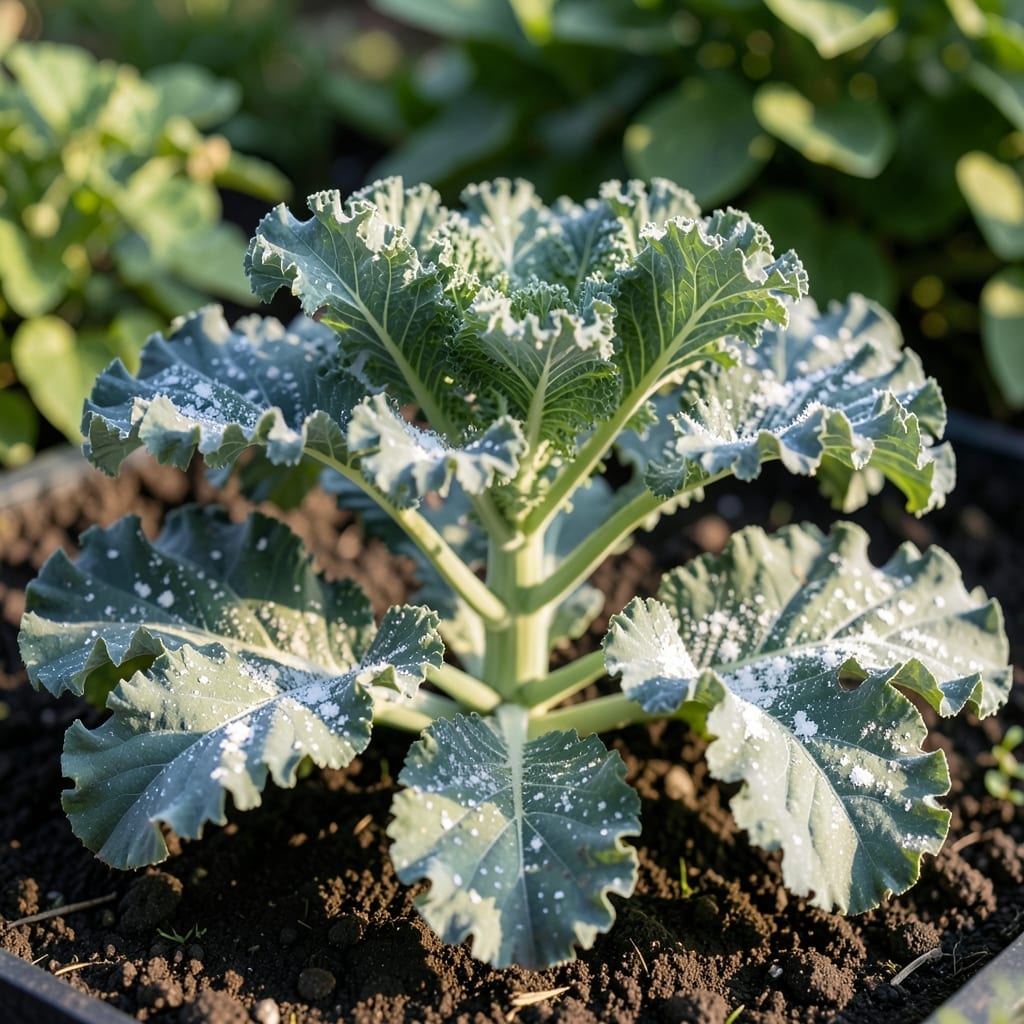
White powder on your kale leaves isn’t flour—it’s a fungal thief stealing your harvest. I’ve lost entire crops to this silent invader before learning how to stop it in its tracks.
The culprit thrives in crowded plants and damp conditions, but you can outsmart it with simple fixes. Airflow, spacing, and the right watering schedule make all the difference. No chemicals needed.
Your kale will bounce back with organic sprays and resistant varieties. I saved my fall crop last year using just three household items you probably already have.
Prevention is easier than cure, and it starts with how you plant and maintain your garden beds. Here’s what works.
Powdery mildew on kale thrives under specific environmental conditions and plant stressors. Understanding these triggers helps you prevent and manage outbreaks effectively.
This fungal disease (Erysiphe spp. or Leveillula spp.) flourishes in humid environments (60-80% relative humidity) with stagnant air. Dense plantings or crowded garden beds restrict airflow, creating a microclimate where spores germinate and spread. Kale leaves with poor ventilation retain moisture, accelerating infection.
Watering kale from above leaves foliage damp for extended periods, providing the perfect breeding ground for spores. Evening watering is especially risky, as cooler night temperatures slow evaporation. Always water at the base of plants to keep leaves dry.
Some kale cultivars are genetically more prone to powdery mildew. Curly-leaf varieties (e.g., ‘Winterbor’ or ‘Starbor’) have more surface area for spores to cling to, while smoother types (e.g., ‘Lacinato’) may resist better. Check seed descriptions for disease resistance traits.
Powdery mildew spores thrive in moderate temperatures (60-80°F). Warm days followed by cool, dew-filled nights create ideal conditions. Kale grown in shaded areas or during seasonal transitions (spring/fall) is particularly vulnerable.
Over-fertilizing with nitrogen promotes lush, tender growth that’s more susceptible to infection. Conversely, low potassium or phosphorus weakens plant cell walls. Balance soil nutrients with compost or organic fertilizers to strengthen kale’s natural defenses.
Powdery mildew on kale can be frustrating, but these targeted solutions will help you tackle the issue head-on and keep your greens thriving. Below are practical fixes mapped to common causes, plus prevention tips to stop it from returning.
Crowded plants trap moisture, creating a perfect breeding ground for mildew. Thin out kale seedlings to allow 12–18 inches between plants. Prune lower leaves to boost airflow, and avoid overhead watering to keep foliage dry. If growing in containers, space pots apart and elevate them for better circulation.
Mildew thrives in damp conditions. Water at the base early in the day so leaves dry quickly. Use drip irrigation or a soaker hose for precise hydration. In greenhouses or humid climates, run a fan for a few hours daily to lower humidity. Mulch with straw to prevent soil splashing onto leaves.
Over-fertilizing with nitrogen can lead to soft, susceptible growth. Switch to a balanced organic fertilizer (like 5-5-5) and add potassium-rich amendments (e.g., compost or wood ash) to strengthen cell walls. Avoid high-nitrogen feeds until the mildew clears.
For active outbreaks, apply a DIY spray:
💡 Pro Tip: Rotate treatments to prevent resistance, and remove heavily infected leaves to stop the spread. With these steps, your kale will bounce back—healthier and mildew-free!
Look for white, powdery spots on the upper surfaces of leaves. These patches spread quickly and may turn yellow or brown if untreated.
Apply treatments in the early morning or late evening when leaves are dry. This prevents sunburn and ensures the spray adheres properly.
Yes, spores can travel via wind or water splash. Keep infected plants isolated and remove affected leaves immediately to protect nearby crops.
Smoother varieties like Lacinato resist better than curly types. Check seed packets for disease-resistant labels.