
Beautiful Plants For Your Interior
Beautiful Plants For Your Interior
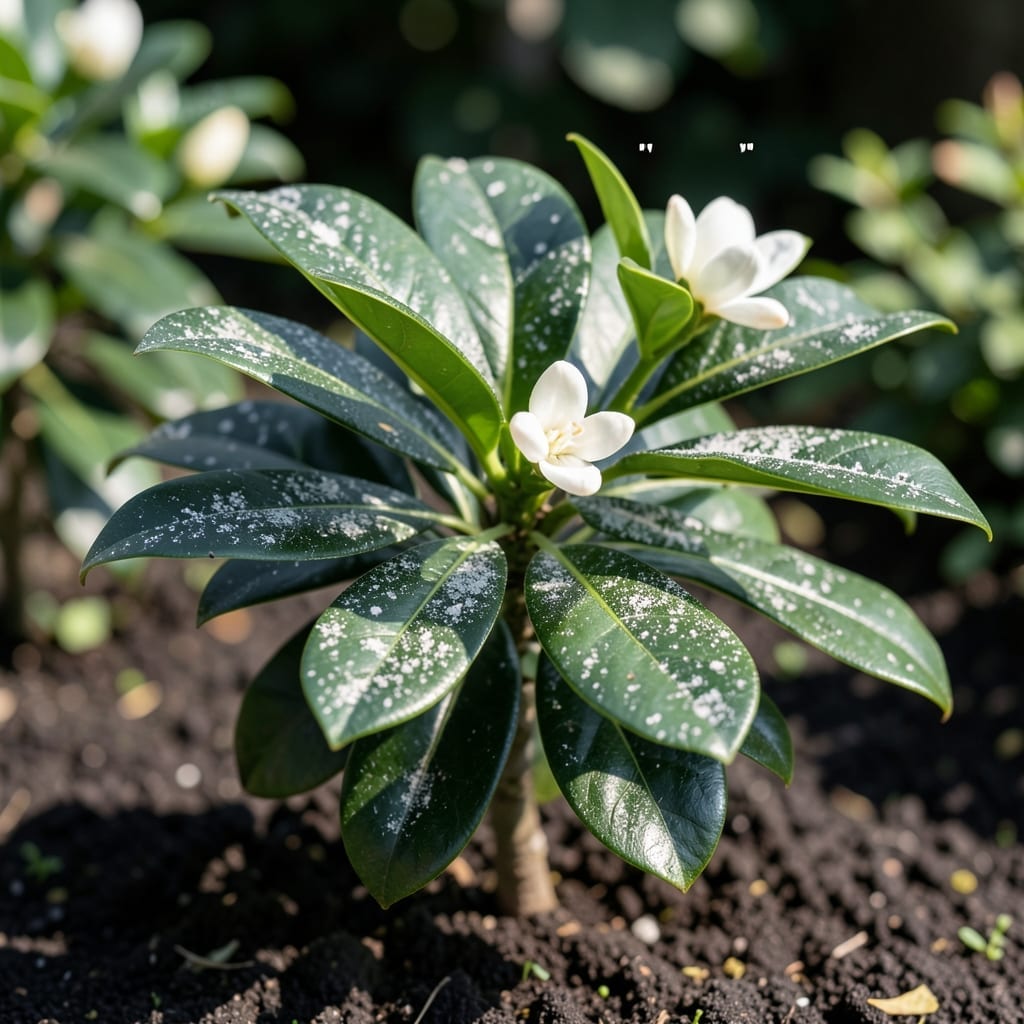
White dust on gardenia leaves means trouble ahead. I’ve lost count of how many gardenias I’ve seen succumb to powdery mildew, but catching it early makes all the difference.
This fungal issue thrives in humid conditions with poor air circulation. Left unchecked, it spreads fast, coating leaves and stems until they yellow and drop.
You’ll spot it first on new growth—tiny white spots that look like someone sprinkled flour. The good news? Organic solutions work, and prevention is simpler than you think.
With the right care, your gardenia can bounce back and stay mildew-free for the long haul.
Powdery mildew on gardenias thrives under specific environmental and cultural conditions. Understanding these triggers helps you prevent and manage outbreaks effectively.
This fungal disease flourishes in humid environments (60-80% relative humidity) with stagnant air. Gardenias planted too closely or in dense foliage trap moisture, creating ideal conditions for Erysiphe or Oidium spores to germinate. Action: Space plants 3-4 feet apart and prune inner branches to improve circulation.
Wet foliage, especially in the evening, extends the leaf surface’s moisture retention—a key requirement for spore infection. Gardenias watered from above (rather than at the base) are particularly vulnerable. Action: Use drip irrigation or soaker hoses to keep leaves dry.
Over-fertilizing with nitrogen promotes lush, soft growth, which is more susceptible to powdery mildew. Gardenias thrive on balanced nutrition (e.g., 10-10-10 or 3-1-2 NPK ratios). Action: Switch to a slow-release, phosphorus-rich fertilizer to strengthen cell walls.
While gardenias prefer bright, indirect light, deep shade reduces leaf temperature and slows moisture evaporation. This prolonged dampness encourages fungal growth. Action: Ensure 4-6 hours of morning sun and dappled afternoon shade for optimal health.
The fungus overwinters in fallen leaves and stems, reinfecting gardenias the following season. Action: Remove and destroy (do not compost) all affected plant material immediately to break the disease cycle.
Tackling powdery mildew on your gardenias starts with quick, targeted action. Below are practical fixes for each common cause, along with prevention tips to keep your plants thriving. 🌿
Fix: Reduce watering frequency and ensure the soil drains well. Use a moisture meter to check soil dampness before watering. If the soil stays soggy, repot the gardenia in fresh, well-draining potting mix with perlite or sand.
Prevention: Water at the base of the plant early in the day to allow foliage to dry quickly. Use pots with drainage holes.
Fix: Prune crowded branches to improve airflow. Space gardenias at least 3–4 feet apart if planted in the ground. For potted plants, move them to a breezier spot or use a small fan on low to gently circulate air.
Prevention: Regularly thin out dense foliage and avoid overcrowding with other plants.
Fix: Relocate potted gardenias to a sunnier spot with at least 6 hours of indirect sunlight daily. For in-ground plants, trim nearby trees or shrubs blocking light.
Prevention: Monitor sunlight exposure and adjust plant placement as seasons change.
Fix: Remove and discard affected leaves (do not compost). Spray the plant with a homemade solution of 1 tablespoon baking soda, 1 teaspoon dish soap, and 1 gallon of water. Apply weekly until the mildew clears.
Prevention: Disinfect pruning tools with rubbing alcohol between cuts. Avoid overhead watering to reduce spore spread.
Fix: Increase ventilation with fans or by opening windows in greenhouses. A dehumidifier can help in indoor settings.
Prevention: Keep humidity levels between 40–60%. Water in the morning to allow moisture to evaporate during the day.
💡 Pro Tip: Apply neem oil or sulfur-based fungicides as a preventative every 2–3 weeks during humid seasons to keep powdery mildew at bay.
It appears as white, powdery spots that resemble flour dusted on the surface. These patches spread quickly, covering leaves, stems, and even flowers.
Yes, but act fast. Remove all infected leaves and treat with neem oil or a baking soda solution. Severe cases may need fungicide.
Apply organic treatments every 7-10 days until the issue clears. For prevention, treat every 2-3 weeks during humid seasons.
The fungus thrives in damp, still conditions. Improve airflow, reduce humidity, and avoid overhead watering to break the cycle.