
Beautiful Plants For Your Interior
Beautiful Plants For Your Interior
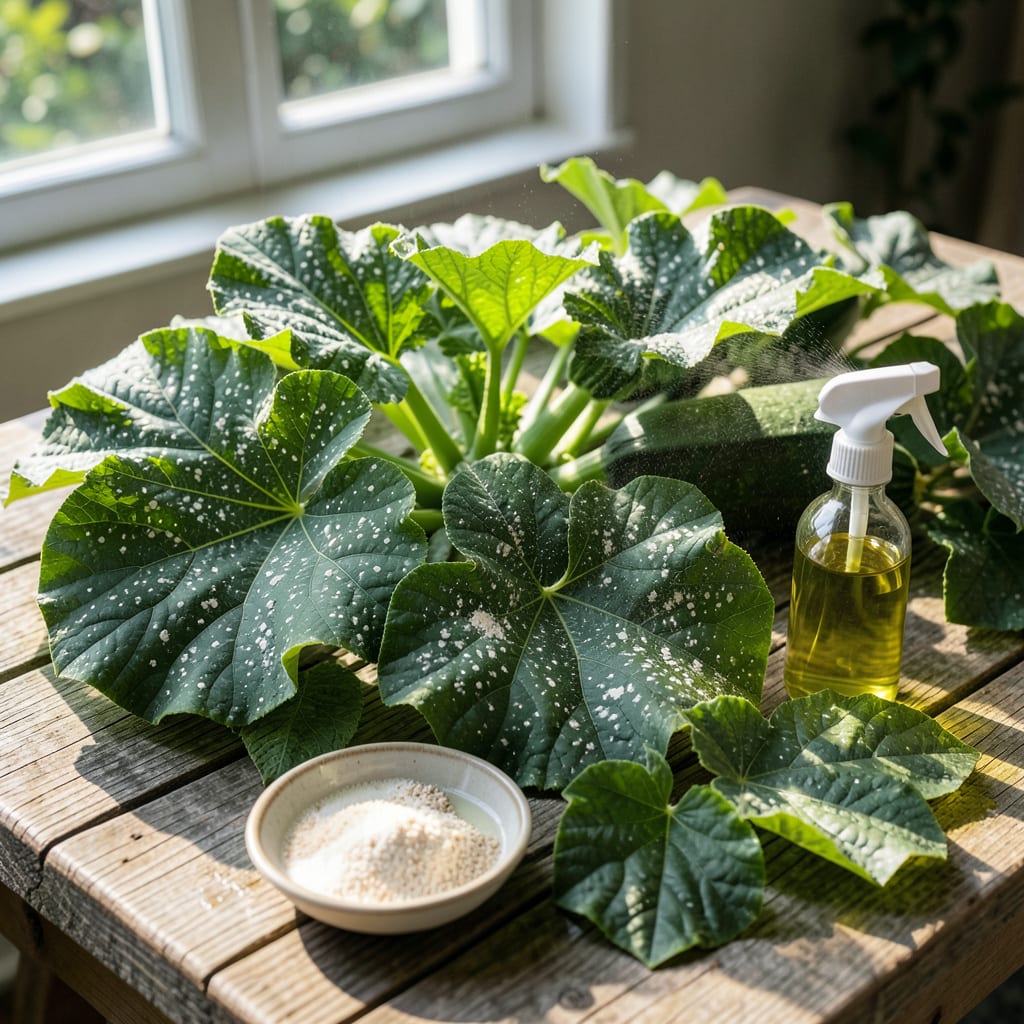
White spots on zucchini leaves hit me hard last summer. Between you and me, I lost half my harvest before figuring out the real causes and fixes.
The usual suspects are powdery mildew, spider mites, or downy mildew—each leaves its own signature on the leaves. I’ve learned to spot the difference and act fast before the damage spreads.
With the right approach, you can stop the spread in 24-48 hours and protect the rest of your crop. Organic sprays work just as well as chemical options if you catch it early.
Prevention is simpler than you think. Good airflow, proper watering, and a little vigilance keep my plants spot-free all season now.
White spots on zucchini leaves often signal underlying issues that disrupt the plant’s health. Here are the most common causes, explained scientifically:
Podosphaera xanthii, the fungus behind powdery mildew, thrives in humid, warm conditions (60–80°F). It spreads via airborne spores, forming white, powdery patches as it colonizes the leaf surface. The fungus blocks sunlight absorption, weakening photosynthesis and stunting growth.
These tiny pests pierce leaf cells to feed on sap, leaving behind white stippling or spots. Spider mites (Tetranychus urticae) create fine webbing, while whiteflies (Bemisia tabaci) excrete sticky honeydew that attracts sooty mold, compounding the damage.
Overhead watering or poor air circulation traps moisture on leaves, inviting fungal spores. Similarly, nutrient deficiencies (e.g., calcium or magnesium) can cause chlorotic (white/yellow) spots as cellular processes break down.
Foliar sprays (e.g., neem oil or fungicides) applied in direct sunlight or high concentrations may scorch leaves, creating white, necrotic patches. Always follow dilution guidelines and spray during cooler hours.
White spots on zucchini leaves often point to specific issues, and each has a targeted solution. Here’s how to tackle them effectively:
For fungal white spots, start by pruning infected leaves to improve airflow. Remove any crowded foliage to reduce humidity. Next, apply a baking soda solution (1 tsp baking soda + 1 quart water + a few drops of dish soap) weekly until the issue clears. For stubborn cases, use neem oil or a fungicide labeled for powdery mildew. Prevention tip: 💡 Space plants 2–3 feet apart and water at the base to keep leaves dry.
If pests like spider mites or whiteflies are the culprit, blast them off with a strong stream of water. Follow up with insecticidal soap or neem oil, spraying the undersides of leaves where pests hide. Repeat every 5–7 days until gone. Prevention tip: 🎯 Introduce beneficial insects like ladybugs or use reflective mulch to deter pests.
For white spots caused by sunscald or spray drift, move potted plants to partial shade or provide shade cloth. If chemical burn is suspected, rinse leaves with water and avoid spraying herbs/pesticides on windy days. Prevention tip: ✨ Apply treatments in the early morning or late evening to minimize leaf stress.
If the issue stems from a nutrient imbalance (e.g., calcium or magnesium), test your soil and amend with compost or a balanced fertilizer. For quick fixes, use a foliar spray of Epsom salt (1 tbsp per gallon of water) for magnesium. Prevention tip: 🌱 Rotate crops yearly and enrich soil with organic matter before planting.
Powdery mildew looks like white dust on leaf surfaces, while pest damage often appears as tiny dots or stippling. Check leaf undersides for webbing or insects.
Remove affected leaves immediately and apply a baking soda spray or neem oil. Isolate heavily infected plants to prevent further contamination.
Yes! A mix of 1 tsp baking soda, 1 quart water, and dish soap works well. Spray weekly until spots disappear. Avoid harsh chemicals unless necessary.
If only leaves are affected, the fruits remain edible. Wash them thoroughly before eating. Discard any fruits with visible mold or damage.
