
Beautiful Plants For Your Interior
Beautiful Plants For Your Interior
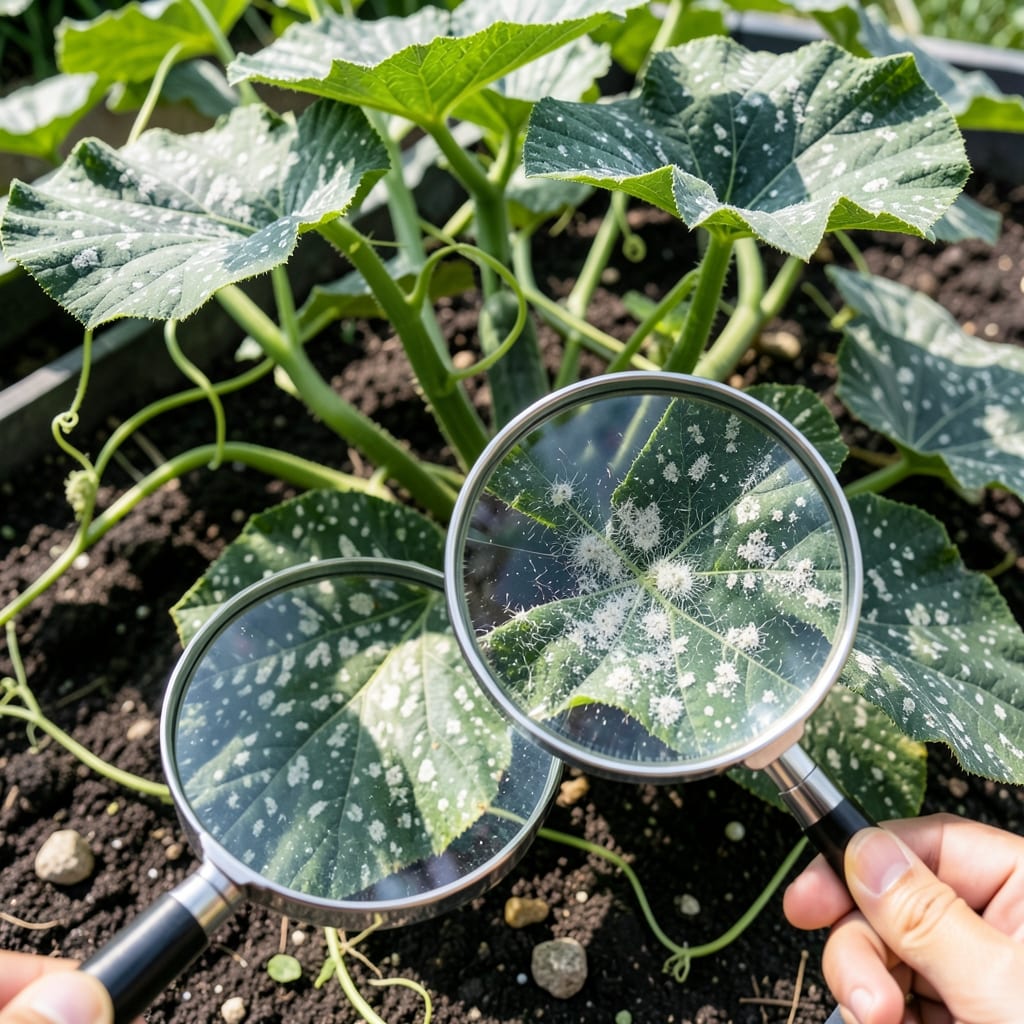
That white dust on your cucumber leaves isn’t flour. I’ve lost entire squash plants to powdery mildew, and it spreads faster than you’d expect in 48 hours.
This fungal enemy loves dry foliage but humid air—perfect conditions for cucumbers, melons, and pumpkins. The good news is that early detection means you can stop it before it wipes out your harvest.
Organic solutions like baking soda sprays and resistant varieties work, but timing is everything. I caught it early last season and saved 80% of my zucchini crop.
Prevention beats cure every time. Here’s how to spot the first signs and shut it down before it takes over.
Powdery mildew on cucurbits doesn’t appear out of nowhere. It thrives under specific conditions, often tied to environmental factors and plant stress. Understanding these triggers helps you prevent outbreaks before they start.
The fungus Podosphaera xanthii and Erysiphe cichoracearum, the primary culprits, spread rapidly in humid environments (60–80% relative humidity). However, unlike other fungal diseases, powdery mildew doesn’t require wet foliage—dry leaves with moist air are enough. Crowded plantings or poor airflow exacerbate this by trapping humidity around the leaves.
Cucurbits are especially vulnerable when daytime temperatures hover between 68–80°F (20–27°C). The fungus spores germinate quickly in this range, and warm nights (above 60°F/15°C) accelerate growth. Heat stress from sudden temperature swings can also weaken plants, making them more susceptible.
While the fungus doesn’t need water to infect, evening watering or sprinklers that wet the foliage create ideal conditions. Water droplets on leaves can increase local humidity, and if leaves stay damp overnight, spore production skyrockets. Drip irrigation is a safer alternative to keep foliage dry.
Weak or nutrient-deficient cucurbits (e.g., squash, cucumbers, melons) are magnets for powdery mildew. Nitrogen-heavy fertilizers promote lush, soft growth that’s more prone to infection, while low potassium or phosphorus reduces the plant’s natural defenses. Drought stress or inconsistent watering also weakens plants, leaving them vulnerable.
Addressing these triggers—improving airflow, adjusting watering habits, and balancing nutrition—can significantly reduce the risk of powdery mildew taking hold.
Powdery mildew on cucurbits can feel like a losing battle, but it doesn’t have to be! With the right approach, you can treat existing infections and prevent future outbreaks. Here’s how to tackle each cause with simple, effective fixes.
Crowded plants and stagnant air are a mildew magnet. Space your cucurbit plants at least 2–3 feet apart to allow airflow. If your garden is dense, prune excess leaves (especially lower ones) to open up the canopy. In greenhouses, use fans to keep air moving. Prevention tip: 💡 Avoid overhead watering to reduce humidity around leaves.
Powdery mildew thrives in damp conditions. Water at the base of plants (not the leaves) and do it early in the day so foliage dries quickly. If humidity is unavoidable, apply a thin layer of mulch to prevent soil splashing onto leaves. Prevention tip: ✨ Consider drip irrigation for precise, leaf-friendly watering.
Some cucurbit varieties are bred for mildew resistance. Opt for resistant cultivars like ‘Powdery Mildew Resistant’ (PMR) cucumbers or squash. Check seed packets for disease-resistant labels. Prevention tip: 🎯 Rotate crops yearly to avoid buildup of spores in the soil.
For active infections, spray affected leaves with neem oil, sulfur-based fungicides, or baking soda solutions (1 tsp baking soda + 1 quart water + a few drops of dish soap). Apply every 7–10 days or after rain. Prevention tip: 🌡️ Treat plants preemptively in early summer before mildew appears.
Bonus: Remove and destroy (don’t compost!) severely infected leaves to stop the spread. With these steps, your cucurbits can bounce back—stronger and mildew-free! 🌱
Look for white, powdery spots on leaves, usually starting on older foliage. These spots spread quickly, turning yellow or brown as the disease progresses. Check the undersides of leaves too, as spores often appear there first.
Yes, the fruit remains safe to eat, but wash it thoroughly. However, severe infections can reduce yield and quality. Harvest affected fruits promptly to prevent further spread.
The fungus can overwinter in plant debris, so remove and destroy all infected material. Rotate crops and avoid planting cucurbits in the same spot for at least 2 years to break the cycle.